Saed News: “Sleep shame” as a cultural and individual pressure, by creating feelings of guilt regarding the time and amount of rest, threatens sleep quality and mental health. In a society where constant productivity is considered valuable, many people are judged for early waking, staying up late, or even taking naps.
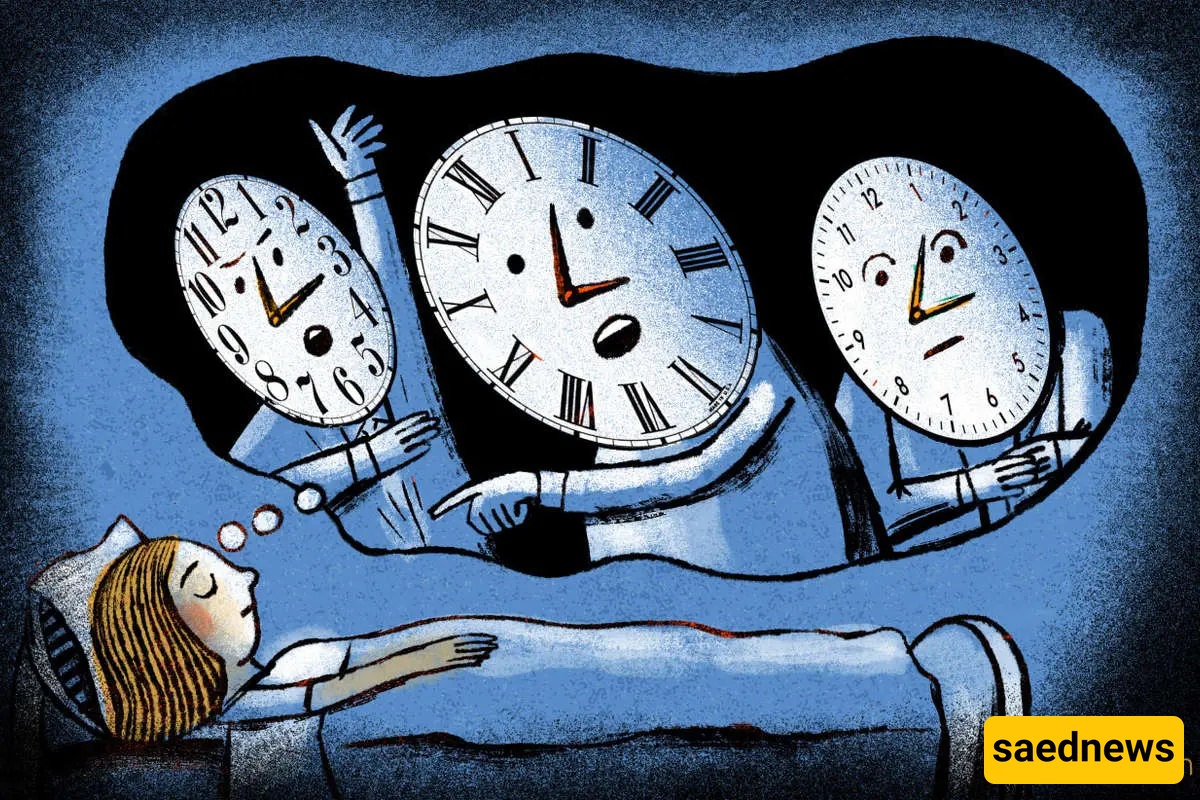
According to SAEDNEWS, citing the Wall Street Journal, in recent years sleep has shifted from a natural and obvious need to a controversial and even competitive topic. Not only sleep deprivation, but also the way and timing of sleeping can become a basis for judgment. A phenomenon some psychologists call “sleep shame” has now become one of the hidden obstacles to a healthy night’s rest; a social pressure that makes people feel guilty or weak for their body’s natural needs.
People who have experienced judgment for their sleep habits are not few. If you are an early riser who wakes up with sunrise, you may seem “boring” to some. If you go to bed late and wake up later, you may be labeled “lazy.” Even a short afternoon nap can be considered irresponsible by some. And there is always the familiar question: “How many hours did you sleep last night?”—a question whose answer almost never feels satisfactory.
Experts say a major part of this shame originates from culture. In many modern societies, hard work and constant productivity are considered values. From childhood we are taught: “Wake up early to succeed.” Such teachings unconsciously send the message that the less we sleep and the more we work, the more successful we will be—while sleep science has repeatedly shown otherwise.
The pressure does not only come from society or colleagues; even close family members sometimes unintentionally contribute to this cycle. Family members or romantic partners may react with judgment when someone does not follow their sleep pattern. On the other hand, many individuals become their own harshest critics.
According to Wendy Troxel, a sleep psychologist and senior behavioral science researcher at the RAND Corporation, sleep is not a pass-or-fail test. She emphasizes that people are judged both when they express their need for sleep and when they do not sleep enough. This dual perspective, she believes, is not consistent with the reality of how sleep functions.
Experts warn that the most important consequence of sleep shame is worsening sleep problems. Alex Dimitriu, a psychiatrist specializing in sleep disorders in California, compares this situation to a finger trap toy; the more you struggle to escape, the tighter it becomes. According to him, excessive effort to fall asleep or compensate for lack of sleep has the opposite effect, and the only solution is calmness and releasing mental pressure.
One of the main roots of this phenomenon is the belief in a single version of sleep for all people; while sleep needs in terms of duration and timing are completely individual and largely biological. Some people are naturally early risers and others are night owls. These biological patterns, called “chronotypes,” are difficult to change. Researchers believe forcing the body to sleep outside its optimal time can reduce sleep quality.
In recent years, sleep tracking tools have also become a double-edged factor. Although these technologies can increase awareness, the obsession with achieving “perfect sleep” sometimes leads to more anxiety. Zlatan Krizan, a psychology professor at Iowa State University, says sleep naturally varies from night to night, and over-focusing on one night’s data distorts the overall picture.
Experts suggest several strategies to combat sleep shame. First is accepting individual needs. When we understand that our sleep amount and timing are biologically rooted, we feel less guilt. Troxel recommends viewing sleep as a strategy to improve performance. Just as we expect pilots, surgeons, or athletes to be well-rested before performing their duties, every individual needs quality sleep to maintain health, relationships, and productivity.
Another recommendation is taking a long-term view of sleep data. Judging based on one sleepless night is not fair. If you use tracking tools, it is better to set a long-term goal, such as identifying factors that disrupt sleep or examining trends over weeks and months.
In romantic relationships, respecting biological differences is also important. Research shows that couples with different sleep habits may experience more conflict. Talking about individual needs and finding solutions that consider both partners’ needs can reduce tension. According to Troxel, maintaining shared pre-sleep rituals is more important than falling asleep at the same time.
Finally, naming this phenomenon can help fight it. Having a simple reminder such as “sleep needs differ for each person, and this is my need” can reduce psychological pressure. And sometimes, the best response to critics is a brief smile and indifference.
The main message of experts is clear: sleep is not a sign of weakness or laziness, but a pillar of physical and mental health. In a world that praises constant productivity, perhaps the most important step toward better sleep is letting go of shame and reclaiming the natural right to rest.