SAEDNEWS: Trump Extends Iran Ceasefire Indefinitely as Tehran’s Silence and Internal Divisions Stall Talks
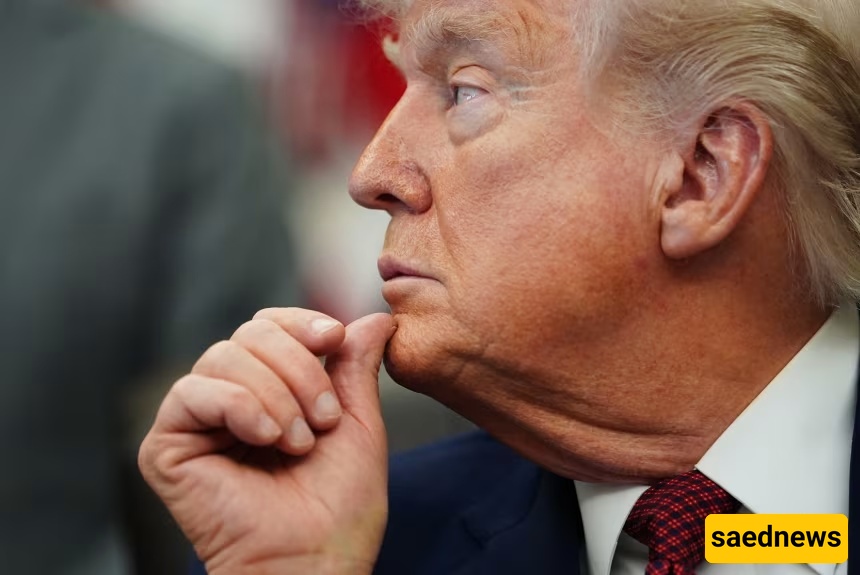
CNN Report, as Quoted by Saednews Political Desk, U.S. President Donald Trump held a meeting on Tuesday afternoon at the White House with his national security team, facing a major decision: what should the next step toward Iran be?
His ceasefire deadline was approaching, while Air Force Two was being prepared at Joint Base Andrews for a planned departure of Vice President JD Vance to Pakistan for the next round of talks. However, the administration was confronted with a dilemma: an almost complete silence from the Iranian side.
In the days prior, the United States had sent Iran a list of broad framework points for a potential agreement, requesting that Tehran approve them before the next round of negotiations. Days passed without any response, increasing doubts among officials about whether Vance and others could achieve progress through their planned diplomatic trip to Pakistan.
While Trump met on Tuesday with Vance, Secretary of State Marco Rubio, Defense Secretary Pete Hegseth, Joint Chiefs Chairman Dan Caine, and CIA Director John Ratcliffe, the U.S. still had not received any reply from Iran. Officials asked Pakistan’s top military leadership to try to obtain at least some form of response before Vance boarded Air Force Two.
The U.S. assessment is that Iran has not reached internal consensus on its position, particularly regarding uranium enrichment and its existing stockpile of enriched uranium—key obstacles in the negotiations.
Instead of resuming military strikes, Trump decided shortly before the deadline to extend the two-week ceasefire with Iran. This time, he did not set a new expiration date. In a post on Truth Social, he described Iranian officials as “deeply divided” and reiterated his preference for a diplomatic solution, avoiding a return to a conflict he claims the U.S. has already prevailed in.
However, the collapse of negotiations highlights ongoing challenges for Trump in securing a deal that meets his demands.
Iran has publicly insisted that the U.S. lift restrictions on ships entering or leaving Iranian ports in the Strait of Hormuz before returning to talks. Trump rejected this demand, stating in an interview that the U.S. would not reopen the strait without a final agreement.
During the White House meeting, Trump and his team concluded that the ceasefire—set to expire within hours according to Pakistani mediators—should be extended. Although Trump had earlier suggested it might last until Wednesday evening in Washington, he ultimately removed any fixed deadline.
Officials said the extension could give Iran more time to reach internal consensus under Supreme Leader approval, though there are no guarantees. If signals emerge that Iran is ready to return to negotiations, a rapid diplomatic trip could be arranged.
Pakistan’s officials reportedly encouraged both sides to continue the ceasefire while pushing Iran toward talks. As the deadline approached, Trump agreed to extend it until negotiations produce a clear outcome.
Iranian officials, however, appeared unconvinced. A senior Iranian adviser to Parliament Speaker Mohammad Bagher Ghalibaf, who leads Iran’s negotiating team, said that extending Trump’s ceasefire “means nothing” and warned that continued pressure would be met with a military response.
Trump’s announcement of the extension followed a day of uncertainty that began with his own comments suggesting he expected renewed military action against Iran in the short term.
Without a new deadline, Trump’s advisers privately warned him that easing pressure could allow Iran to delay negotiations further.
At minimum, negotiators had hoped to reach a general framework this week, followed by detailed talks in the coming weeks. However, disagreements remain over Iran’s future enrichment capabilities, the fate of its high-enriched uranium stockpile, and what sanctions would be lifted.
The flexibility of both sides will ultimately determine whether a deal is possible. Trump has insisted he will not accept an agreement resembling the 2015 nuclear deal he withdrew from in 2018, which he has repeatedly criticized as weak.
In recent days, Trump has expressed optimism about securing a stronger deal, claiming confidence in his negotiating approach and suggesting military strength has already significantly weakened Iran’s capabilities.
Later, during a separate event honoring collegiate athletes, Trump avoided taking questions on the conflict and left the room after briefly acknowledging reporters.