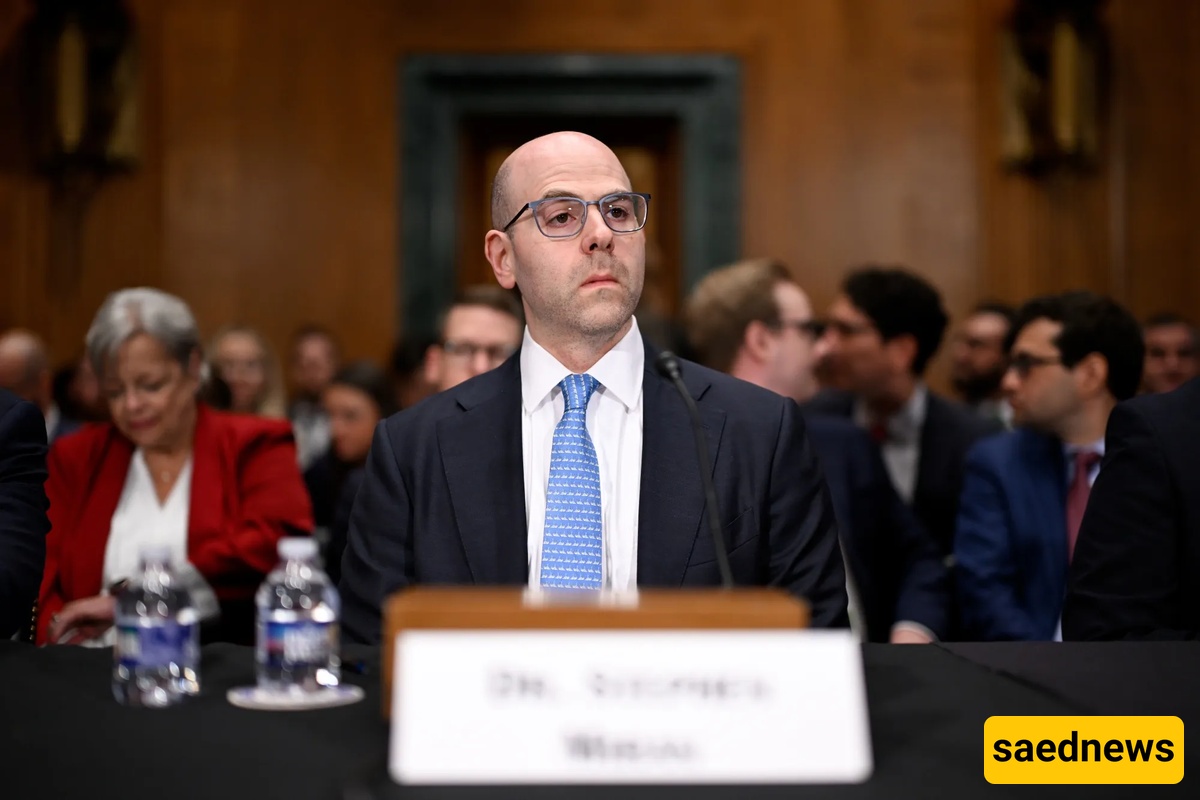
President Trump’s surprise pick to the Fed has arrived like a cartoon supervillain with a spreadsheet. Stephen Miran didn’t just bring unconventional ideas — he brought a political mission: weaken the Fed’s independence and, in his own words, chip away at the dollar’s global dominance.
A weird nomination becomes a weirder reality
When Trump tapped Council of Economic Advisers chief Stephen Miran for a vacant seat on the Federal Reserve Board, eyebrows shot up. Lots of observers assumed this was a graceful exit from the administration after Miran’s fiasco around April’s tariff “Liberation Day.” Instead, Miran doubled down — accepted the Fed seat and kept his White House role, becoming the first person since 1936 to straddle both branches at once. That arrangement reads like a historical curiosity — and a potential constitutional red flag.
First vote, first signal: loyalty over orthodoxy
Miran’s debut on the Fed was telling. He cast the lone vote for a 50-basis-point cut while colleagues settled on 25 — an aggressive posture straight out of the political playbook rather than the central banker’s one. Then came his dot-plot fantasy: Miran thinks six rate cuts (150 bps) by year’s end are ideal. That would shove the federal funds rate below inflation — an explicit “negative real rates” stance most economists reserve for only the direst recessions.
Not economics — politics (and a crusade)
This isn’t merely a debate about the timing of rate cuts. Miran has publicly framed his mission as removing what he calls the “burden” of the dollar’s reserve-status — a crusade that reads more geopolitical than macroeconomic. Rather than leaning into the Fed’s traditional dual mandate of price stability and maximum employment, Miran tacked on “moderating long-term interest rates” as a third, oddly equal goal. That’s a red flag: long-term yields are usually a market judgment about credibility, not a policy target.
Markets didn’t love the message
Bond desks reacted nervously. The logic is simple: deep, politically driven short-term cuts can unanchor inflation expectations. With deficits ballooning, that could steepen the yield curve — meaning higher long-term borrowing costs even as the Fed pushes short rates down. As one strategist put it (paraphrased): slash too much now and you’ll likely need heavy-handed measures later — from balance-sheet interventions to a fresh round of QE, or even yield-curve control. In short: trying to force long yields down by political fiat often backfires spectacularly.
The Fed’s limits — and the illusion of control
The institution can move the short end of the curve; it doesn’t “control” the long end. History shows that when the Fed aggressively cuts short rates, long-term yields can climb anyway. That reality undercuts the political fantasy of “easy money forever” — and raises the real risk of losing market confidence if cuts come across as politically motivated rather than data-driven.