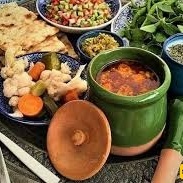
SAEDNEWS: Kashk-e Bademjan” is one of the traditional and delicious dishes that is both easy to prepare and can be decorated in the most beautiful ways.
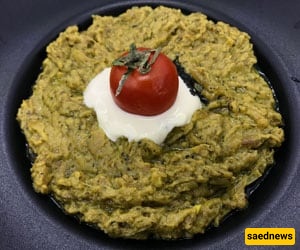
According to SAEDNEWS, Kashk-e Bademjan is a traditional and delicious dish that is part of the menu for many Iranian homemakers. This classic dish can be easily prepared at home using accessible ingredients such as eggplant, kashk (fermented whey), garlic, onion, and more. It can be served with bread and fresh herbs at any gathering or party.
The method of preparing Kashk-e Bademjan varies across different provinces. Some people, when making this rice-free Iranian dish, prefer to grill the eggplants instead of frying them according to their taste, and some add meat to make it look more festive.
If Kashk-e Bademjan is one of your family’s favorite dishes, follow this section from Namnak’s cooking guide to learn how to make a more elegant version.
First, prepare the ingredients below before moving on to the main recipe:
Ingredient | Quantity |
|---|---|
Eggplant | 1 kg |
Salt | As needed |
Turmeric | 1 tablespoon |
Black pepper | ½ teaspoon |
Dried mint | 3 tablespoons |
Onion | 1 large |
Garlic | 6 cloves |
Ground walnuts | 2 tablespoons |
Kashk | ½ cup |

Step 1: Preparing the Eggplants
Peel the eggplants and cut them in half lengthwise. To prevent bitterness, soak them in salted water for 30 to 60 minutes.
Step 2: Frying the Eggplants
Remove the eggplants from the salted water, rinse, and let them drain. Pour some oil into a pan and fry the eggplants, making sure not to over-fry them.

Step 3: Frying the Onions
Peel and finely chop the onion. Fry it in a pan with a little oil over low heat until caramelized. Be careful not to burn the onion.
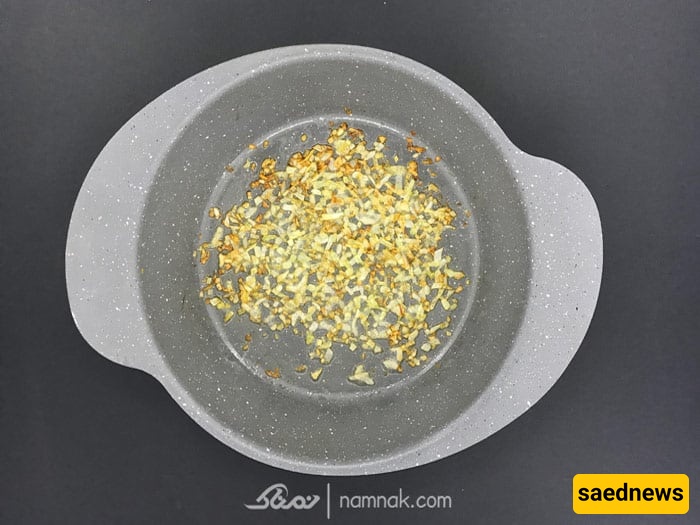
Step 4: Adding Spices
After the onions are fried, add turmeric and black pepper and sauté briefly to release the spices’ aroma. You can also grate or chop the garlic and fry it with the onions, or add it raw later—this is optional.

Step 5: Preparing Fried Mint (Na’na-ye Dagh)
Remove the fried garlic and onions from the pan. Add the dried mint with a little oil and sauté for about 30 seconds until it darkens slightly. Avoid frying it longer to prevent bitterness.
Step 6: Mashing the Eggplants
Place the fried eggplants in a pan and mash them using a fork or potato masher. Add the fried onions, garlic, mint, and ground walnuts, mixing everything evenly.

Step 7: Letting Kashk-e Bademjan Cook
Place the pan with mashed eggplants on very low heat and cover it, allowing the eggplants to absorb the oil.
Step 8: Adding Kashk
Once the eggplants are cooked in oil, add the kashk and mix well. Taste and adjust salt and spices as needed. Cover and cook for another 15 minutes.
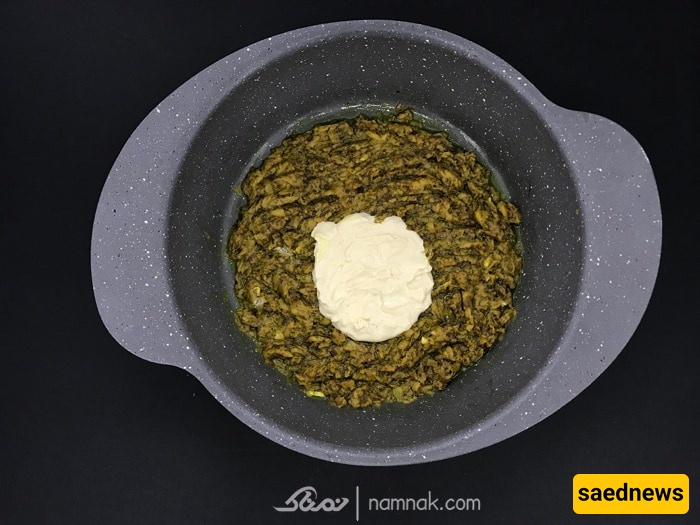
Final Step: Serving Kashk-e Bademjan
Transfer the dish to a serving plate and garnish with fried mint, fried onions, kashk, and walnuts. For a more festive version, you can also sauté some minced meat with onions and tomato paste and add it on top.

Choose firm, glossy, heavy, and long eggplants with smooth skin for better flavor.
Soaking the eggplants in salted water reduces bitterness and helps them absorb less oil.
After frying, place eggplants on a wire rack to drain excess oil.
Over-frying garlic and mint can make the dish bitter.
Be careful when adding salt to avoid over-seasoning.
You can add kashk and walnuts just before serving.
For a lighter version, grill the eggplants instead of frying.
Walnuts help balance the cold nature of kashk.
Kashk-e Bademjan contains approximately 190–230 kcal per serving.
Preparation time: ~45 minutes
Cooking and waiting time: ~45 minutes
Can be served for lunch, dinner, or as an appetizer.
Suitable for Ramadan if served as Iftar.
The recipe serves 4 people.








![[VIDEO] Discovering the Spiritual Splendor of Imam Reza Shrine: A Pilgrimage Destination in Iran](https://en.saednews.com/storage/files/post/4921784e-542d-42df-820e-0fab7aa09fbd-jvKi7UrTwppmPHtu/1x1-image.jpg)