SAEDNEWS: Discover the full story of Puma’s founding, its rivalry with Adidas, and the iconic leaping cat logo in this complete article, and explore the evolution of Puma.
According to Saed News, the story of the Puma brand is more than a tale of a successful sports company; it is a dramatic story of rivalry, innovation, and the separation of two brothers. In the heart of the small town of Herzogenaurach, Germany, a seed was planted that would grow into two of the world’s biggest sports brands: Puma and Adidas. This article takes you on a journey through time to explore the remarkable history of Puma, from its early days under Rudolf Dassler to becoming a global symbol of speed and style—a path marked by numerous challenges and fierce competition with Adidas, ultimately creating Puma’s unique identity.
The roots of Puma trace back to 1924 and the shoe factory “Dassler Brothers.” Rudolf and Adolf (Adi) Dassler ran a successful business together. Adi was a creative and introverted designer, while Rudi was a smart and outgoing salesman. Their collaboration quickly achieved success, and their shoes were worn by many Olympic athletes.
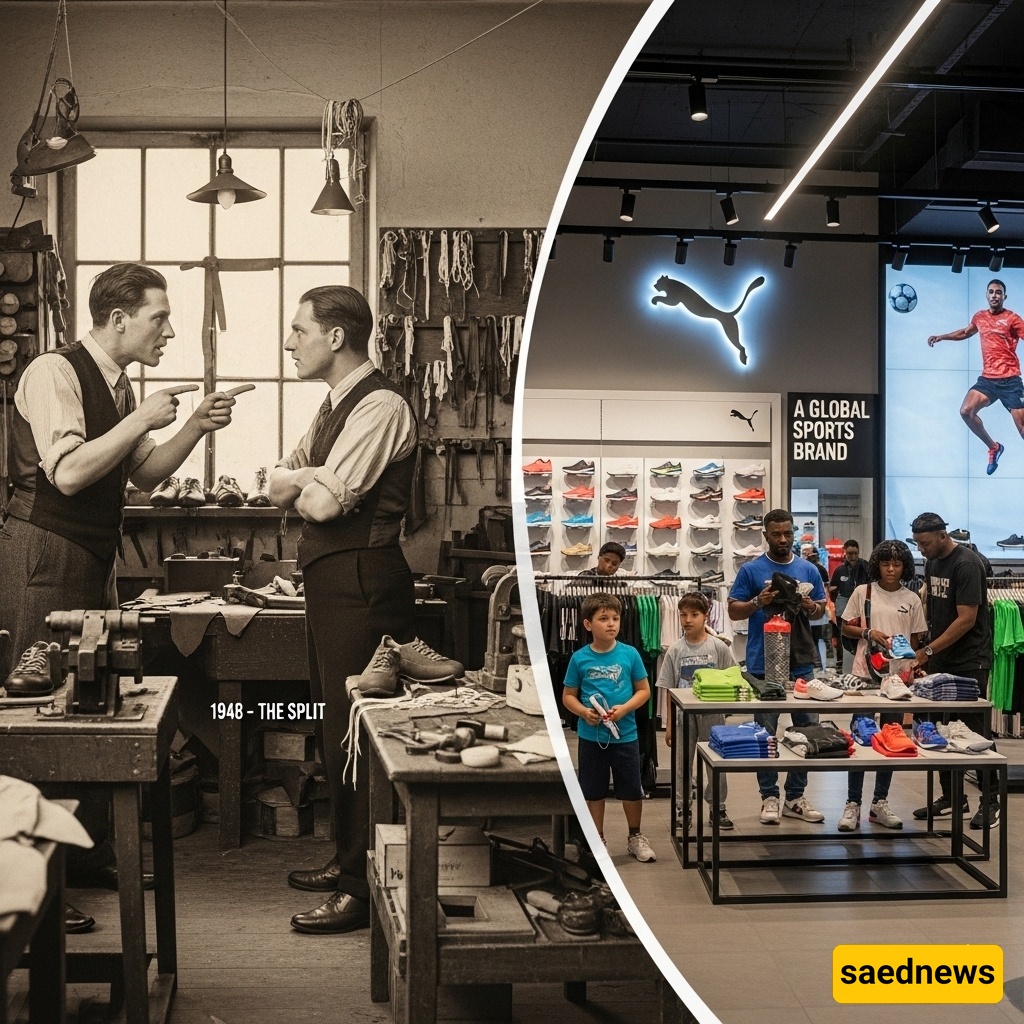
However, during World War II, tensions between the brothers deepened. Misunderstandings and mutual accusations created an irreparable rift. This conflict culminated in a full separation in 1948. Adolf Dassler founded his own brand, Adidas, while Rudolf established his new company across the river in the same town.
Rudolf’s company was initially called “Ruda,” derived from the first two letters of his first and last names (Rudolf Dassler). But this name did not last long. Rudolf sought a name that would represent speed, agility, and power—qualities reflected in his sports products. Thus, Puma was chosen, inspired by the American wildcat known for its remarkable leaping ability and breathtaking speed.
Puma’s first logo, created in 1948, depicted a puma jumping through the letter D (from Dassler). Over the years, the logo underwent several changes, eventually evolving into the minimalistic and powerful symbol known today. In 1967, famous cartoonist Lutz Backes designed the leaping cat without extra details, quickly becoming one of the world’s most recognizable logos. This symbol, along with the “Formstrip”—a curved line applied to shoes and apparel—permanently established Puma’s visual identity.
The brothers’ separation divided Herzogenaurach into two poles. Puma and Adidas employees rarely socialized, and the rivalry extended into every aspect of the town’s life. This decades-long competition became a driving force for innovation in both companies.
One highlight of this rivalry was sponsorship of top athletes. Puma secured legends like Pelé, the Brazilian football icon, and Usain Bolt, the fastest man in the world, cementing its status as a leading sports brand. A defining moment came during the 1970 World Cup final when Pelé bent down to tie his Puma shoes before the match—a marketing move that captivated millions of viewers and remains one of the smartest in sports history.
Puma has always emphasized innovation in its products. From producing the first football boots with replaceable studs (Super Atom) in 1952 to introducing advanced technologies in running shoes and sportswear today, the brand has consistently aimed to enhance athlete performance.
In recent decades, Puma has strategically blurred the lines between sports and fashion. Collaborations with renowned designers and celebrities in music and entertainment, such as Rihanna and Jay-Z, have secured Puma a prominent position in the lifestyle market.
The history of Puma is an inspiring story of transforming a family conflict into a global empire. Through innovation, clever marketing, and a deep understanding of athletes’ and fashion enthusiasts’ needs, Puma has remained at the top for over seventy years. Today, the leaping Puma symbolizes not only speed and power in sports arenas but also style and boldness on streets worldwide, carrying Rudolf Dassler’s legacy into a brighter future.