SAEDNEWS: How AI Can Protect Air Quality and Advance Environmental Justice—and Help Us Monitor, Predict, and Combat Pollution Smarter
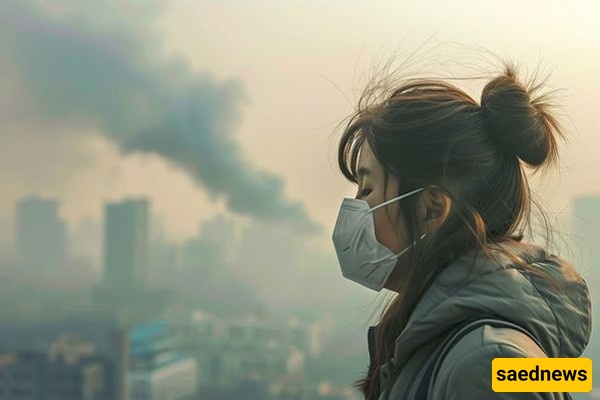
According to the Science and Technology Desk of Saed News, citing Mehr News Agency, air pollution has emerged over the past decade as one of the most fundamental threats to public health. Its ranking among global causes of death has reached a level that even surpasses the risks associated with tobacco use and unhealthy dietary patterns. Increased concentrations of airborne particles from industrial activity, rising fossil fuel consumption, expansion of energy-intensive transportation, and the accelerating pace of global warming due to climate change have all brought air quality in many regions to a critical threshold—threatening respiratory, cardiovascular, and cognitive health for millions of people on a daily basis.
Alongside these trends, widespread forest fires—resulting from ecosystem destruction and rising temperatures—release a new wave of particulate matter into the atmosphere. These particles travel across borders, affecting air quality even in distant regions. Meanwhile, emerging technologies, particularly artificial intelligence (AI), are rapidly transforming industrial, urban, and communication systems. This transformation raises a crucial question: what role can this powerful technology play in protecting air quality and promoting environmental justice, and how can its capabilities be harnessed for more precise monitoring, intelligent prediction, and targeted interventions to reduce pollution?
Scientific data indicate that air pollution causes over ten million deaths annually worldwide, and 99% of the global population is exposed to pollution levels that affect both physical health and cognitive performance. Despite advancements in electric vehicles and increased awareness of sustainability, U.S. Environmental Protection Agency reports show that industries, power plants, and transportation collectively generate 78% of the carbon pollution in the air. In this context, low-income populations, children, the elderly, and indigenous communities face the greatest risks.
The use of AI and big data in environmental monitoring is expanding rapidly. Advanced pollution-prediction models, developed using traffic patterns and spatial analysis of industrial activity, have increased estimation accuracy by an average of 17.5%—a significant improvement for urban policy and interventions in vulnerable areas. Wearable sensors, such as those designed at Yale University’s School of Public Health, now allow individuals to measure their exposure to environmental chemicals and gain a precise picture of nearby pollutants.
The World Economic Forum reports that initiatives like the Equal Air Collaborative, which bring together leading companies and organizations to tackle air pollution, focus on collaborative solutions. This initiative leverages AI to network data, identify previously unknown pollutants, and develop community-based monitoring systems.
The Equal Air Project, conducted by Coupa in collaboration with nonprofits such as Earth Watch and Sustainable Silicon Valley, and Yale School of Public Health, demonstrates smart field monitoring of air pollution. Using distributed sensors in the San Francisco Bay Area, the project revealed significant variations in air quality even within small geographic areas.
Economists have found that air pollution not only harms individual health but also reduces workforce productivity. Globally, over 1.2 billion workdays are lost annually due to poor air quality, a figure projected to reach approximately 3.8 billion days by 2060. Businesses, particularly in information technology where skilled labor is essential, risk substantial losses with any decline in employee health and cognitive performance.
A lesser-known aspect of the air pollution crisis is the existence of pollutants not yet defined in official regulatory frameworks. For instance, particulate matter from vehicle tires is a highly dangerous pollutant whose effects are largely unregulated. Machine learning algorithms, capable of processing massive datasets, can detect these hidden pollutants and guide policies and interventions toward effective management of emerging contaminants.
Experts emphasize that AI is not merely a problem-solving tool; understanding its environmental consequences is critical. Deep learning models and data-driven systems require immense computational power, translating into substantial electricity consumption, data center expansion, and increased demand for cooling infrastructure. The global growth of data centers, fueled by competition in AI, has raised electricity consumption and added pressure on energy networks, contributing indirectly to pollution.
Research from China shows a direct link between electricity consumption and declining air quality. Additional energy use from fossil-fuel-based power plants increases particulate matter and emissions. Furthermore, producing advanced hardware like machine-learning chips involves high energy use, rare metal extraction, and complex supply chains, all with environmental impacts.
To address these challenges, AI development must prioritize energy management. Strategies include designing energy-efficient chips, building renewable-energy-powered data centers, implementing high-efficiency cooling systems, and optimizing computational architectures. National and international policies should guide technology development toward models that balance computational demands with environmental sustainability.
The world is moving rapidly toward widespread AI adoption, making it essential to rethink the relationship between technological development and public health. Air pollution, one of today’s most pressing environmental and health threats, cannot be addressed without advanced analytical tools and big data capabilities. AI’s ability to model complex systems, reveal hidden patterns, and enhance field monitoring can transform environmental policymaking from reactive to predictive.
By combining institutional capacity, networked collaboration among private sector, academia, and public institutions, and AI-driven analytics, clean air becomes an achievable, measurable goal rather than a distant ideal. Projects like the Equal Air Collaborative demonstrate that organized use of environmental data and machine learning can expose environmental inequalities and enable targeted policies to reduce vulnerability in underserved communities.
Active participation of policymakers, innovators, and researchers is essential. Only through sustained collaboration can technological advancement align with public health and strengthen environmental justice.