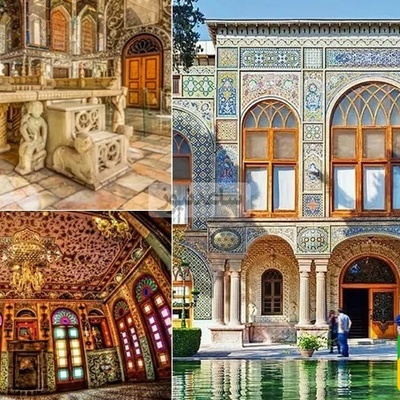
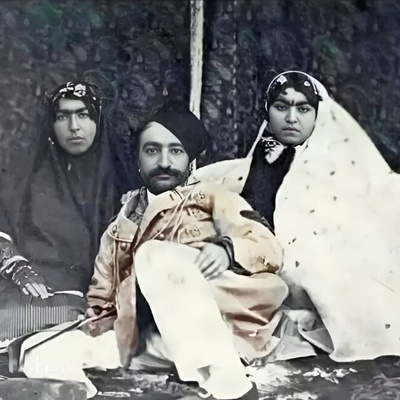
SAEDNEWS: Golestan Palace, also known as the Golestan Complex, is a historic site in Tehran that later became known as the ‘Tehran Royal Citadel.
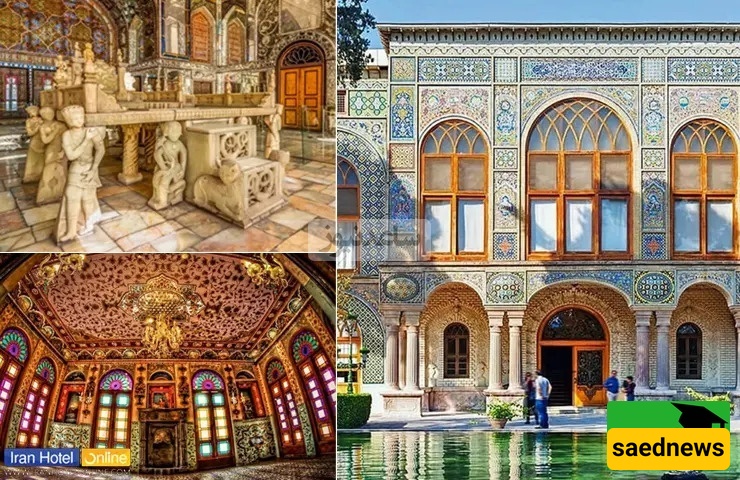
According to the History and Culture section of Saed News, the origins of Tehran’s Royal Citadel (Arg-e Tehran) can perhaps be traced back to July 6, 1404 CE (20 Dhu al-Hijjah 806 AH / 17 Tir 783 SH), when Clavijo, the envoy of King Enrique III of Castile, set out to meet Amir Timur Gurkani in Samarkand and stayed in Tehran at the residence of the government’s representative, known as Babashikh. Later accounts, including those in Pietro Della Valle’s travelogue (Wednesday, June 6, 1617 CE / 2 Jumada al-Thani 1026 AH / 17 Khordad 996 SH) and the writings of the English traveler and historian Sir Thomas Herbert (1628 CE / 1037 AH / 1006 SH), mention a Chaharbagh (four-garden) and a plane tree grove inside the Shah Tahmasp-era enclosure, and during the reign of Shah Abbas I in Tehran.
However, closer historical references suggest that the formal establishment of the Royal Citadel occurred under Shah Suleiman Safavi (r. 1078–1109 AH / 1046–1076 SH), who constructed a Diwan-khaneh (administrative hall) in the same area as the Shah Abbas plane tree grove. This Diwan-khaneh later hosted Ottoman envoy Dery Ahmed Effendi in the final year of Shah Sultan Hossein’s reign (1133 AH / 1100 SH). Today, none of these original foundations remain, and the surviving structures of Golestan Palace date primarily to the Zand period, with the Diwan-khaneh itself built between 1172–1173 AH / 1137–1138 SH.
The Royal Citadel gained true prominence during the reign of Agha Mohammad Khan Qajar. In the late Zand period, following the death of Karim Khan Zand (1193 AH / 1158 SH), he took advantage of Iran’s internal turmoil. After defeating Lotf Ali Khan Zand in Sha’ban 1209 AH (1173 SH), he returned to Tehran and crowned himself Shah of Iran.
Agha Mohammad Khan’s actions elevated the importance of the Royal Citadel, and during Fath Ali Shah’s reign, Golestan Palace underwent further expansion and embellishment—both because he was crowned there (24 Rabi’ al-Awwal 1212 AH / 1797 CE / 26 Shahrivar 1176 SH) and due to his grandiose architectural vision.
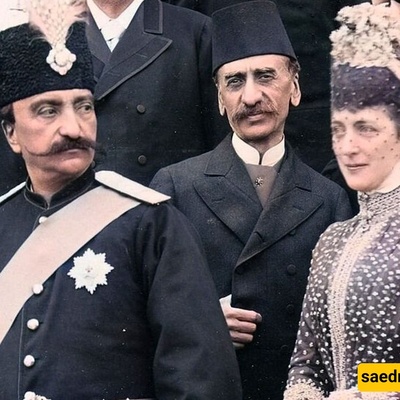
During Naser al-Din Shah’s long reign (crowned Friday, 21 Dhu al-Qi’dah 1264 AH / 27 Mehr 1227 SH), Golestan Palace was transformed significantly. His nearly 50-year rule and three European trips (1290, 1295, and 1306 AH / 1252, 1257, and 1267 SH) introduced major structural and stylistic changes influenced by European architecture.
Although the last three Qajar kings—Mozaffar al-Din Shah, Mohammad Ali Shah, and Ahmad Shah—made no significant architectural changes to the citadel before the dynasty’s fall (13 Rabi’ al-Thani 1344 AH / 9 Aban 1304 SH), its history became inseparable from major political events, including the Constitutional Revolution, leaving a profound imprint on Iran’s collective memory.
After the Qajar dynasty, the Royal Citadel witnessed the coronations of Reza Shah Pahlavi (April 24, 1926 / 4 Ordibehesht 1305 SH) and Mohammad Reza Shah Pahlavi (October 26, 1967 / 4 Aban 1346 SH), along with various structural modifications. With such a rich history, Golestan Palace remains one of Iran’s most unique historical complexes. It was registered as a national heritage site (No. 417) on February 1, 1956 (11 Bahman 1334 SH) and was later recognized by UNESCO as a World Heritage site on June 23, 2013 (2 Tir 1392 SH), underscoring its cultural, historical, and artistic significance.




![The World's Strangest Family Refuses to Sell Their Land for Millions [Photos]](https://en.saednews.com/storage/files/post/bc9a19a9-4fe4-4d06-9aee-e9f2a3073a80-ylE3J4U11joOINOx/1x1-image.jpg)