SAEDNEWS: Two Palestinian operations in less than 12 hours wounded three Israeli soldiers and underscored the stark reality that the occupied West Bank is a powder keg, primed to explode under the weight of unrelenting Israeli military raids, settler terror and a calculated annexation drive.
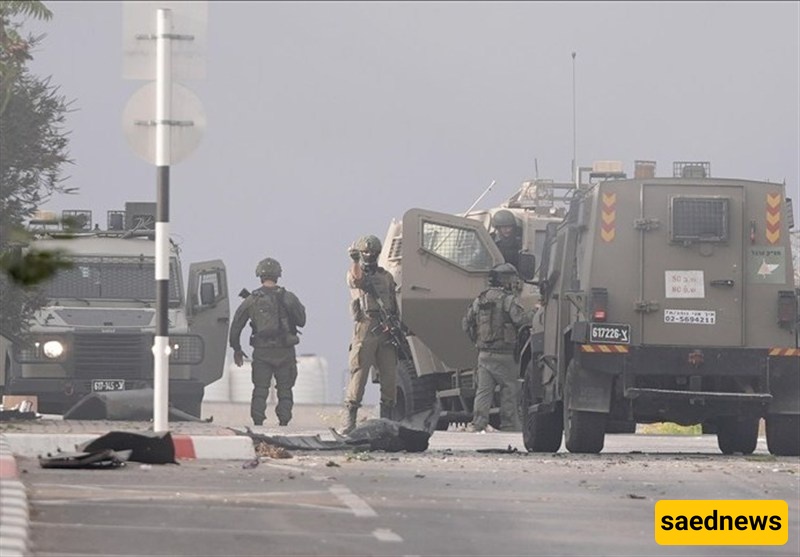
The attacks—one a vehicle-ramming near the illegal Kiryat Arba settlement south of Hebron (Al-Khalil), the other a stabbing at the illegal Atiret outpost north of Ramallah—were carried out by teenagers. The attackers’ youth alone has raised alarm within Israel’s security establishment.
A female soldier was injured during the overnight ramming at Yehuda Junction. Hours later, two paratroopers were stabbed in Atiret. Both Palestinian attackers—17-year-old Muhanad al-Zaghir and 18-year-old Muhammad Asmar—were shot dead by Israeli forces.
The Israeli army said the Hebron attacker was “neutralized” at dawn by the 202nd Battalion. Palestinian medical sources confirmed that al-Zaghir died of multiple gunshot wounds.
The surge in violence comes amid near-daily Israeli raids that have intensified since mid-January, when a previous Gaza ceasefire allowed Israel to redirect its operations toward the West Bank.
Last week alone, Israeli forces launched a large-scale operation in Tubas governorate in the north, part of what Palestinian analysts describe as a systematic campaign to crush resistance, expand illegal settlements, and enforce demographic change.
Hundreds of Palestinians have been injured or detained in recent weeks; dozens of homes and olive groves have been destroyed. Settlers, often shielded by soldiers, have torched farmland and attacked villagers with near-total impunity.
Palestinian political analyst Khalil Kafakji warned that the West Bank is approaching a breaking point.
“The ongoing Israeli aggressions in the West Bank, settler attacks, and daily arbitrary arrests of Palestinians reflect immense pressure on Palestinian society,” he said. “Even warnings from within the occupation army suggest that Israelis themselves recognize that controlling the West Bank is becoming increasingly difficult.”
Kafakji added that any spark could trigger “a broader confrontation—either direct clashes or a wider wave of armed resistance.”
Hamas leader Abdulrahman Shadeed framed the Israeli campaign as evidence of panic.
“No matter how far the Zionists go in their oppression and crimes, they cannot impose their terms on the Palestinian people,” he declared.
Resistance factions have echoed this sentiment, warning that continued killings and land grabs will only accelerate cycles of defiance.
Strategists now consider four possible scenarios:
A full-scale security eruption, turning the West Bank into a multi-front battlefield of armed resistance.
A third intifada combining street protests, general strikes, and armed operations.
The collapse of the Palestinian Authority, replaced by local commanders and grassroots networks that redefine the fight.
A sweeping Israeli reoccupation—including mass arrests, prolonged curfews, and potential territorial fragmentation to break Palestinian contiguity.
For now, the occupied West Bank remains a cauldron of tension, its next chapter written in the blood of teenagers who refuse to live under permanent siege.