SAEDNEWS: The Internal Organs of a Woman Named Xin Zhui Remain Intact and Preserved After Thousands of Years
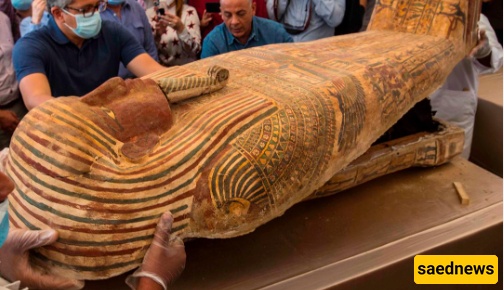
According to Saed News’ Social Affairs service, citing Young Journalists, the internal organs of a female mummy named Xin Zhui have remained untouched and remarkably well-preserved for thousands of years.
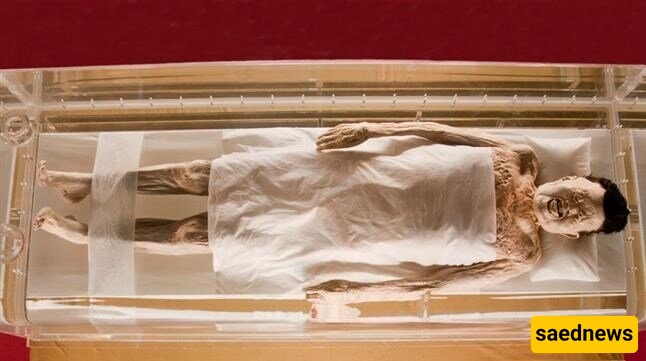
When most people hear the word “mummy,” they probably imagine a shriveled body barely recognizable. But the 2,000-year-old corpse of Xin Zhui defies that expectation—her body has remained astonishingly intact.
Lady Dai, also known as Xin Zhui, lived between 145 and 178 BCE. Although she passed away during that period, when her tomb was accidentally discovered in 1971, researchers could hardly believe that her body had survived millennia in such pristine condition.
Based on the artifacts found alongside Lady Dai, it is clear that she was a wealthy woman of her time. But it seems she also had access to the best mummification techniques: not only was her skin still supple and her eyelashes intact, but blood continued to flow through her veins.
Even her mummified organs—including the nerves in her lungs—remained intact. During an examination, experts discovered over 100 undigested melon seeds in her esophagus, stomach, and intestines, revealing that she had eaten melon just an hour before her death.
How Did Xin Zhui’s Body Stay So Well-Preserved?
Lady Dai’s wealth likely contributed to her exceptional preservation, as her body was wrapped in 18 layers of silk and linen garments. Her coffin contained a mysterious clear liquid that turned brown when exposed to oxygen. While some researchers believe it was simply bodily fluids, others think it may have been a traditional herbal solution that helped preserve her body.
Despite her wealth, researchers determined that Lady Dai had health problems. Examination revealed she died of a heart attack, with blood clots still visible in her veins. She was around 50 years old at the time—an age considered relatively young for death in her era. Her medical history included heart disease, obesity, diabetes, high blood pressure, high cholesterol, gallstones, and liver disease, likely exacerbated by a lifestyle of comfort and minimal physical activity.
Today, visitors can see Lady Dai at the Hunan Provincial Museum, where she remains astonishingly well-preserved, even after 2,000 years.