SAEDNEWS: As Trump draped the FIFA Peace Medal over his own neck last night, the world watched in disbelief: a self-proclaimed peacemaker being honored while his record tells a very different story.
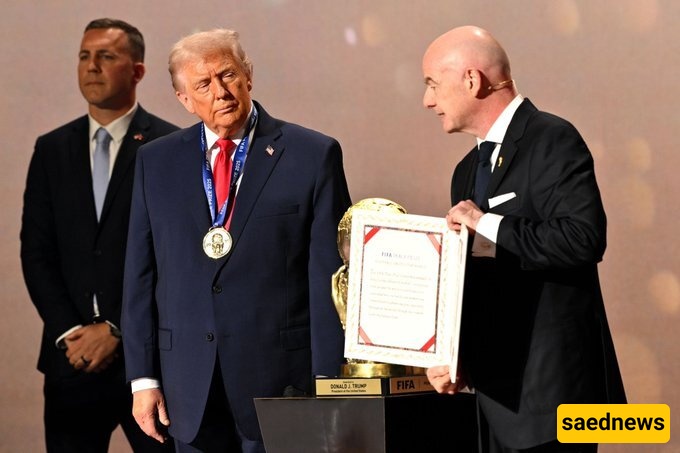
Last night, what should have been a routine celebration of the 2026 FIFA World Cup turned into a global talking point—for all the wrong reasons. At the Kennedy Center in Washington, D.C., FIFA President Gianni Infantino awarded US President Donald J. Trump the inaugural “FIFA Peace Prize.” Attended by football officials, diplomats, and international media, the ceremony saw Trump personally receive a golden medal as Infantino hailed him as a champion of “peace and unity around the world.”
The announcement sparked immediate criticism from observers worldwide. Awarding a peace prize to a leader whose administration repeatedly engaged in military interventions, supported allied regimes in conflicts, and enacted policies often criticized as aggressive and self-serving raises fundamental questions about the criteria, neutrality, and ethics behind FIFA’s new award.
The 2026 World Cup draw was meant to celebrate football’s ability to unite people across borders. Instead, in a dramatic moment, Infantino praised Trump as someone who “brings nations together through dialogue, diplomacy, and respect.”
In his brief acceptance speech, Trump described the medal as “one of the greatest honors of my life” and claimed that “we have saved millions of lives” through his policies. Broadcast live around the globe, the ceremony saw Trump place the medal around his own neck—a theatrical gesture meant to reinforce his image as a global peacemaker.
Applause from parts of the audience did little to mask the glaring contradiction critics quickly noted. While Trump donned the medal in front of cameras, his record tells a different story.
During his presidency and beyond, Trump cultivated an image as a mediator and negotiator, sometimes publicly intervening in international disputes and claiming credit for peace initiatives. His final speech at the 2025 United Nations General Assembly called for ending hostilities in Gaza and resolving conflicts diplomatically. Yet, during the same period, his administration vetoed resolutions aimed at halting hostilities while continuing to provide military, financial, and logistical support to allies engaged in armed conflict.
This duality—“peace in rhetoric, war in action”—is a recurring theme in Trump’s political narrative. From covert operations in the Middle East and South America to drone strikes and military build-ups, critics argue that his hands have rarely been free of war, despite public claims of peacemaking. Numerous documented instances also show US policies under Trump indirectly contributed to civilian casualties, displacement, and escalating regional tensions. Awarding him a peace prize, then, is not only ironic but deeply problematic.
Historically committed to political neutrality, FIFA now finds itself at the center of international scrutiny. Awarding a peace prize to a polarizing figure like Trump raises urgent questions: What are the selection criteria? Who serves on the committee? Was the decision influenced by political connections or public relations considerations rather than genuine contributions to peace?
No official documentation clarifies these questions. Transparency and merit are core principles expected of organizations granting symbolic international awards. FIFA’s move risks setting a precedent where sporting prestige can be leveraged to whitewash political reputations.
Instead of celebrating sport as a unifying force, last night’s ceremony highlighted the clash between symbolism and the stark realities of global power politics.
Trump has long displayed an almost obsessive enthusiasm for receiving awards and public recognition. Throughout his business and political career, he has sought trophies, honors, and titles that reinforce his narrative of success and global importance.
Last night’s FIFA Peace Prize is a striking example of how global institutions can bend to satisfy that obsession. By awarding Trump the inaugural prize, FIFA did more than honor a figure—it staged a theatrical act of subservience. Infantino’s praise and the ceremonial moment of Trump draping the medal over his own neck sent a clear message: the world’s most influential football body was willing to compromise credibility and neutrality for a photo op.
The medal became less an honor and more a symbol of FIFA’s willingness to kowtow. A global stage intended to celebrate sport and unity instead highlighted how powerful individuals can bend international institutions to serve personal vanity.
Hours after the ceremony, media outlets worldwide published critical pieces highlighting the contradictions. Al Jazeera described the award as “raising questions about FIFA’s neutrality,” noting the incongruity between Trump’s record and the ideals of peace.
Human Rights Watch and other organizations highlighted the dissonance between the medal and Trump’s documented support for military interventions. Social media audiences expressed widespread skepticism, noting the irony of awarding a peace prize to a leader closely associated with conflict.
The decision has major consequences for FIFA’s credibility. For decades, it has claimed football transcends politics. Awarding a politically divisive figure risks:
Undermining its commitment to neutrality.
Damaging public trust in governance and decision-making.
Setting a precedent where symbolic recognition can favor political connections over verifiable contributions to peace.
In effect, the move turns a sporting celebration into political theater, highlighting the danger of mixing diplomacy and entertainment at the expense of ethics.
Trump draping a golden peace medal around his neck is visually striking yet deeply ironic. It captures the tension between symbolism and reality—a theatrical celebration of peace awarded to a figure whose policies are repeatedly linked to war.
For the international audience, the controversy is a cautionary tale about image management in global institutions. While FIFA may have intended to celebrate unity, the unintended message is clear: power and public perception can overshadow historical and factual accountability.
The long-term impact on FIFA’s reputation remains uncertain. If it continues blending sport and political spectacle, it risks alienating fans, partners, and global audiences who expect football to remain a force for unity rather than political maneuvering.
Ultimately, last night’s ceremony may be remembered less as a celebration and more as a lesson in the dangers of conflating image with reality—and in awarding peace where little peace exists.