SAEDNEWS:NASA Has Captured Bizarre Space Images—Most of Which Remain Hidden from the Public
According to the science service of SaedNews, most of the time, we get so caught up in daily life that we forget to look at the starry sky at night. Another major obstacle, especially if you live in a big city, is light pollution, which blocks the view of the cosmic order's beauty. Perhaps this is one of the greatest things we have removed from our lives.
As Carl Sagan, the American astronomer and astrophysicist, once said: the cosmos is within us. We are made of star-stuff. We are a way for the universe to know itself. By adopting this perspective, our outlook on life can shift, and with it, many problems can change.
This article presents your imagined world in a new light. You’ll encounter images of black holes, white holes, floating spoons on Mars, diamond planets, mysterious nebulae, and rogue planets wandering freely through the universe.
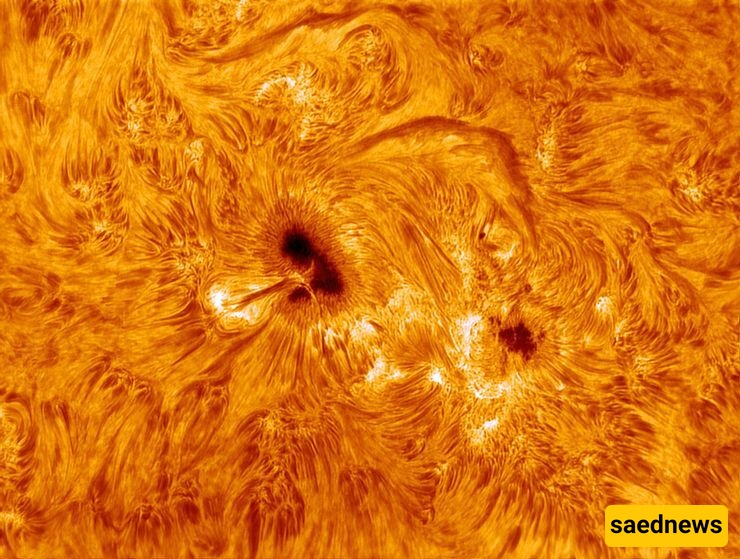
A Hole in the Sun
Have you ever wondered what a close-up of the Sun looks like? Contrary to what you might think, the image below is not a scary lava-filled cave, nor a close-up of a severe skin infection or a destroyed orange.
Faces of Mars
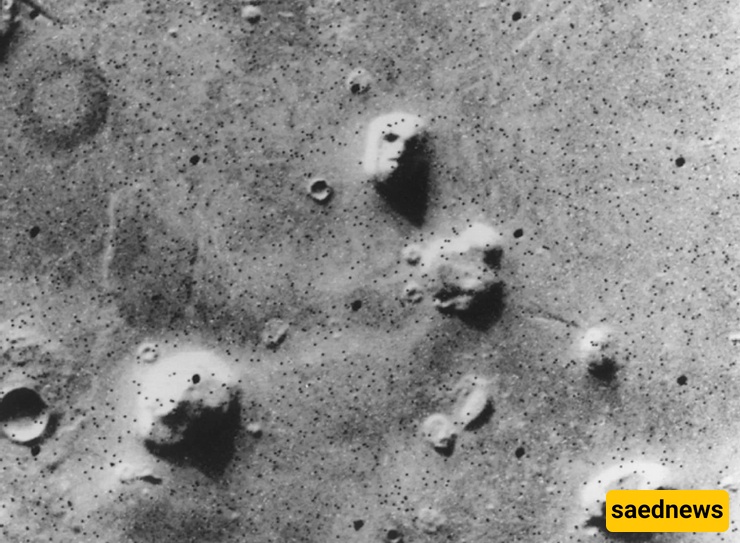
You may have heard of Mars’ mysterious “faces.” What appears below looks like human faces buried in the red sands, evoking fear and awe. However, according to NASA, it’s simply the formation of a massive rock resembling a human head. Shadows create the illusion of eyes, nose, and mouth.
The Death Star Floating Around Saturn
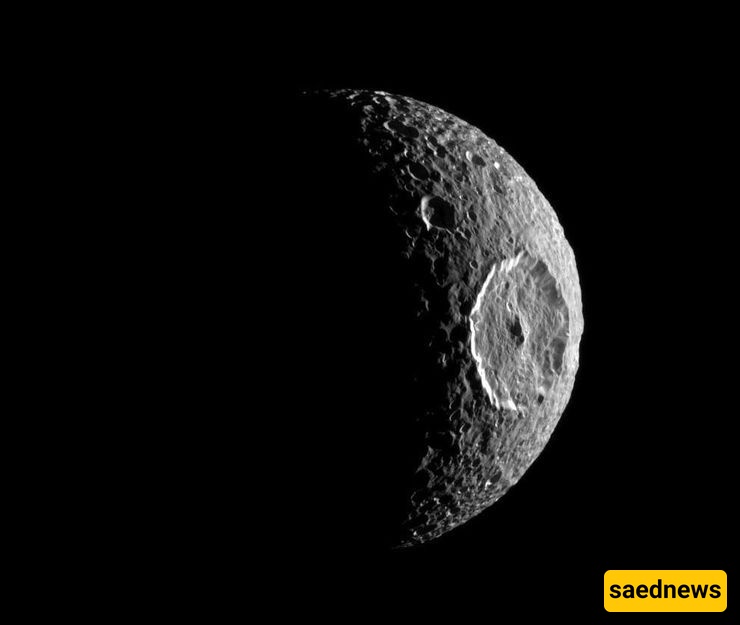
Looking at this photo, it’s startling to realize that the Death Star from Star Wars isn’t just imagination—it exists in reality. Don’t worry, it’s not a functioning spacecraft; it’s Saturn’s moon Mimas, featuring a massive Herschel Crater, which gives it a Death Star-like appearance. Interestingly, this crater wasn’t discovered until 1980, suggesting George Lucas found inspiration elsewhere.
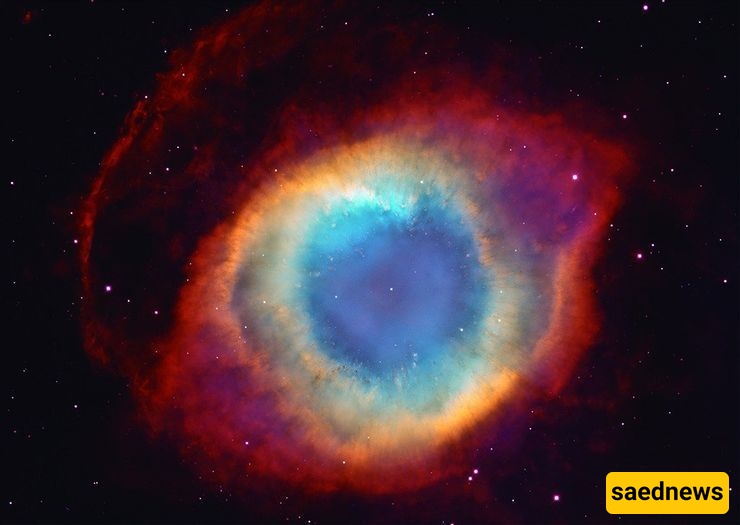
The Eye of God
Officially called the “Helix Nebula,” this cosmic marvel has a strange majesty. Its penetrating gaze is formed by a dying Sun-like star over thousands of years. Observing it reminds us of the universe’s vastness and our own minuteness.
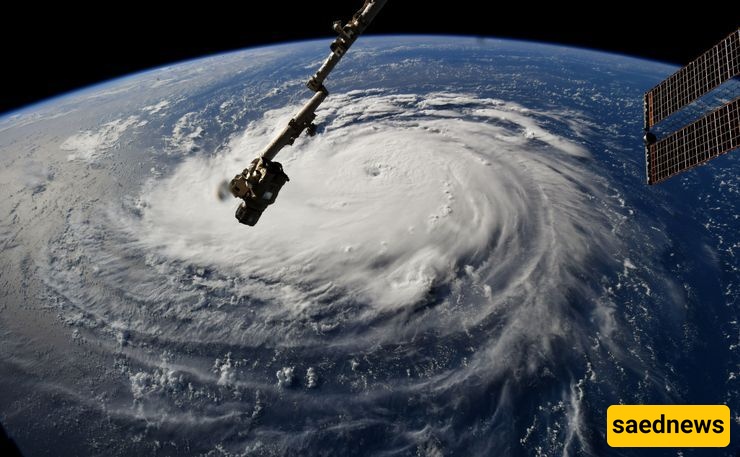
Florence Storm from Space
Just like the Northern Lights, storm systems observed from orbit are mesmerizing. Unlike auroras, however, storms are far more deadly. This photo was taken by astronaut Ricky Arnold from the International Space Station on September 10, 2018. The storm was so massive that only an ultra-wide-angle lens could capture it.
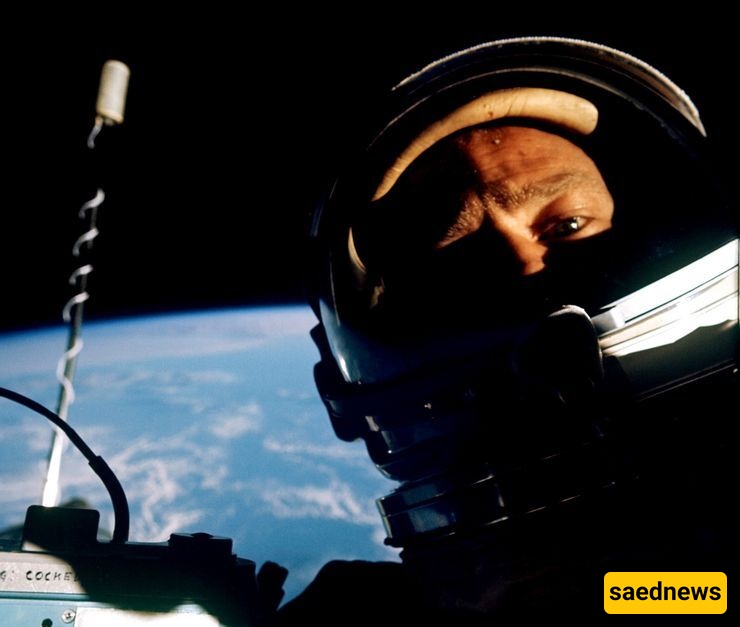
The First Space Selfie
When we think of selfies, astronauts aren’t the first image that comes to mind. Yet Buzz Aldrin took the first space selfie in 1966, long before the term became popular. He later recalled: “While photographing things around me, I wondered if it could capture me in ultraviolet. So I turned the camera and clicked—perfect!”
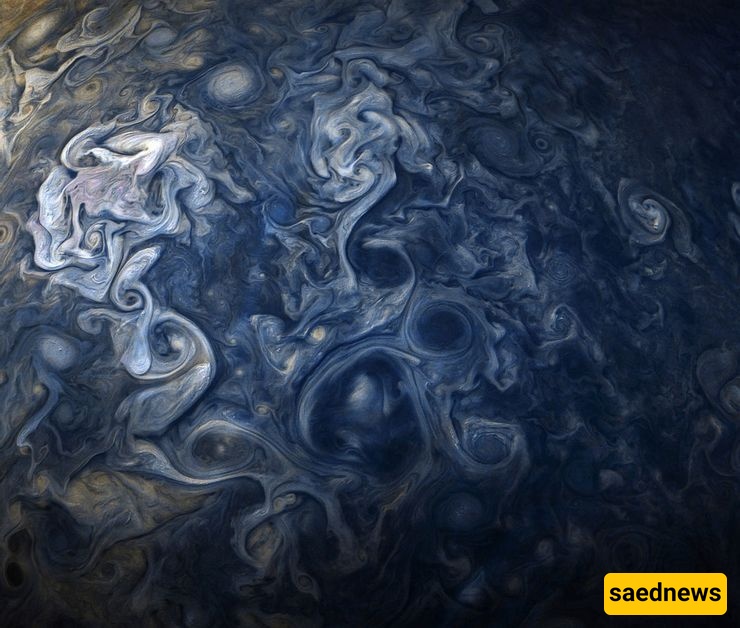
Jupiter’s Clouds
In astronomy, Jupiter is remembered for its sheer size and its Great Red Spot—a massive storm over twice Earth’s width. This enhanced image shows clouds casting shadows across the planet, captured at a higher angle, providing a stunning new perspective of the gas giant.
The Black Hole Void
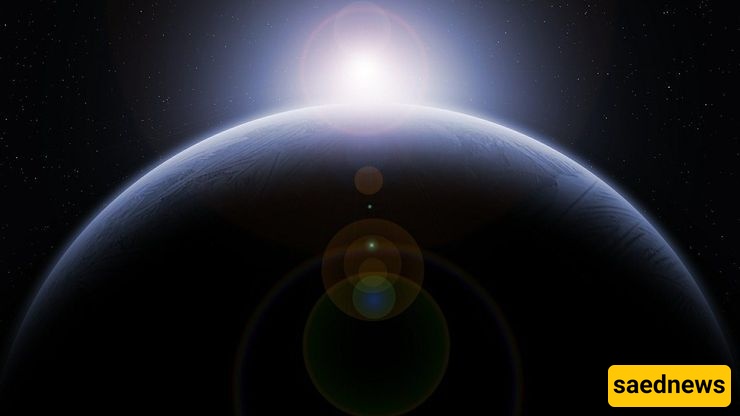
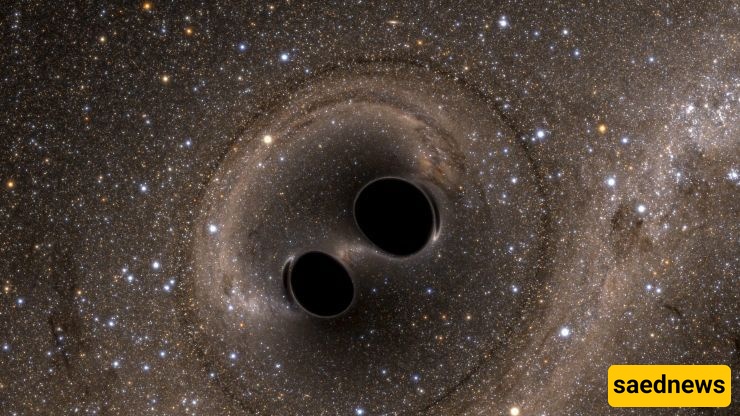
Though the image below is an artist’s rendition based on NASA data, it is terrifying—at least to most of us. The immense darkness, representing the continuous spacetime vacuum around black holes, is both awe-inspiring and frightening. The good news: no black hole is close enough to threaten our solar system. Scientists believe massive black holes existed in the early universe, growing in parallel with their host galaxies.
A Tree on Mars?
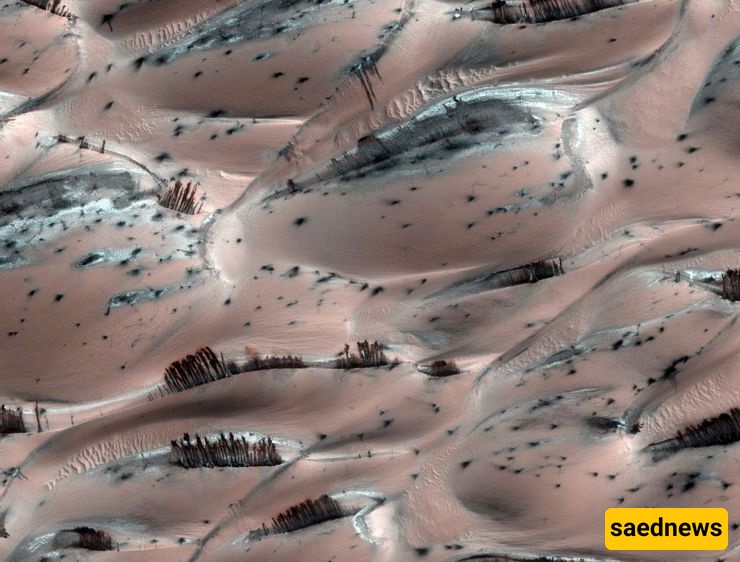
The “tree” below is not a Martian forest but an optical illusion. Dark streaks appear in the sand due to sublimating carbon dioxide ice, creating shapes that resemble trees. It’s simply a chemical reaction, tricking the eye.
The Universe in a Single Image
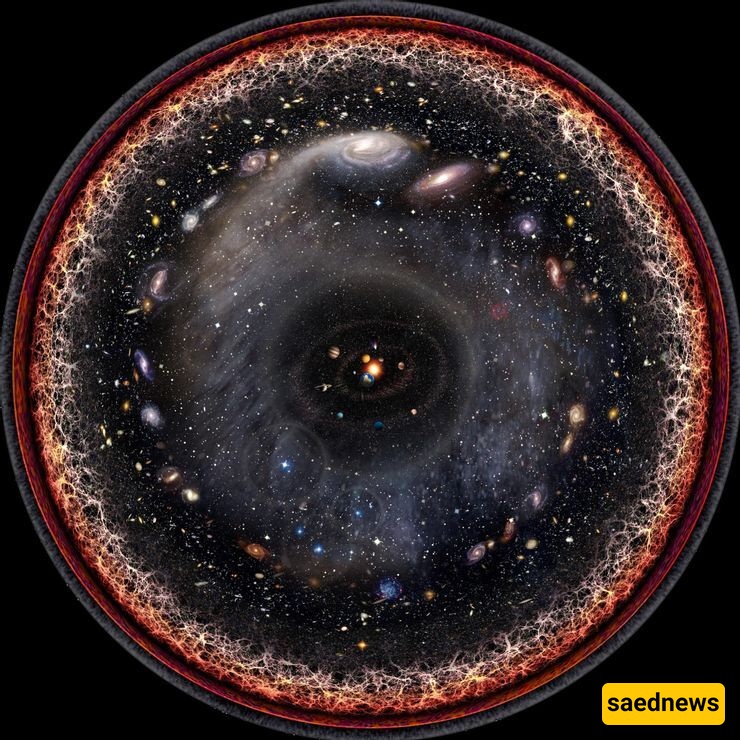
This breathtaking logarithmic visualization, created by Pablo Carlos Budassi, captures the entire universe in one frame: from the Solar System at the center, inner and outer planets, the Kuiper Belt, Oort Cloud, Alpha Centauri, the Perseus Arm, the Milky Way, Andromeda, nearby galaxies, the cosmic web, cosmic microwave background, to the invisible plasma of the Big Bang at the edge.
Floating Spoon on Mars
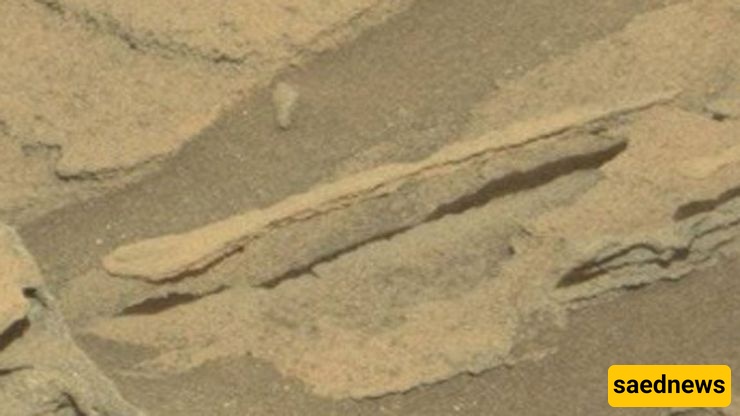
The “floating spoon” is a playful illusion. This rock formation on Mars, sculpted over time by wind, might resemble a spoon but is entirely natural. NASA notes: “No spoon exists here. It’s likely a wind-shaped Martian rock.”
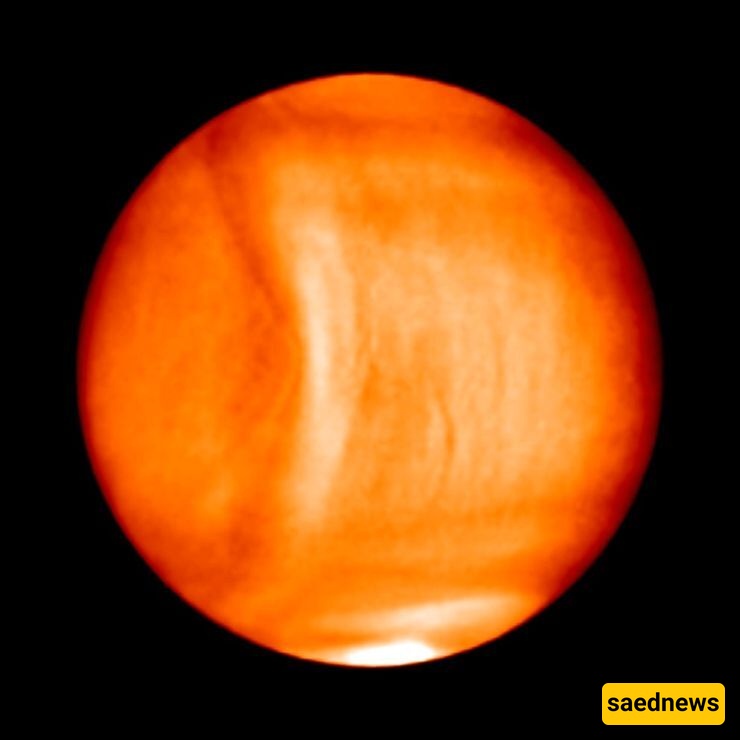
The Largest Wave in the Solar System
Discovered by a Japanese spacecraft in December 2015, a massive atmospheric pressure wave stretched over 10,000 kilometers across Venus and persisted for four days, becoming one of the planet’s most striking features. Venus, the hottest planet in the Solar System at over 460°C due to a runaway greenhouse effect, demonstrates just how powerful planetary waves can be—potentially influencing Earth’s climate.
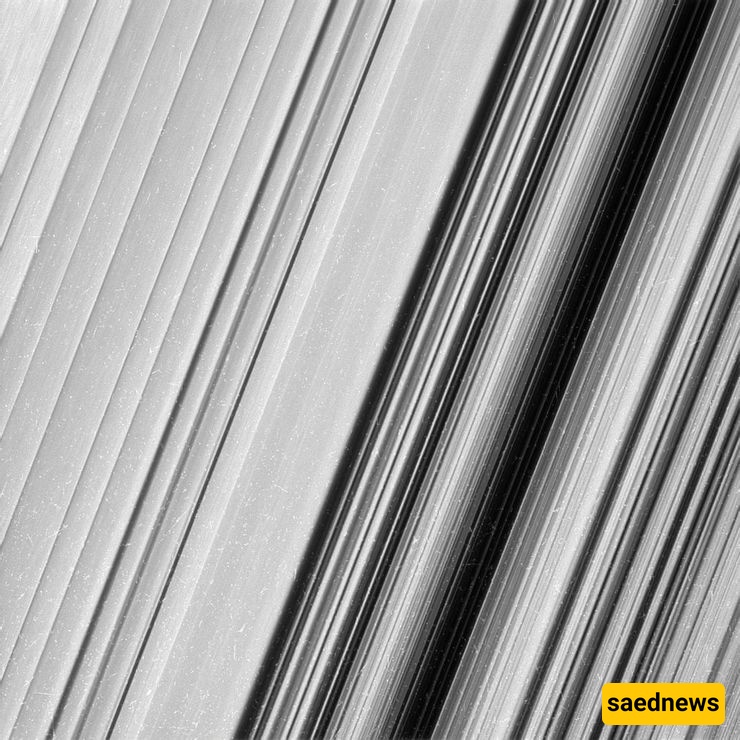
A Closer Look at Saturn’s Rings
NASA’s Cassini spacecraft captured the most detailed images of Saturn’s rings to date. Composed of ice, rock, and dust of varying sizes, these images reveal new structures, including hidden constellations of small moons.
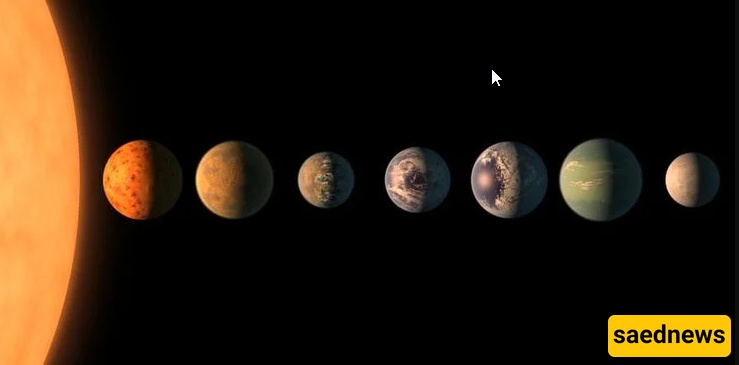
Seven Exoplanets
In February 2017, astronomers discovered seven Earth-sized planets orbiting the star TRAPPIST-1 near Aquarius. Located 39 light-years away, some planets may contain liquid water, raising the prospect of extraterrestrial life. It’s the first time in history Earth-sized planets have been found orbiting a star, though their habitability remains uncertain.
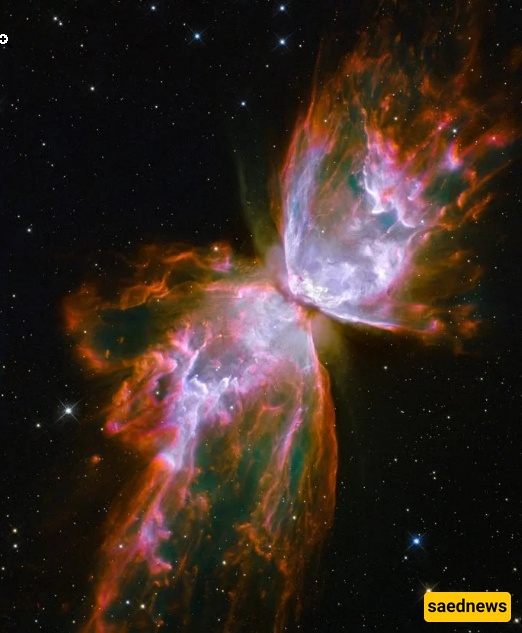
The Cosmic Butterfly
This stunning image from the Hubble Space Telescope captures a dying star exploding into two massive lobes of hot gas and debris. The star was five times the Sun’s size, producing one of the hottest locations in the galaxy at 20,000°C.
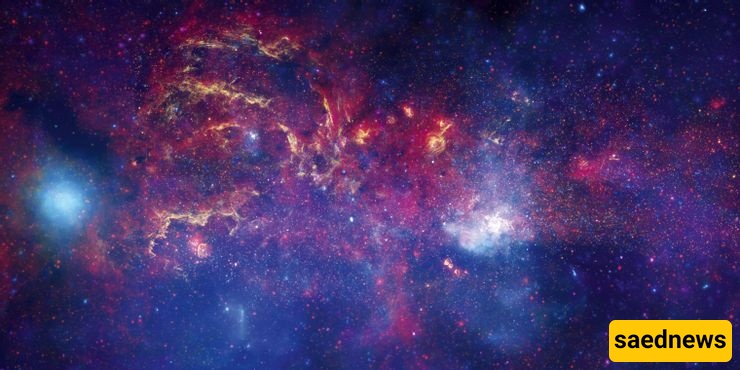
The Center of the Milky Way
Known as the “Heart of Our Home,” this composite of NASA’s Spitzer, Chandra, and Hubble telescopes shows the Milky Way’s center. Try spotting our planet—impossible, as Earth is tiny at this scale. Reflect on your own problems and consider how trivial they seem against such cosmic vastness.
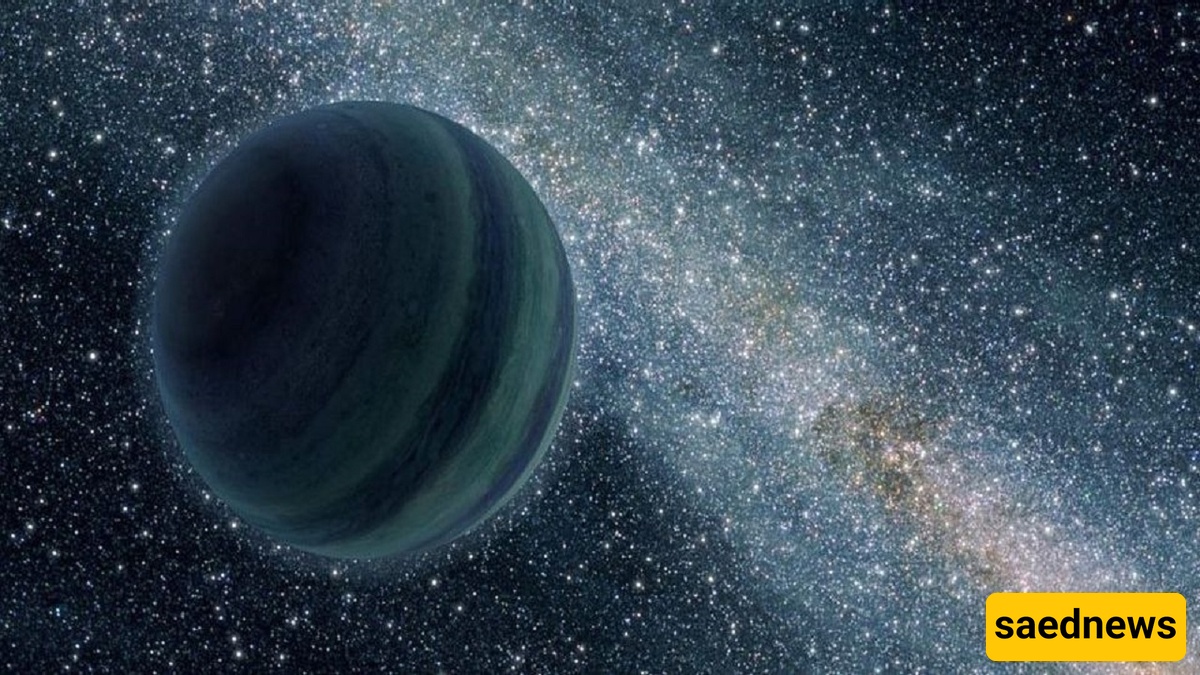
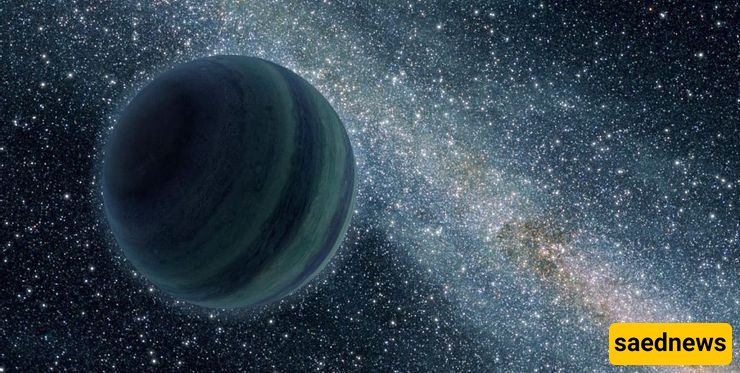
A Rogue Planet
Not all planets orbit stars. PSO J318.5-22 is a rogue planet drifting through space without a star. Jupiter-sized and 75 light-years away, it’s shrouded in clouds of molten iron and dust. Its extreme temperatures would make Venus look hospitable.
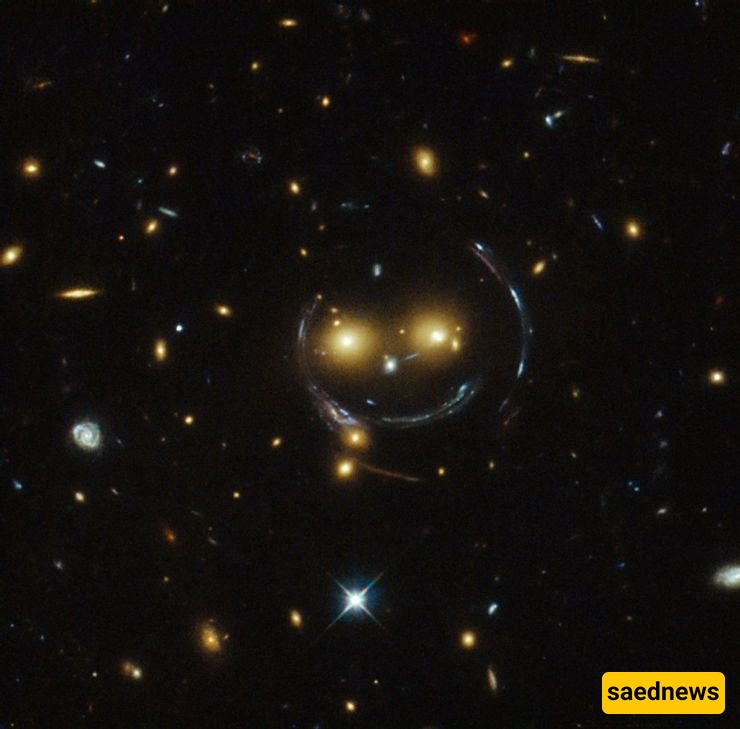
A Smiling Hubble Face
This cosmic grin is created by gravitational lensing, where a massive galaxy bends spacetime, distorting light from distant galaxies into arcs and circles—known as an Einstein Ring.
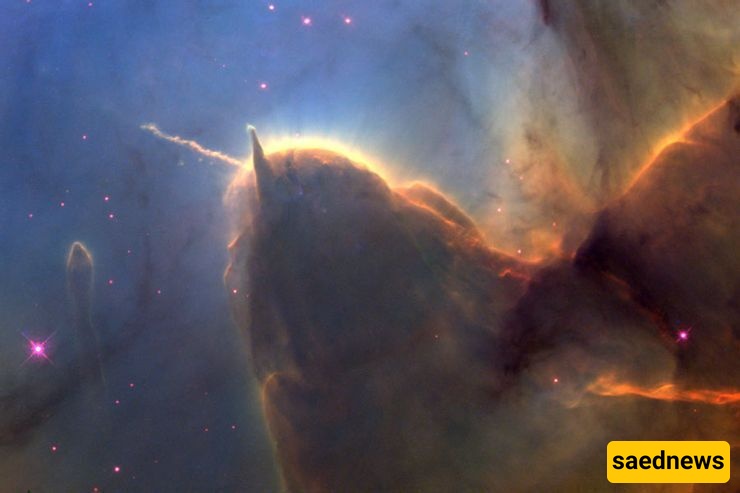
The First Unicorn in Space
Officially called the Trifid Nebula, it resembles a horned creature. Located 9,000 light-years away in Sagittarius, it’s best observed in August. Hubble’s color-enhanced image reveals hydrogen, sulfur, and oxygen in stunning detail.
Diamond Planet
This planet is made entirely of crystallized diamond. Twice the size of Earth, its value—by terrestrial standards—would be 26.9 million carats. Once a star, it now consists of diamond, graphite, and other silicates, making its owner potentially the wealthiest being in the universe.