SAEDNEWS: The azalea blooms in spring and stays in flower for several weeks. A potted variety, which is smaller in size, makes a perfect gift for Nowruz and Mother’s Day. Once the blooms in the pot have faded, transplant the azalea into your garden and plant it there.
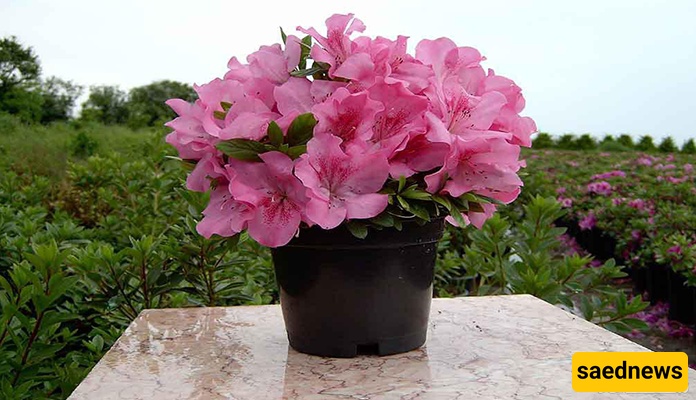
According to Saed News, citing Nazboo, the Azalea, scientifically known as Rhododendron simsii, is a popular ornamental plant commonly used for decorating gardens and greenhouses. This plant grows as a shrub or a relatively small tree, featuring large, multi-petaled flowers in red, purple, white, and yellow. Flowers may appear singly or in clusters.
Azaleas bloom in spring and remain in flower for several weeks. Potted Azaleas, which are smaller in size, make excellent gifts for Nowruz and Mother’s Day. Once the blooms fade, you can transfer the plant to a garden bed for continued growth.
Azaleas grow and bloom best in bright light throughout autumn and winter, but direct sunlight should be avoided. In summer, they thrive in shaded areas. Direct sun can burn leaves and petals and cause flower buds to drop, while insufficient light can result in pale leaves and poor bud formation.
Azaleas begin their resting period in early autumn, when flower buds develop. To produce buds, they need about 6–8 weeks of cool conditions, with daytime temperatures around 15–18°C (59–64°F) and nighttime temperatures near 10°C (50°F). Early artificial cooling in autumn encourages early winter blooming. Cooler ambient temperatures during flowering extend bloom longevity, whereas excessive heat can cause bud drop and leaf shriveling.
The soil should always remain moist, even in winter, as dryness can cause leaf drop. Use water free of minerals, such as rainwater or cooled boiled water. Mist the plant in summer and autumn to keep it cool and encourage flower bud formation.
Azaleas prefer humid environments. You can mist the plant or place the pot on a tray filled with pebbles. Fill the tray with water up to half the pebble height, ensuring the pot does not touch the water. Evaporation gradually provides the needed humidity.
Feed the plant from late April to mid-December. Mature Azaleas benefit from fertilizers high in potassium and containing iron, applied every two weeks. Avoid high-nitrogen fertilizers in late summer or early autumn, as these promote leaf growth at the expense of blooms. During flowering, use fertilizer at half the usual strength.
A mix of peat moss and leaf mold from pine trees is ideal for Azaleas. Covering the soil with 2–4 cm of pine bark also helps maintain acidity. A recommended planting mix is: one part peat moss, one part potting soil, one part sand, and one part perlite.
Repot every 2–3 years, ideally after flowering, choosing a slightly larger pot. Terracotta pots are preferable.
Prune after flowering, removing malformed or diseased branches, and trim shoots growing outside the plant’s shape. Pinching strong branches encourages side bud growth and maintains a bushy form.
From late spring to mid-summer, Azaleas can be propagated from semi-hardwood cuttings of young stems. Cuttings should be 8–10 cm long and planted in a mix of peat moss and perlite, with 2–3 cm embedded in the soil. Warmth (around 22°C / 72°F) and misting encourage root development. Once roots form, cool them for 2–4 weeks at 7°C (45°F) before lowering to 2°C (36°F). Cover cuttings with a clear plastic bag to retain moisture and maintain 16°C (61°F) with adequate light.
Yellowing leaves: Caused by poor drainage, nutrient deficiency, overfertilization, or pH imbalance.
Abnormal flowers or elongated stems: Prune after flowering.
White rings on leaves: Insect infestation; treat weekly with an appropriate insecticide.
Blackened leaves or flowers: Cold temperatures or chemical damage; move the plant to a warmer spot and avoid chemical sprays.
Spider mite damage (yellow leaves, webbing): Treat with miticide every two weeks and maintain humidity.
Pale green leaves: Insufficient light or excess soil calcium; move to a brighter location and water with rainwater or melted snow water.
Buds fail to open: Overwatering or excessive heat; adjust conditions and allow soil to dry between waterings.
Keep Azaleas away from warm indoor areas and water generously. Place the pot in the coolest part of the room with sufficient light.
Occasionally submerge the pot in water for a few minutes to improve plant health.
In spring, gentle rain can benefit the plant using lime-free water. Cooler storage conditions prolong flower life.
After flowering, remove faded blooms, place the pot in 6–8°C (43–46°F) conditions, reduce watering, and remove new buds from branches.