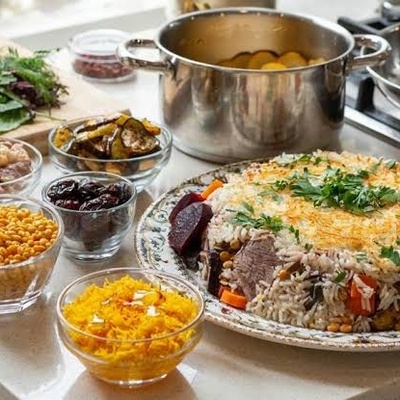
SAEDNEWS: Samnan Herb Rice is a traditional layered rice dish from Iran’s desert cuisine, combining fragrant saffron-infused rice with the distinctive aroma of rich Kermanshahi clarified butter. This elegant and flavourful dish is a wonderful choice for festive gatherings, family celebrations, and special weekend meals.
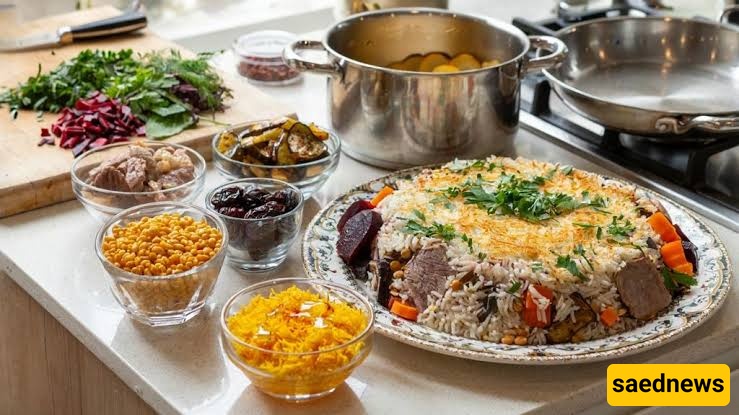
According to Saednews, Most Iranians associate Sabzi Polo (Persian herb rice) with fish and consider it a simple, quick meal. However, in Semnan Province, this traditional dish takes on a completely different form. Semnani Sabzi Polo is a beautifully layered rice dish filled with meat, fresh herbs, legumes, vegetables and dried plums. Finished with aromatic Kermanshahi butter oil and saffron, it has a distinctive flavour and fragrance.
If you are looking for a unique Persian rice dish to serve at a family gathering, dinner party or weekend meal, this traditional Semnani recipe is well worth trying.
500 g mixed fresh herbs (spinach, leek, beet greens, coriander and dill)
500 g lamb
500 g cooked spinach
1 eggplant
1 carrot
A few small onions
1 handful of dried plums (Aloo Bukhara)
2 tomatoes
Kermanshahi butter oil, as needed
Salt and black pepper, to taste
Sour grape powder (Ghooreh powder) or lemon juice, to taste
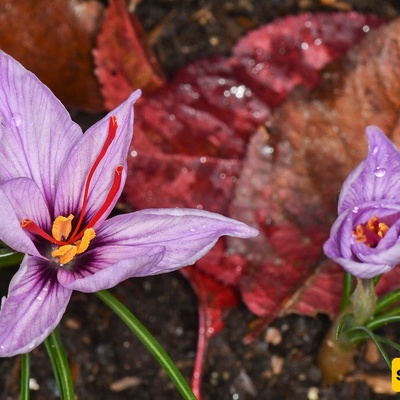
3 tablespoons concentrated brewed saffron
A few small potatoes
2 large potatoes (for the crispy rice crust)
3 small beetroots
6 cups rice
1½ cups cooked black-eyed peas
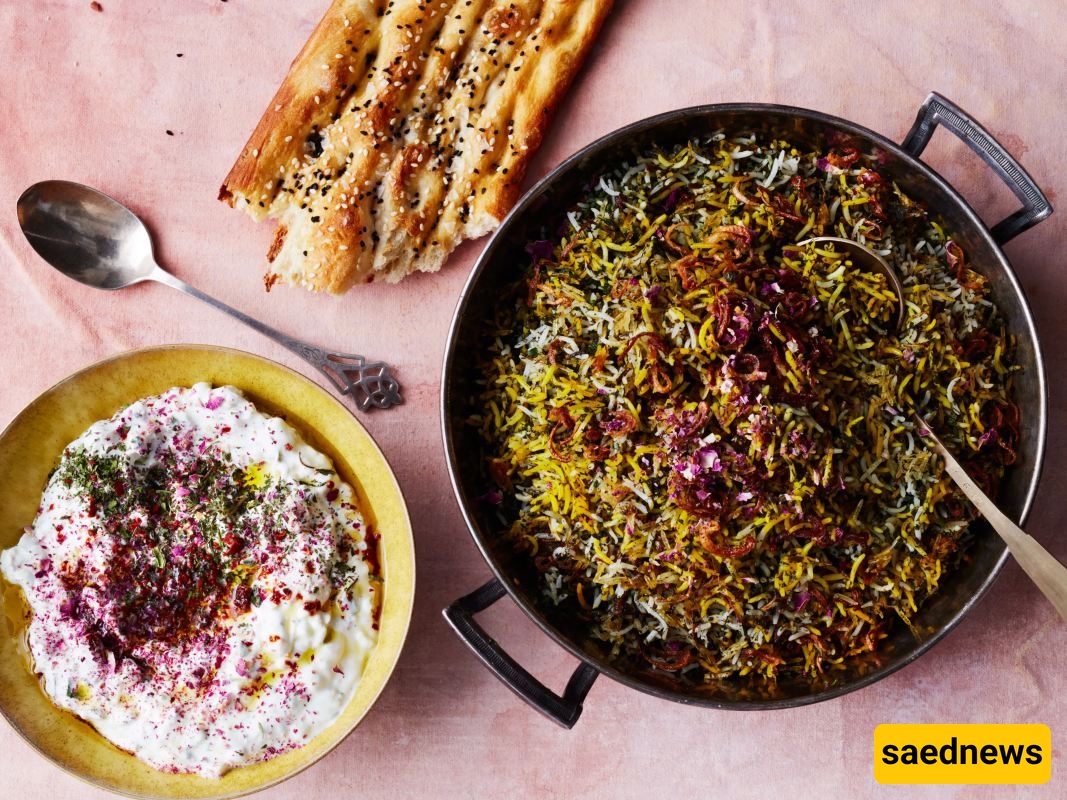
For the best results, use long-grain Iranian rice with minimal broken grains. Rice that has been harvested and stored for some time generally cooks up longer and is less likely to break.
Before cooking, soak the rice in salted water. This helps firm up the grains and remove excess surface starch.
Soak the rice in water and salt for 2–3 hours.
Bring a large pot of salted water to a boil. Add the soaked rice and cook for a few minutes, until the outside of the grains softens slightly while the centres remain firm.
Drain the rice in a colander and rinse gently with lukewarm water to remove excess salt and surface starch.
Heat some Kermanshahi butter oil in a pan and sauté the small onions until softened.
Add the lamb, salt, black pepper and a little brewed saffron. Cook until the meat is tender.
Finally, add grated or chopped tomatoes and allow the excess liquid to evaporate until the mixture thickens slightly.
This aromatic meat mixture will form one of the main layers of the rice.
Sauté the chopped fresh herbs in Kermanshahi butter oil until fragrant, darker in colour and reduced in volume.
In a separate pan, lightly sauté the cooked spinach before adding it to the herb mixture.
Finally, stir in the cooked black-eyed peas, taking care not to mash them.
Cut the eggplant into thin slices, sprinkle with salt and leave it briefly to release its bitter liquid. Rinse or pat dry, then fry until golden.
Cook or lightly sauté the carrot and small beetroots separately.
Besides adding flavour, these ingredients create beautiful colours throughout the different layers of the rice.
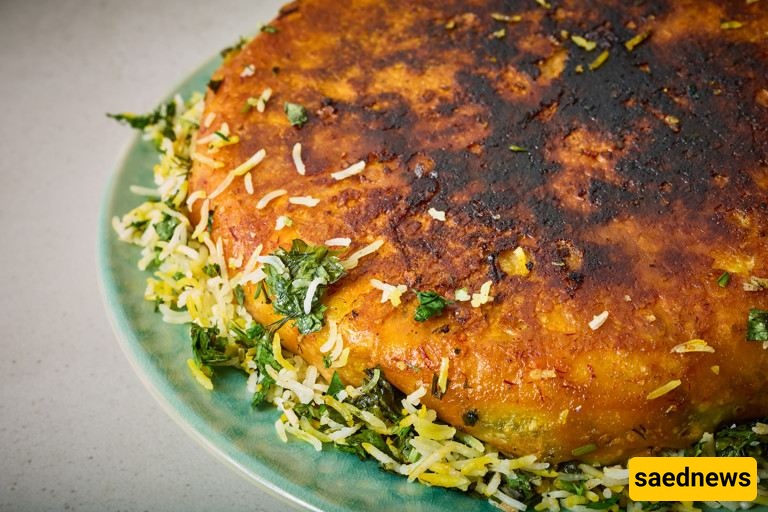
Cut the two large potatoes into moderately thick round slices.
Grease the bottom of a large cooking pot and arrange the potato slices neatly in a single layer.
This potato crust, known as Tahdig, prevents the rice from burning while creating a deliciously crispy and flavourful base.
Start by spreading a layer of drained rice over the potatoes and drizzle with a little brewed saffron.
Add some of the lamb and onion mixture, spreading it evenly over the rice.
Next, add a layer of sautéed herbs and black-eyed peas.
Arrange the fried eggplant, carrot, beetroot and dried plums in subsequent layers.
Continue layering the ingredients, finishing with a final layer of rice.
Pour the remaining brewed saffron and a few tablespoons of Kermanshahi butter oil over the top.
Cover the pot with a tightly fitting lid.
Initially, cook over high heat for a few minutes until steam begins to build inside the pot.
Then reduce the heat to low and allow the rice to steam for approximately 45–60 minutes.
Avoid lifting the lid during cooking, as keeping the steam inside helps preserve the rice's aroma and flavour.
Once the steaming time is complete, taste a few grains of rice from the edge of the pot.
The rice should be tender inside, with the grains remaining separate and fluffy.
If necessary, continue steaming over low heat for a few additional minutes.
Balance the sourness: Add sour grape powder or lemon juice towards the end of preparation to preserve its fresh tangy flavour and complement the richness of the Kermanshahi butter oil.
Control the moisture: Make sure the herbs and vegetables are not too wet before layering. Excess moisture can make the rice mushy.
Let the rice rest: After turning off the heat, allow the rice to rest for a few minutes. This helps the flavours settle and the aroma develop.
Use high-quality saffron: Fresh, strongly brewed saffron gives the rice a more vibrant colour and a richer, more consistent aroma.
Use butter oil in moderation: Kermanshahi butter oil has a powerful aroma, so adding too much can make the dish overly rich.
Semnani Sabzi Polo is much more than ordinary Persian herb rice. Its combination of tender lamb, aromatic herbs, legumes, colourful vegetables, dried plums and fragrant saffron creates a hearty and festive dish that brings traditional regional Persian cooking to the table.
Serve it hot with its crispy potato Tahdig and enjoy a distinctive speciality from Semnan Province.