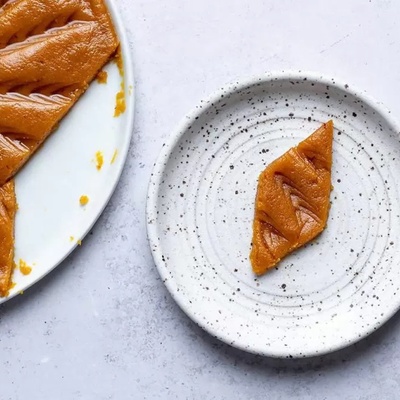
SAEDNEWS: Stringy halva is caused by an imbalance in ingredients or improper cooking techniques. It can be prevented by choosing the right flour and maintaining the correct ingredient ratios.
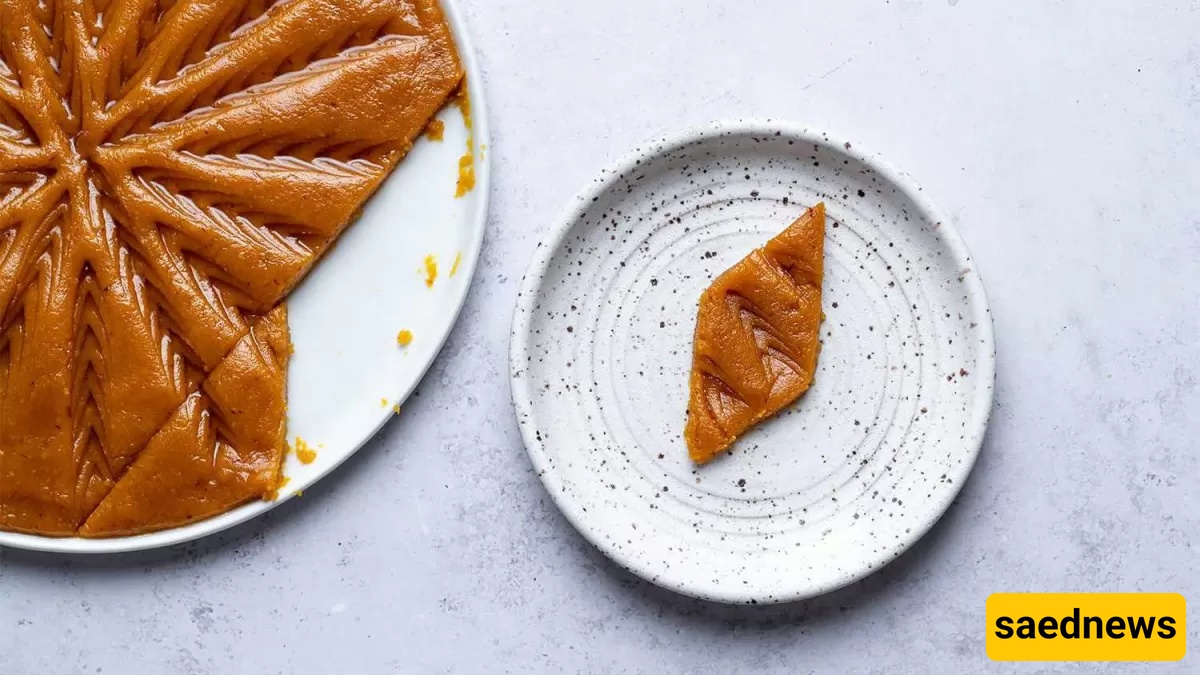
According to Saednews, Halva is one of Iran’s most beloved traditional desserts, commonly served at everything from casual gatherings to memorial ceremonies. Its soft, delicate, slightly elastic texture reflects the cook’s skill and the quality of the ingredients. However, many people encounter problems when making halva, such as sugar crystallization, excessive firmness, or a loose, unappealing consistency. One of the most common questions is: Why does halva become stretchy?
Halva is made from a simple combination of flour, oil, sugar, and saffron, but achieving the perfect texture requires careful control of how these ingredients interact. The final consistency depends on the relationship between the starch in the flour, sugars, and fats. Ideally, halva should be soft, delicate, slightly porous, and melt easily in the mouth. When the balance is disrupted, it can become stretchy, hard, or grainy.
Stretchy halva is often associated with excessive gluten development or improper sugar crystallization. Here are seven common causes and how to prevent them.
The most common reason halva becomes stretchy is the type of flour used. Regular wheat flour, especially bread flour, contains relatively high levels of gluten-forming proteins. When mixed with liquid and subjected to heat, these proteins can form an elastic network. Using high-gluten flour can make halva rubbery and stretchy, particularly when it is stirred excessively.
Solution: Use pastry flour or low-protein wheat flour. Rice flour is also an excellent option for making gluten-free halva with a softer texture. If you only have regular wheat flour, try replacing a portion with rice flour or cornstarch.
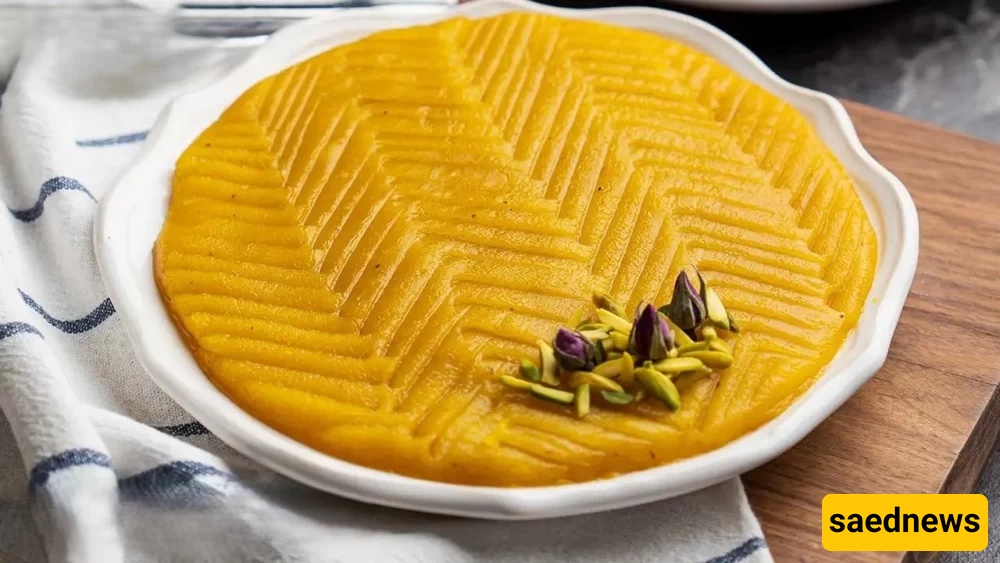
Toasting flour is an essential step in making halva. It removes the raw flour smell and gives the dessert its characteristic golden-brown color. However, excessive toasting can cause the flour to become overly dry and may affect its ability to absorb oil and syrup evenly, resulting in a firm, dense texture.
Solution: Toast the flour over low heat, stirring continuously. Once the raw smell disappears and the flour reaches a uniform light golden-brown color, usually after 10–15 minutes depending on the heat and quantity, remove it from the stove. Avoid letting it become dark brown or burnt.
Halva requires a proper balance of fat from oil and moisture from the sugar syrup. Too little oil can make the dessert dry and firm, while overly concentrated syrup can encourage sugar crystallization as the halva cools, affecting its texture.
Solution: Measure the ingredients carefully. A basic ratio to try is:
2 cups of flour
1 cup of oil
2 cups of sugar
2 cups of water
Bring the syrup to a boil and allow it to dissolve completely, but avoid reducing it until it becomes excessively thick.
Adding syrup to toasted flour is one of the most sensitive stages of halva preparation. If the syrup is cold or lukewarm, it may be more difficult to distribute it evenly through the flour and oil mixture, resulting in an inconsistent texture.
Solution: Prepare the syrup while the flour is toasting. Add the hot syrup to the hot flour mixture carefully, stirring continuously to distribute the liquid evenly. Expect steam to form during this step.
Once the syrup has been added, halva should be stirred gently until the ingredients are evenly combined. Excessive or vigorous stirring, especially as the mixture thickens, can contribute to a dense or rubbery texture, particularly when wheat flour with a high gluten content is used.
Solution: Stir only until the mixture becomes smooth and cohesive and the oil begins to separate from the halva. Turn off the heat and allow the dessert to rest in the pan rather than continuing to stir it unnecessarily.
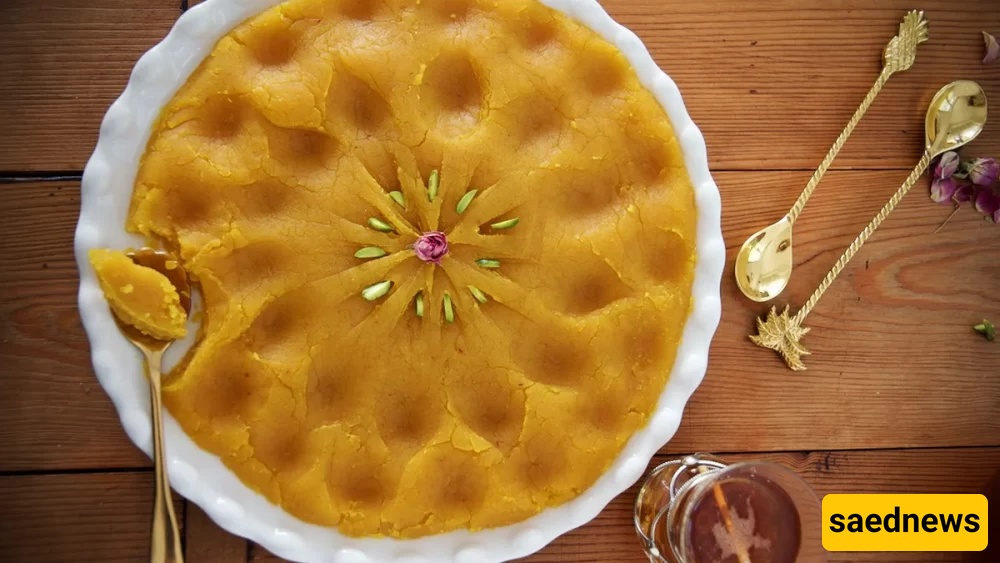
Refined white sugar is generally a reliable choice for halva. Brown sugar or sugar that has absorbed moisture may affect the syrup’s consistency and the final texture. Substituting honey or molasses for part of the sugar can also change the moisture balance and influence how the halva sets.
Solution: Use fresh, good-quality white sugar. If you want to add honey or molasses for extra flavor, use a moderate amount and adjust the liquid in the recipe accordingly.
The way halva cools can influence its final consistency. Placing it directly in the refrigerator immediately after cooking may cause it to firm up quickly and can make its texture seem less tender. However, rapid cooling alone is not necessarily the main cause of stretchiness.
Solution: Transfer the cooked halva to a serving dish, smooth the surface, and let it cool gradually at room temperature. Once cooled, cover it and store it appropriately. For food safety, refrigerate leftovers that will not be eaten within a suitable period.
Follow these practical tips for a smoother, more delicate result:
Choose the right flour: Use pastry flour or low-protein flour. You can also try a mixture of wheat flour and rice flour in a 3:1 ratio.
Toast the flour carefully: Cook it over low heat until the raw smell disappears and it reaches a light honey-golden color.
Use hot syrup: Prepare the syrup in advance and add it while hot.
Stir gently: Mix only until the ingredients are fully combined. Avoid prolonged, vigorous stirring.
Allow the halva to rest: Let it stand for two to three hours at room temperature before serving so its texture can settle and its flavors can develop.
If your halva has already become stretchy, you may be able to improve its texture using these methods.
1. Reheat with a little liquid
Place the halva in a nonstick pan and add a few tablespoons of hot water or rosewater. Heat it gently, stirring until the added moisture is incorporated and the mixture becomes softer. Add the liquid gradually to avoid making the halva too loose.
2. Add a little oil
If the halva is particularly dry and firm, add one or two tablespoons of oil and stir gently over low heat until incorporated. This may improve its softness, although it will not necessarily reverse a strongly elastic texture caused by the flour.
Final tip: The type of flour, the balance of oil and syrup, and the way you mix the ingredients are the most important factors to consider when troubleshooting stretchy halva.