SAEDNEWS: Making Nazri Sholeh Zard has many tips and tricks; if you follow them all, you’ll end up with a Sholeh Zard that is incredibly flavorful and aromatic.
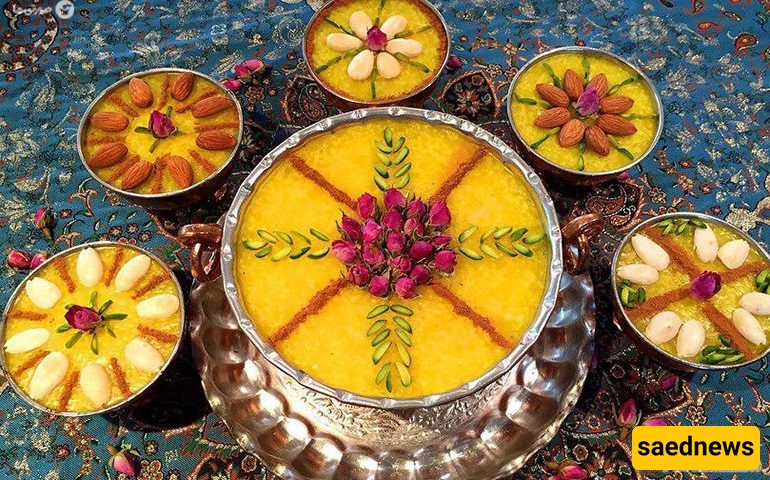
According to Saed News’ cooking section, Sholeh Zard is a traditional Iranian dessert renowned for its exceptional aroma and flavor. While cooking, the kitchen fills with the fragrances of saffron, rose water, and Iranian rice, creating a deeply comforting atmosphere. This dessert is commonly prepared during Ramadan and offered as a charitable dish (nazri) during Muharram and Safar.
During Muharram, giving nazri becomes widespread, and Sholeh Zard is one of the most popular choices. Here’s a simple guide to making Sholeh Zard for 100 people, including both traditional and molded versions.
Rice: 20 cups
Sugar: 40 cups
Water: 140 cups
Rose water: 10 cups
Slivered almonds: 1.5 kg
Slivered pistachios: 1 kg
Saffron: 4 mesghal (~24 grams)
Cardamom: 5 tablespoons
Butter: 400 g
Ground cinnamon (for garnish): as needed
Proportions: The ingredient ratios are based on rice. Water should be 7 times the rice volume, sugar 2 times, and rose water half the rice volume. Always measure all ingredients with the same cup used for rice. Slivered almonds and pistachios can be reduced if desired.
Rice: Soak rice for at least 6 hours. If using semi-broken rice, 4 hours is sufficient.

Sugar: Add sugar only after the rice is fully cooked. Adding sugar too early prevents the rice from cooking properly. Some prefer partially intact rice grains in Sholeh Zard, while others like it fully soft—add sugar when your desired texture is reached. To test sweetness, let a small sample cool before tasting.

Almonds: Soak slivered almonds in a mix of water and rose water for 20–30 minutes, then drain and add to the pudding for better flavor.
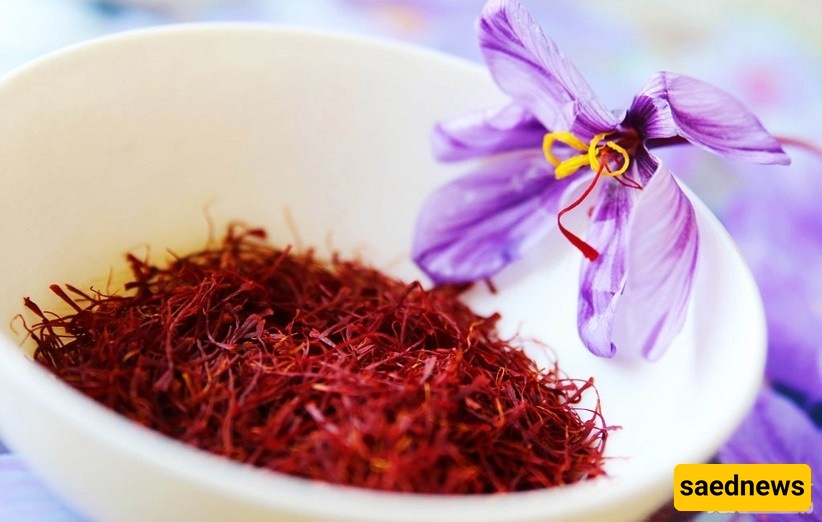
Saffron: Saffron is key to the color, aroma, and flavor of Sholeh Zard. Use genuine saffron: press a strand between your fingers—if no oil is released, it’s pure. Avoid fake, shiny saffron.
Cardamom: Use whole cardamom pods rather than powder to preserve color. For powdered cardamom, wrap in cloth, steep in hot water for 2 hours, and use only the liquid. For whole pods, crush lightly, steep in hot water on indirect heat for 30 minutes, then add only the infused water.

Soak rice in 140 cups of water overnight. The next day, cook on medium-high heat until half the water evaporates. Do not stir at this stage to prevent excess water.
Once half the water is gone, stir constantly until the mixture thickens completely. For molded Sholeh Zard, cook it slightly thicker.
Gradually add dissolved saffron, stirring to achieve the desired color. Saffron deepens in color over time, so add in stages.
Add sugar and stir well. Adding sugar first delays saffron coloring.
Add slivered almonds and cook for 20 minutes. Then add cardamom, butter, and rose water. Melt butter over indirect heat before adding.
Cover and let rest for 10 minutes. To prevent sticking, place bricks under the pot for even heat distribution. After cooking, allow to sit for 30 minutes before serving.
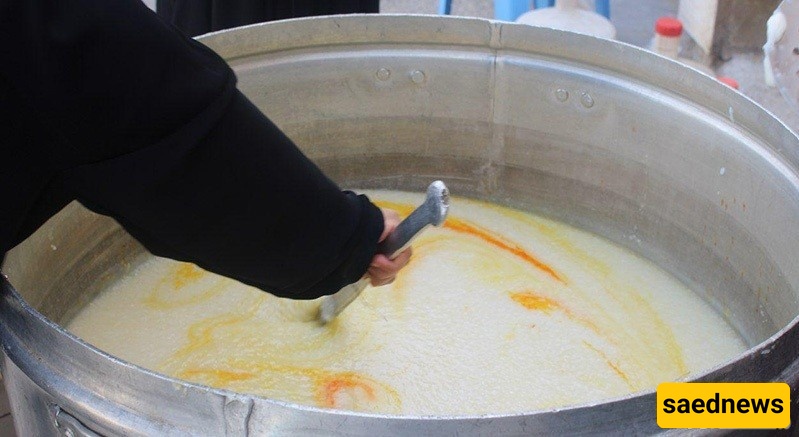
Serve hot, garnished with slivered almonds, sliced almonds, pistachios, ground pistachio, and cinnamon.
For molded Sholeh Zard, pour the hot pudding into greased silicone or plastic molds. After cooling, refrigerate for 12–24 hours before unmolding.
How do I prevent Sholeh Zard from releasing water?
Avoid stirring until half the water has evaporated.
Use a flame diffuser at the end and cover with a cloth to allow the pudding to steam and thicken.
What if the pudding isn’t sweet enough?
If measurements were accurate, this is rare. Otherwise, add a little sugar and simmer for 15–20 minutes to prevent excess water. Always taste as you add sugar.