SAEDNEWS: Inside this intact burial chamber, discovered on November 26, 1922, an astonishing collection of artifacts belonging to Tutankhamun, the ancient Egyptian pharaoh, was uncovered. He had died at around 18 or 19 years of age, after a reign of nine years.
According to Saednews history news report, on the afternoon of November 26, 1922, archaeologist Howard Carter and a team of Egyptian workers made one of the most significant archaeological discoveries in history. As they dug deeper into a stone tomb in the Valley of the Kings, they uncovered a door decorated with seals of the royal Egyptian necropolis and Pharaoh Tutankhamun. They were on the verge of revealing one of the most remarkable finds in archaeology.
Carter later wrote in his diary: “With increasing excitement, we cleared away the last bits of rubble from the floor of the passage in front of the door until only a clean, sealed doorway remained.” He removed a few loose stones from the upper corner and inserted an iron rod and a lit candle through the gap to check for empty space and ensure the air was not toxic.
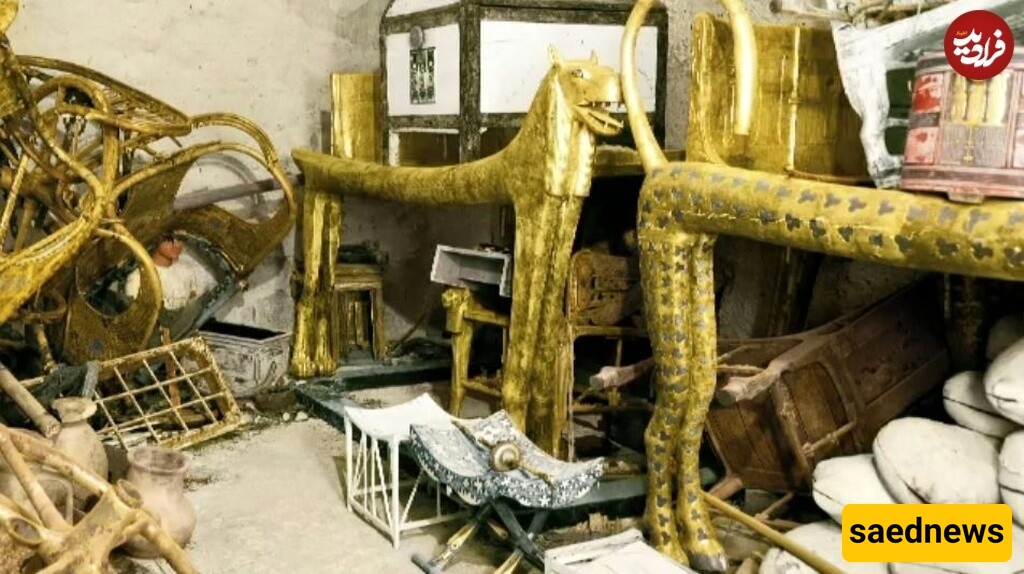
Carter was the first to peer into the dark chamber. He described the moment in writing: “It took a while for my eyes to adjust. But as soon as they became accustomed to the light, the interior of the chamber gradually came into view… a strange and wonderful mixture of extraordinary and beautiful objects piled upon one another.”
Standing behind him was his wealthy patron, George Herbert Carnarvon, who asked whether anything could be seen. Carter replied breathlessly: “Yes, wonderful things!”
Carnarvon, Carter, and the others held their candles through the opening and stared inside.
As writer Jo Marchant noted in The Smithsonian in 2022, “What they saw was undoubtedly still the most astonishing archaeological discovery of all time.”
Inside the tomb lay a vast treasure belonging to Tutankhamun, a pharaoh of Egypt’s New Kingdom (c. 1550–1070 BCE) who had largely been forgotten. As a result, his tomb had escaped the extensive looting suffered by many others in the Valley of the Kings.
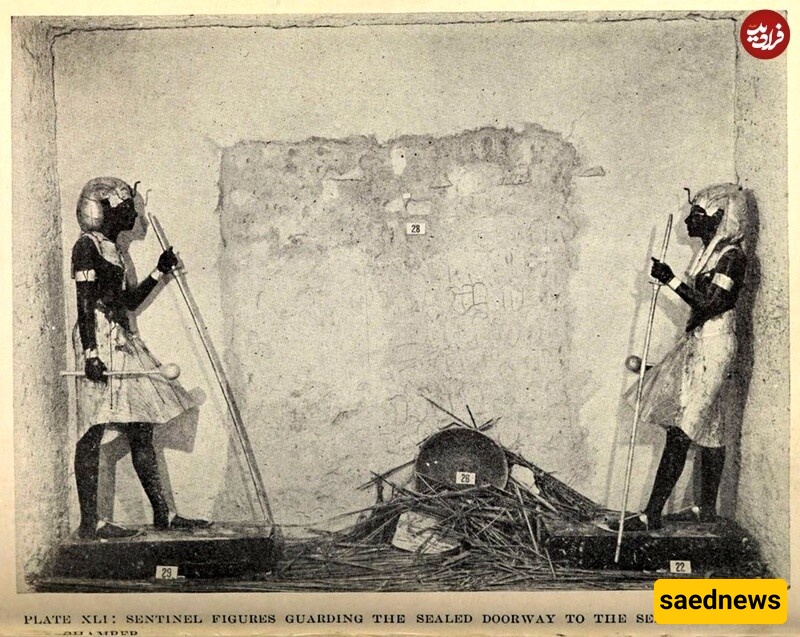
From the darkness of the chamber emerged black ebony statues of the king holding staffs, wearing linen kilts and golden sandals. There were gilded benches with animal-headed designs, beautifully painted decorated coffins, dried flowers, marble vessels, black shrines adorned with a golden serpent, white chests, finely carved chairs, a golden bed, and countless boxes, stools, and overturned chariot fragments still shimmering with gold.
Carter’s team included Egyptian foremen whose contributions were largely omitted from historical accounts. Together, they carried out months of meticulous archaeological work, transporting newly discovered artifacts on wooden sledges for cataloging and study. Visitors and journalists flocked to Luxor near the Nile to witness the excavation.
It took another fourteen and a half months before archaeologists finally reached the burial chamber and the iconic golden funerary mask in February 1924. (Lord Carnarvon, Carter’s financial supporter, had died a year earlier from blood poisoning, fueling rumors of a “mummy’s curse.”)
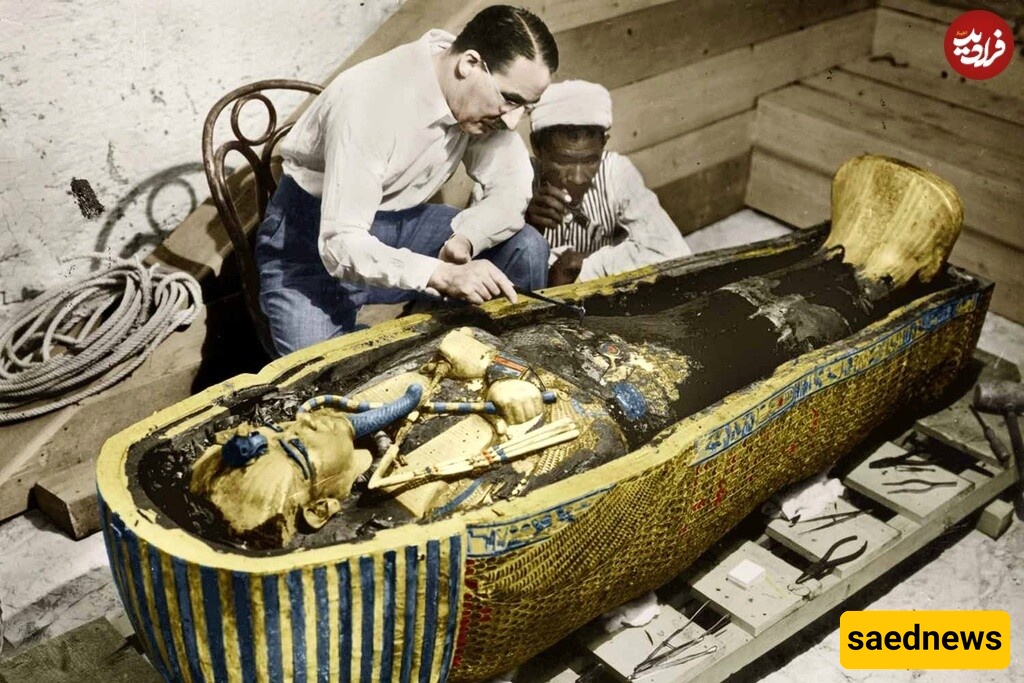
Eventually, researchers confirmed that the pharaoh’s tomb was intact and his sarcophagus remained undisturbed. Carter wrote: “The moment we had been waiting for… that this chamber is indeed the tomb of Tutankhamun.”
He added words reflecting the sacred atmosphere of the site: “Our emotions were overwhelming… most of them unspoken. Yet in that silence, you could almost hear the ghostly footsteps of mourning figures.