SAEDNEWS: Seyed Abbas Araghchi stated that nuclear technology belongs to his country and cannot be eliminated through bombing or military intervention. He emphasized that such capabilities are not something that can be destroyed by force, regardless of the scale of military action.
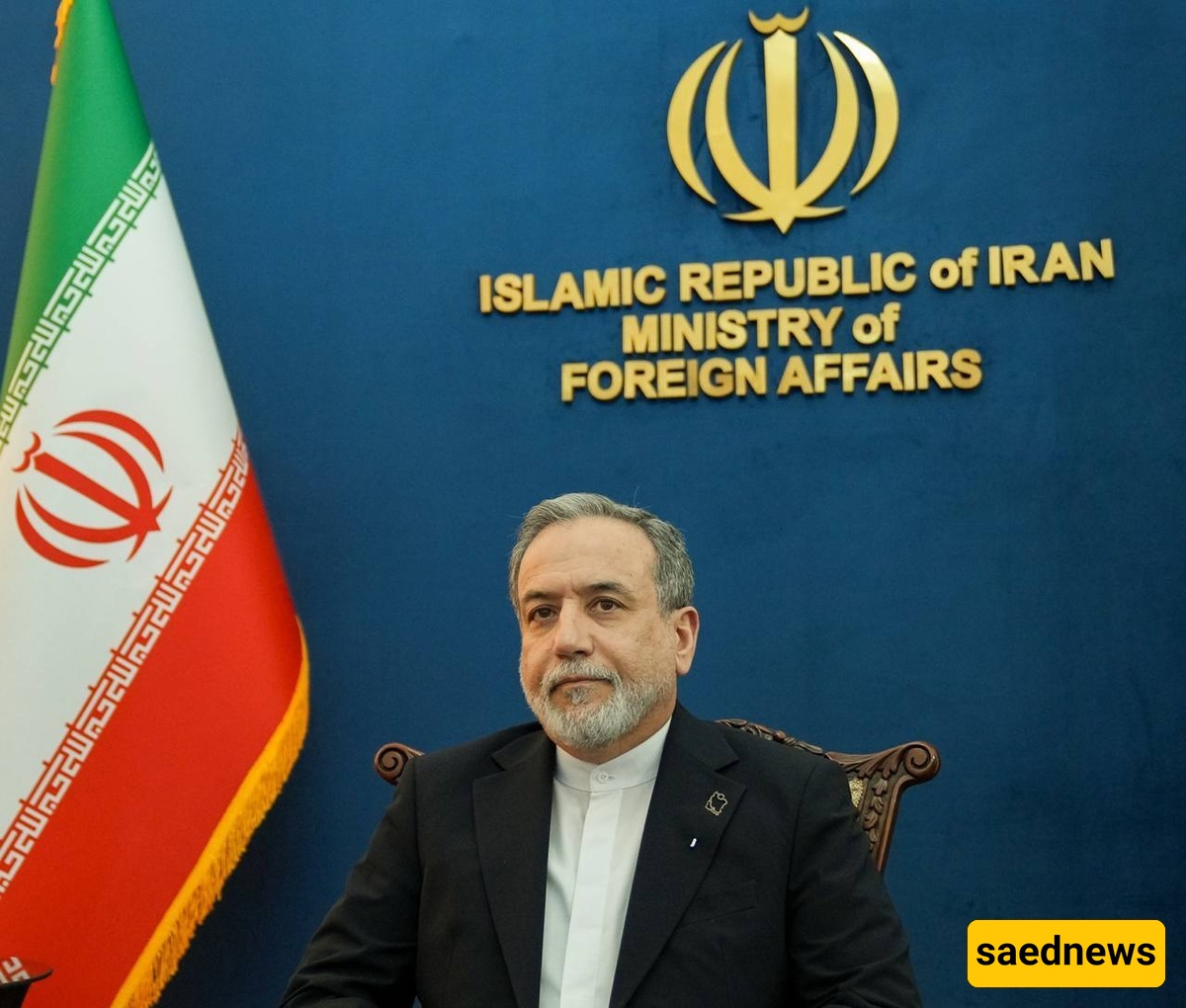
According to the political desk of Saed News, Iran’s Foreign Minister, Abbas Araghchi, said in an interview with MSNBC that there is no military solution to Iran’s nuclear program, emphasizing that diplomacy remains the only viable path forward.
Araghchi stressed, “One point must be emphasized: there is no military solution to Iran’s nuclear program. This has already been tested.”
He noted that Iran’s facilities had previously been subjected to large-scale attacks and its scientists assassinated, yet the nuclear program was not destroyed. “Why? Because this program has been developed by our own scientists. This technology belongs to us and cannot be eliminated through bombing or military action,” he said.
He added that this reality is precisely why the United States has returned to the negotiating table in search of an agreement. “We are ready for peace. We are ready for diplomacy, just as we are ready to defend ourselves.”
Araghchi reiterated that if the goal is to ensure Iran’s nuclear program remains peaceful, diplomacy is the only solution.
Addressing speculation surrounding uranium enrichment, he rejected claims that Iran had proposed suspending enrichment or that the U.S. had formally demanded “zero enrichment.”
“These speculations are not correct,” he stated. “We have not proposed any suspension, and the American side has not requested zero enrichment.”
He clarified that current discussions focus on ensuring Iran’s nuclear program — including enrichment — remains peaceful, alongside sanctions relief for Iran in return for confidence-building measures.
When asked about his message to U.S. President Donald Trump and members of Congress, Araghchi said previous American administrations had tried “war, sanctions, snapback mechanisms, and everything else,” but none had succeeded.
“If you speak to the Iranian people with respect, we will respond in the same language,” he said. “But if you speak with the language of force, we will respond accordingly. Iranians have shown that they are a dignified people. We respond only to respect.”
Araghchi revealed that recent talks in Geneva had been constructive. The two sides discussed nuclear-related issues and U.S. sanctions, reaching an understanding on guiding principles and the possible framework of an agreement.
Iran was asked to prepare a draft proposal for further discussion. Araghchi said this is the normal course of international negotiations and expressed hope that serious text-based negotiations could begin soon.
He emphasized again that military action would only complicate matters and potentially have catastrophic consequences not just for Iran but for the broader region and international community.
Araghchi highlighted the constructive role played by Rafael Grossi, Director General of the International Atomic Energy Agency, in recent discussions. Grossi provided technical proposals aimed at ensuring Iran’s program remains exclusively peaceful.
“There are both technical and political commitments,” Araghchi explained. “We are working on the technical aspects that would guarantee the program cannot deviate from peaceful purposes — similar to what was done in 2015, and perhaps even better.”
He said he remains in direct contact with Grossi and U.S. interlocutors, including Steve Witkoff and Jared Kushner, to work toward a fair and balanced agreement.
Araghchi described a “win-win” deal as one in which the United States is fully assured that Iran’s nuclear program will remain peaceful, while sanctions against Iran are lifted.
He warned that a military option would only worsen the situation. “Diplomacy is available. An agreement is achievable — but it must be fair and mutually beneficial.”
Responding to questions about anti-American slogans heard in Iran since 1979, Araghchi distinguished between the American people and U.S. government policies.
“We do not consider the American people our enemies,” he said. “We consider the policies of the U.S. government toward Iran to be hostile. When these hostilities stop, perhaps we can think about a different kind of relationship.”
He referenced the 2015 nuclear agreement as an example of past diplomatic engagement, noting that Iran did not view that experience positively due to subsequent developments.
“Once we reach a good agreement that is respected and implemented in good faith by the U.S. government, I believe the situation can begin to change,” he concluded.