SAEDNEWS: On Tuesday, February 3, when Masoud Pezeshkian announced on his X account that the Foreign Minister had been instructed to begin talks with a U.S. representative, a politically entrenched faction predictably started raising objections.
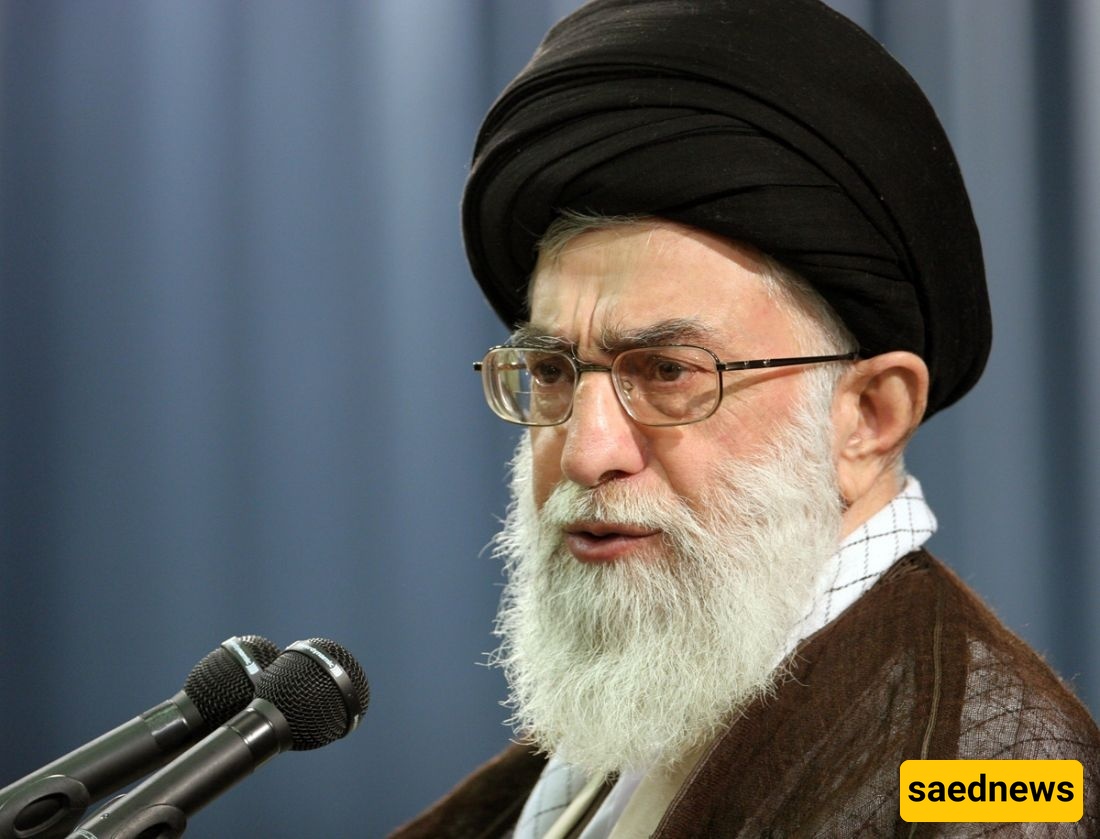
According to the Political Service of Saed News, citing Iran newspaper, a news website aligned with a particular political faction has, in various articles, often directed its criticism toward the president. However, it has also clearly framed the principle of negotiation as contrary to national interests. The site has gone to great lengths to suggest a meaningful divide between the perspectives of the president and the Supreme Leader.
In one article, the site states:
"When the Supreme Leader explicitly says, 'Negotiating with the United States not only brings no benefit but also causes harm,' and 'Negotiation with this government is neither wise nor honorable,' what does your insistence on testing this dead-end path again mean, if not disregarding the country’s 20 years of experience and crossing the red lines set by the Supreme Leader? Mr. Pezeshkian! Our specific question to you is: Will you take responsibility for the consequences of this decision?"
In another piece addressed to Pezeshkian, the site adds:
"Mr. President! The key to solving problems is not negotiation; the key is strengthening the nation. The path you have chosen does not lead to the lifting of sanctions but to national humiliation. 'Security' and 'deterrence' are not products of negotiation tables in Vienna or Geneva; they are the result of efforts that kept war away from Iran’s borders and extended the strategic depth of the Islamic Republic to the Mediterranean."
It appears that the main orientation of this media outlet—and indeed the stance of some other political figures aligned with the same faction—is opposition to negotiation. They do not see diplomacy as guaranteeing or safeguarding national interests. Although this news and analysis line claims to distinguish itself from those opposing “the field” versus “diplomacy,” in practice it undermines diplomatic options.
What is particularly noteworthy, however, is the deliberate ignorance by some political groups of the framework and decision-making processes within the Islamic Republic. These entities, which have been present in the country’s political structures and institutions for decades, portray negotiations with the U.S. as solely the decision of the president or government. Using this as a pretext, they question the principle of dialogue and even issue warnings for the potential failure of negotiations. More strikingly, they resort to a misleading tactic: suggesting a rift between the government and the Supreme Leader. This claim contradicts the political approach and behavior of President Pezeshkian. Before the start of five rounds of indirect talks between Iran and the U.S., on March 2 last year, he stated in parliament:
"I believed that dialogue was better, but the Supreme Leader said that we will not negotiate with the United States, and we will proceed in line with the Supreme Leader’s guidance."
Previous negotiations led by Araqchi and Whitaker were also initiated following decisions made by the Supreme National Security Council.
Earlier, in September, the Supreme Leader emphasized that all citizens, officials, and those with influence in words and pen must wholeheartedly safeguard and strengthen the sacred and immense unity of the nation. He added: “Everyone should support the country’s servants, especially the diligent president.”
Why self-serving claims about negotiation are dangerous
Beyond their inaccuracy, portraying a supposed difference between the government and the Supreme Leader on negotiations carries irreparable political and social consequences—especially under current national circumstances. At a time when the Supreme Leader repeatedly emphasizes internal cohesion, fragmenting society and mobilizing groups into artificial poles of supporters and opponents—particularly within state institutions—runs counter to these calls for unity and is against national interests.
Over past years, alongside the costly and misguided trend of polarizing major issues, many national figures and experts have warned that foreign policy should not be a field for factional or political score-settling. These warnings reflect the lessons learned and the burdens imposed on the country by such political behavior. In today’s context, when reason and prudence demand a unified voice from inside Iran—especially from institutions and political groups supporting Iranian negotiators—exaggerating self-made claims serves neither the people nor the state. Instead, it fuels analyses and interpretations that Iran’s adversaries can exploit, presenting them as signs of a lack of internal cohesion in high-level decision-making.
Evidence, including official positions of the Islamic Republic, reports, and even foreign media accounts, indicates that Tehran has entered negotiations following its core principles and strategic vision. Analyses framing Iran’s presence at the negotiating table as harmful, regardless of outcomes, mainly reinforce foreign narratives portraying engagement as a weakness.
What is clear is that the decision to negotiate with the U.S. is a decision of the Islamic Republic, while ensuring the country’s interests through negotiation is the government’s and the foreign ministry’s mandate. Of course, negotiation is not the only decision of the state, nor is dialogue the government’s only duty. Linking all aspects of the country’s wellbeing—positive or negative—solely to negotiations is neither accurate nor defensible. Diplomacy does not compete with defense capabilities; it complements and strengthens them.