SAEDNEWS: In the textiles used during the Nasserid era, now on display in museums both in Iran and abroad, a rich variety of colors can be seen—especially green. A closer look at the garments reveals that different tribes and communities favored different colors in their clothing.
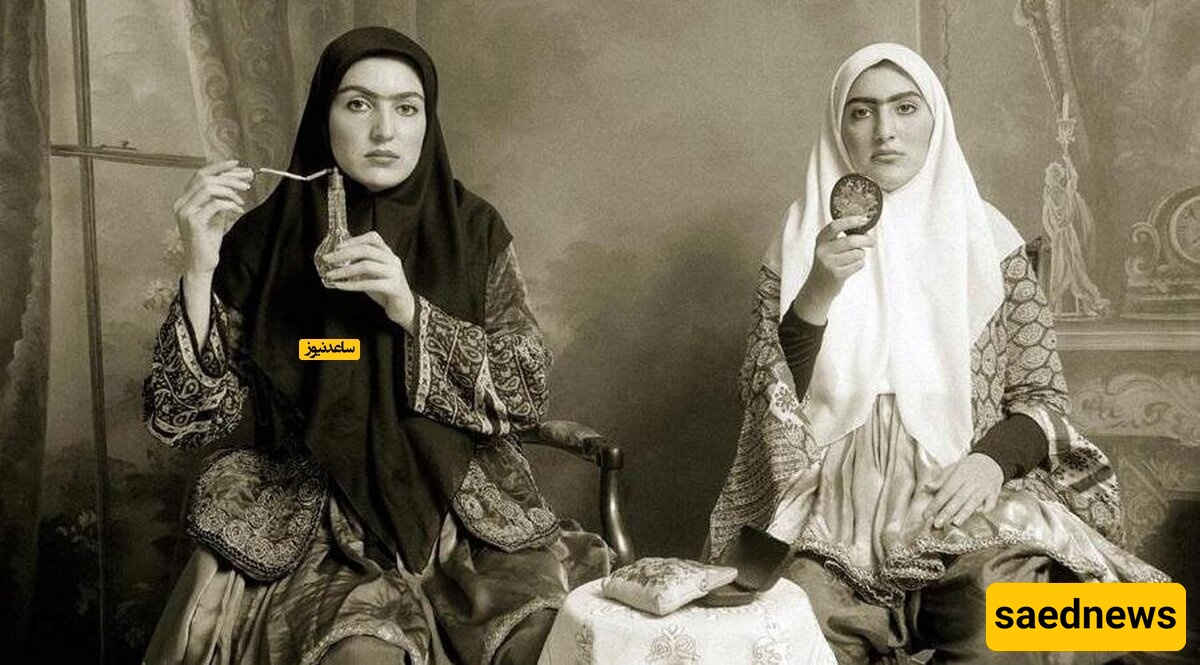
According to the History Service of Saed News, citing FaraDide, our ancestors mostly wore white or colorful clothing. Over time, however, darker shades became more common—a trend that began in the early Pahlavi era and has peaked in recent decades. In the past, vibrant colors were abundant in all aspects of life, from clothing to paintings and artworks. We spoke with Tehran researcher and historian Dariush Shahbazi to explore this transformation.
Shahbazi explains that to understand the colors people in the capital favored historically, we should look at the tradition of enamel work (minakari) in Iran, a craft dating back 1,500 years before Christ.
During the Qajar era, especially under Naser al-Din Shah, enamel works such as pen cases, book covers, hookahs, snuff boxes, earrings, brooches, and lamp bases frequently showcased blue, indigo, and yellow as dominant colors.
Silk, brocade, and white atlas fabrics
Textiles from the Naser al-Din period, now preserved in museums at home and abroad, reveal a wide palette, especially green. Examining clothing shows that various ethnic groups and communities used different colors.
French traveler Jean Chardin notes that during the Safavid period, women wore long white coverings when leaving their homes, often made from brocade or thick atlas fabric, decorated with gold and silver threads or delicate embroidery.
White: The Dominant Color
Spanish ambassador Garcia de Silva observed during Shah Abbas’s reign that women generally wore loose white garments and leather shoes in multiple colors. He also notes that women outside the home commonly wore white chadors. Similarly, Dorville, an officer in General Gardane’s entourage under Fath-Ali Shah, describes military officials in colorful attire and fabric boots. French painter Eugène Flandin, visiting during Mohammad Shah’s reign, reports that women wore white head coverings, wide trousers, and yellow or green shoes, with most chadors in uniform colors.
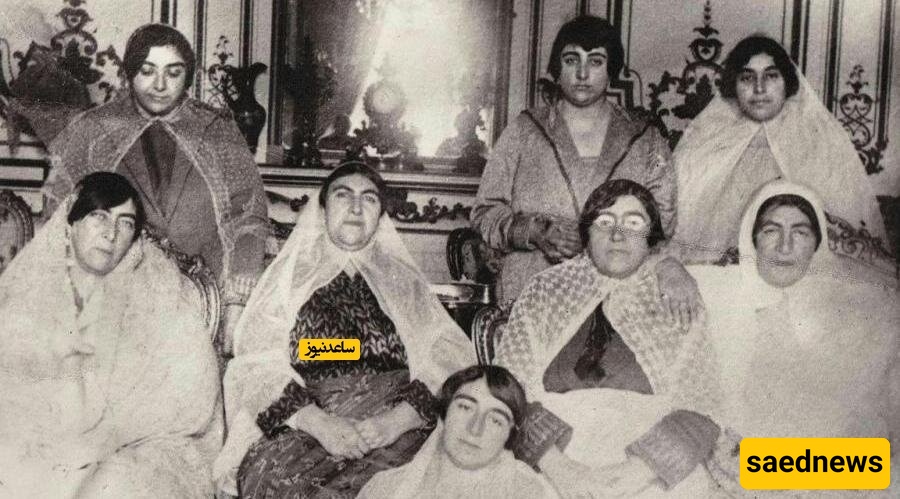
Qajar Women’s Fashion
After Naser al-Din Shah’s European Tour
Clothing in Tehran during the Qajar era can be divided into three phases. From the early Qajar period until Naser al-Din Shah’s European journey, attire was largely uniform across society, similar to styles in Mohammad Shah and Fath-Ali Shah’s reigns.
Shahbazi explains: “After Naser al-Din Shah’s trip to Europe, fashion changed suddenly. Seeing cities in Russia, London, and Paris, he wished for his women to adopt European styles, which led to a significant shift in royal women’s attire. Gradually, this trend spread to society at large.”
When White Socks Were Paired with Black Stockings
From Mozaffar al-Din Shah’s reign to the end of the Qajar era, clothing evolved further. Shahbazi notes that women in the harem and female attendants wore white knitted trousers, as seen in many photographs from the period. Occasionally, they wore black trousers. French historian Henri Delomani records that shoe colors were often green, yellow, or red, while socks were white and handwoven, sometimes with black tops.
Qajar Men: Dark Jackets and Colorful Shoes
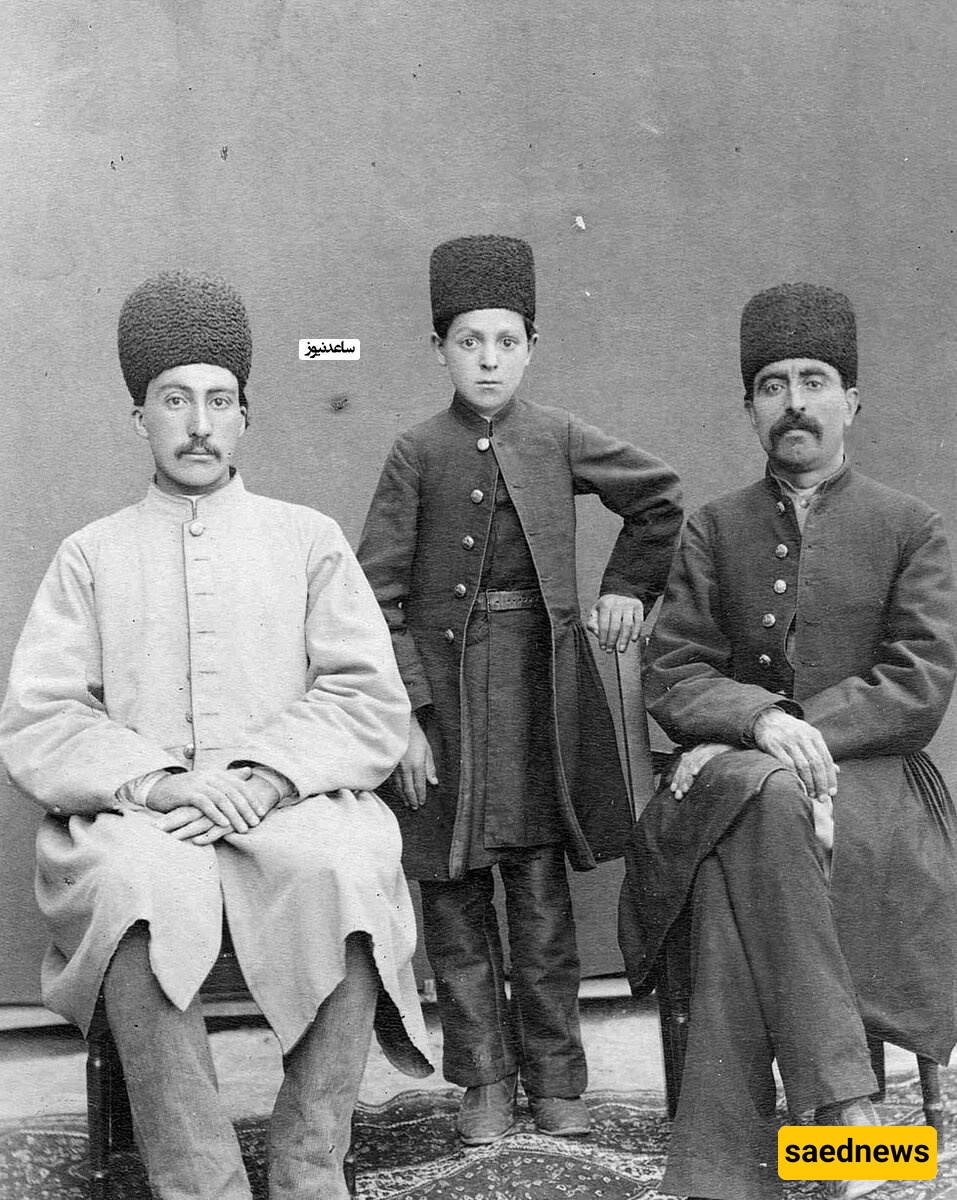
In the late Naser al-Din Shah period, plain white socks became popular, and shoes were red, green, or blue. Undergarments were usually white, while outer garments—coats, robes, jackets, waist sashes, trousers, and turbans—were darker shades or occasionally other colors. Warm hues like brown and burgundy were frequently used.
Striped and Khaki Chadors
Qajar paintings show a wide color range, though dark and bright reds, gold, and orange dominated. Examples are visible in museums such as the Malek Museum and Golestan Palace. Studying Qajar and Pahlavi-era paintings, including works by Kamāl-ol-Molk, we see men’s coats in green, yellow, blue, purple, and red.
During the Constitutional period, some changes occurred, and by the Pahlavi era, women gradually wore black chadors, while ordinary women used khaki or blue-and-white striped chadors.
Women’s Makeup
Naser al-Din Shah’s era also shows women using rouge and thin mustaches in their makeup, applying henna, kohl, rouge, and white powder in various colors.
Military Uniforms
During the Iran-Russia wars, Abbas Mirza employed French General Gardane and his team to train soldiers, introducing military reforms including new clothing styles inspired by French uniforms, typically featuring white trousers. Shahbazi adds that this trend continued into Naser al-Din Shah’s reign, with soldiers often seen in white trousers and indigo jackets in contemporary paintings.