This article explains how student rooms act as mirrors of the mind and how light, colour, order, scent and small rituals influence focus and mental health. It offers simple, low-cost steps to redesign a room so it better supports study, rest and overall well-being.
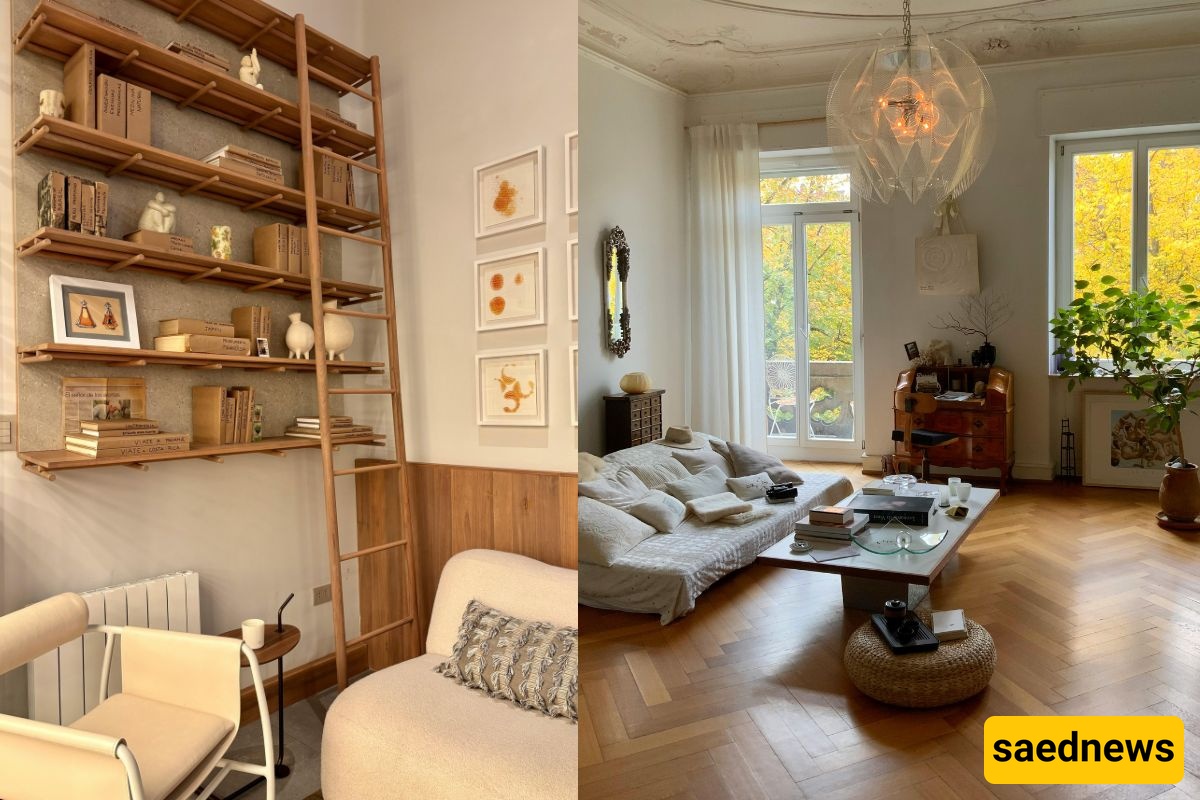
Student rooms are rarely “just” rooms. For many young people they are bedroom, classroom, library, studio and safe space all in one. The way this space looks and feels can quietly influence motivation, stress levels and even academic performance. In Germany, for example, many students simply search for Zimmer Deko when they want to turn a bare dorm room into a place that reflects their personality and supports serious study, not only sleep and scrolling.
The idea behind this article is simple but powerful: a student room can act like a mirror of the mind. Chaos on the outside often reflects chaos on the inside, and the comforting part is that the relationship also works in reverse. By changing the physical space in thoughtful ways, students can give their mind better conditions to focus, rest and grow.
When a student first moves away from home, the new room can feel strangely empty, even if it is full of furniture. Posters, photos, textiles and small objects slowly start to cover the walls and surfaces. Without realising it, students use decor to tell themselves a story about who they are and where they belong.
Psychologists call this “place attachment” - the emotional bond between a person and a space. A student who fills their walls with family pictures, art from their culture or souvenirs from meaningful trips is doing more than decorating. They are building a sense of continuity between their past and their new life. In contrast, a room that stays bare for months can sometimes signal that the person does not yet feel rooted, or is simply too exhausted or stressed to invest energy in their environment.
“The state of a student’s room is often less about laziness and more about how safe, hopeful and in control that student feels.”
At the same time, the room is not just a passive reflection. It feeds back into emotions and motivation. A dark, messy room makes it harder to get out of bed, to open a book, to invite friends. A room with light, a bit of order and a few carefully chosen objects sends a different message: you matter, your work matters, and this space is here to support you.

Clutter is almost a cliché in student life: piles of clothes, stacks of books, empty cups, tangled cables. It is easy to laugh about it, but research consistently shows that visual chaos increases stress and makes it harder to think clearly. Every time your eyes land on an unfinished task - a laundry pile, an unsorted stack of papers - your brain receives a tiny reminder of something you “should” be doing. Multiply that by dozens of items and your attention is already tired before you start studying.
For many students, the problem is not laziness, it is logistics. Rooms are small, roommates bring their own stuff, money for furniture is limited. Perfectly organised, minimalist interiors from social media are not realistic. The goal is not perfection. It is to reduce the number of things that shout for attention, so that the mind has a little more room to breathe.
There is also a difference between healthy minimalism and a room that feels empty and lifeless. A completely bare space can be just as unfriendly to the mind as a chaotic one. Students need a few comforting objects - a favourite mug, a soft blanket, a photo, a candle - to feel that the room belongs to them. The art is in choosing these objects with intention, so that they support life and study instead of blocking them.
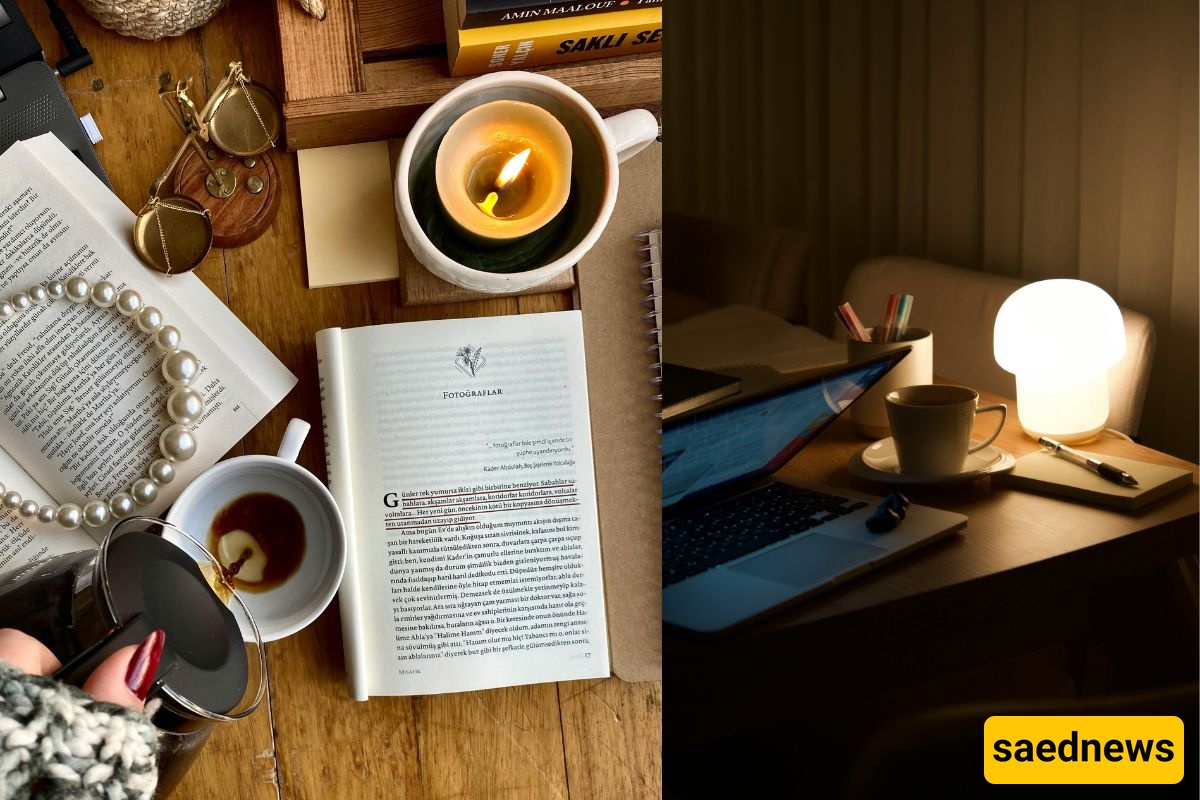
Light is one of the most important yet underestimated tools for student well-being. Natural light helps regulate the body’s internal clock, improves mood and makes it easier to stay alert during the day. Whenever possible, a desk should be placed near a window, with light coming from the side rather than directly from behind or in front of the screen. This reduces glare and makes reading less tiring.
In the evening, harsh overhead lights can keep the brain in “alert” mode. A small desk lamp with a warm bulb, and perhaps one or two additional soft light sources, creates a gentler atmosphere for late study sessions. Candlelight, when used safely on a stable, heat-resistant surface, can add a feeling of calm focus: it marks a special time, different from the rest of the day filled with fluorescent lights and phone screens.
Colour also shapes how a room feels. Strong, saturated colours can be fun, but in small rooms they can become overwhelming if overused. Soft blues and greens are often associated with calm and concentration, while warm accents in cushions, art or candles can provide energy and warmth without taking over. For students who cannot paint walls in rented rooms, colour can live in textiles, posters, ceramics and other movable objects instead.
Materials matter too. Natural and tactile surfaces – wood, cotton, linen, ceramic, simple concrete – tend to age gracefully and feel grounding to the touch. They also connect students, at least symbolically, to a wider natural world that is often missing from dense urban campuses. A simple ceramic vase, a Jesmonite tray, a cotton throw or a small plant on the windowsill are not just decorative; they are quiet reminders of stability in an often unstable period of life.
Brands like SolaceDeco, which specialise in candles and room decor made from ceramic, Jesmonite and other solid materials, build their collections around this idea: small, durable pieces that can travel with you from dorm to apartment and still feel relevant, instead of being thrown away at the end of the semester.
Smell is directly connected to memory and emotion. A certain soap can transport you back to your childhood bathroom, a spice mix to your grandmother’s kitchen. In the context of student rooms, scent can become a gentle tool for creating routines that support study and rest.
A lightly scented candle or a simple essential oil diffuser can signal “now it is time to focus” when switched on only during study hours. Over time, the brain begins to associate that particular smell with concentration, making it easier to slip into the right state of mind. The same principle can work in reverse: a different scent used only in the evening can help mark the transition to relaxation and sleep.
Incense plays a similar role in many cultures. For some students, it is part of prayer or meditation; for others, it is simply a way to make the room feel special and separate from the stress of the day. A simple Räucherstäbchenhalter (incense stick holder) keeps ash under control and turns this practice into something both safe and aesthetically pleasing. Instead of balancing a stick on the edge of a dish, students can choose a holder that fits their style, whether minimal, traditional or playful.
The key with scent is moderation and sensitivity to others. Strong fragrances can be irritating in small rooms, especially with roommates. Subtlety, natural ingredients and good ventilation are more important than intensity.

Life at university can gradually narrow down to a cycle of reading, writing, tests and screens. Hands and senses are used mainly for typing. Craft and creativity offer an important counterbalance: they bring the body back into the process and allow the mind to rest in a different way.
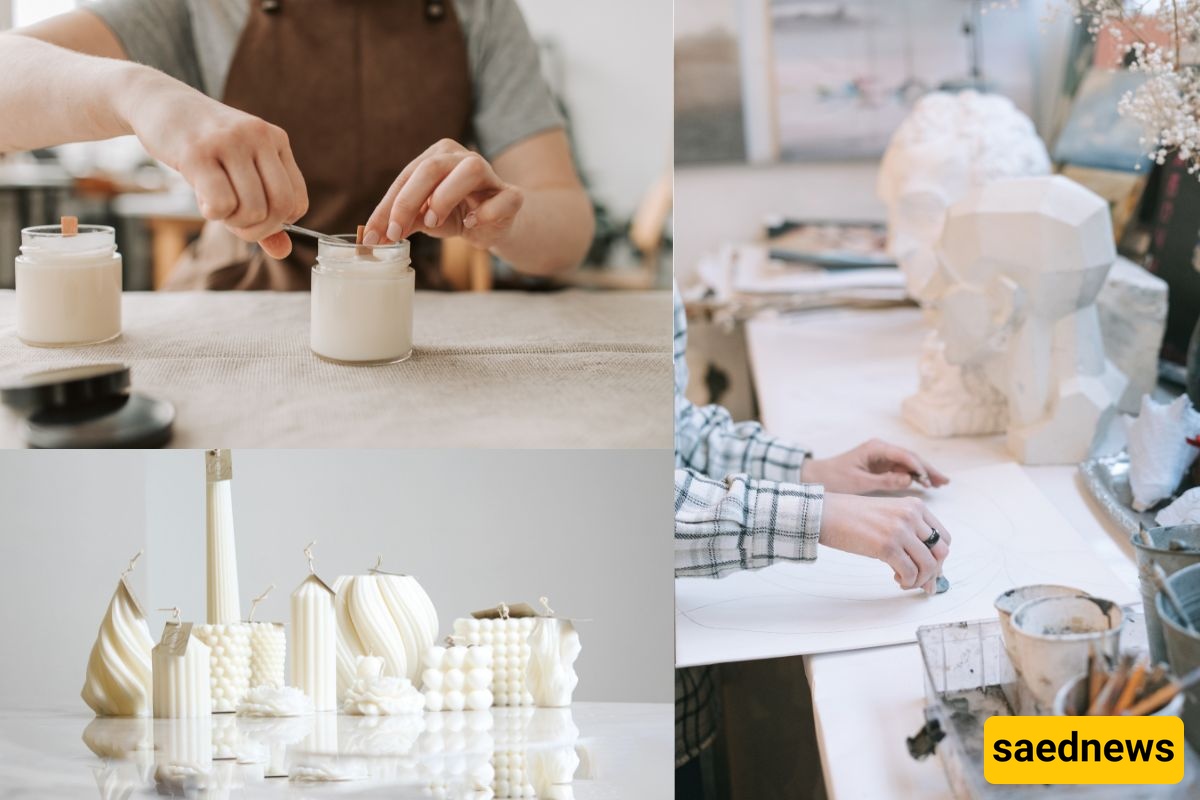
Activities like drawing, pottery, sewing or candle-making are not just hobbies. They are forms of self-care that produce tangible results students can integrate into their rooms. Making something with your hands creates a sense of agency at a time when many aspects of life – grades, deadlines, finances – feel outside your control.
Candle-making is a particularly accessible example. With simple tools and basic materials, students can design candles that match the atmosphere they want in their room: calm colours and soft scents for quiet evenings, brighter notes for times when they need energy. Some even join an online Kerzen herstellen Kurs (candle-making course) to learn proper techniques, feel part of a small creative community and avoid wasting materials. The finished candles then become part of their decor and their daily rituals, reminders of evenings spent creating instead of doom-scrolling.
Handmade decor items also allow students to express cultural identity. Colours, patterns and shapes drawn from their home region or traditions can make a foreign city feel less alien. In this sense, the room becomes a small cultural bridge: a space where global student life and personal heritage meet in visible, touchable form.
The theory is important, but students need concrete steps. The good news is that a supportive room does not require a big budget. It does require attention and small, consistent actions. A simple four-step framework can make the process less overwhelming.
First, observe the “mirror”. Stand in the doorway and look at the room as if it belonged to a stranger. What does it say about the person who lives here? Always tired? Overwhelmed? Energetic but scattered? Write down the first words that come to mind without judging yourself. This honest snapshot is the starting point.
Second, define zones. Even in a very small room, different activities can have different micro-areas. One part is for study, another for sleep, another for socialising or gaming, and maybe a tiny corner for reflection, prayer or stretching. The goal is not to create rigid borders, but to anchor each main activity to a particular spot, with furniture and decor helping to mark the difference.
Third, rebuild with intention. This is where decor becomes a tool instead of a random collection of objects. Start small and focus on items that have both function and emotional meaning. You might follow a checklist like this:
Improve light at the desk with better placement and a warm task lamp.
Reduce visible clutter on main surfaces by using one or two trays or boxes.
Add a few tactile, natural materials such as a ceramic vase, a fabric throw or a small plant.
Introduce one candle or scent only for study time, and another only for wind-down.
Choose one object that symbolises your culture or personal story and give it a clear place in the room.
Finally, turn decor into daily rituals. A room supports well-being most effectively when certain actions are repeated. Lighting a candle made in a candle-making course at the start of a study block, tidying the desk for two minutes before sleep, or burning incense in an incense holder only on Sunday evenings while planning the coming week – all of these are small, low-cost rituals. Each one uses decor as a cue for behaviour the student actually wants.
Over a few weeks, these routines begin to change how the room feels. Instead of being a passive container for stress, it becomes an active partner in stability and growth.
Student rooms will never be perfect. They are temporary, often small, sometimes shared, almost always operating under budget and time pressure. But this does not mean they are unimportant. On the contrary, because students spend so many formative hours in these spaces, even modest changes can have surprisingly deep effects.
When light, colour, scent, materials and objects are chosen with some care, a student room stops being just a place to crash between obligations. It becomes a small ecosystem that supports focus when it is time to work, offers softness when it is time to rest, and reflects identity in a period of life when identity itself is still forming.
Whether students personalise their space with simple room decor pieces, hand-poured candles from a candle-making course, a favourite incense holder or carefully selected items from brands like SolaceDeco, the principle is the same. By treating the room as a mirror of the mind - and gently polishing that mirror through decor and ritual – they give themselves a better chance not only to survive their studies, but to truly thrive in them.