SAEDNEWS: An Italian Diver Stumbles Upon an Extraordinary Hoard of Ancient Coins Off Sardinia’s Coast
According to Saed News’ social affairs service, Italy’s Ministry of Culture announced on Saturday that a diver who accidentally stumbled upon the treasure alerted authorities. In response, the ministry dispatched underwater archaeology specialists to the site to form a protective team.
The coins, discovered among seagrass not far from the northeastern coast of the island, date back to the first half of the 4th century CE. Their exact number has yet to be determined, as researchers are still cataloging them. Based on initial estimates of their total weight, the number of large bronze coins is believed to range between 30,000 and 50,000—surpassing the hoard found in the UK in 2013. These bronze coins are exceptionally well-preserved, with all inscriptions clearly legible.
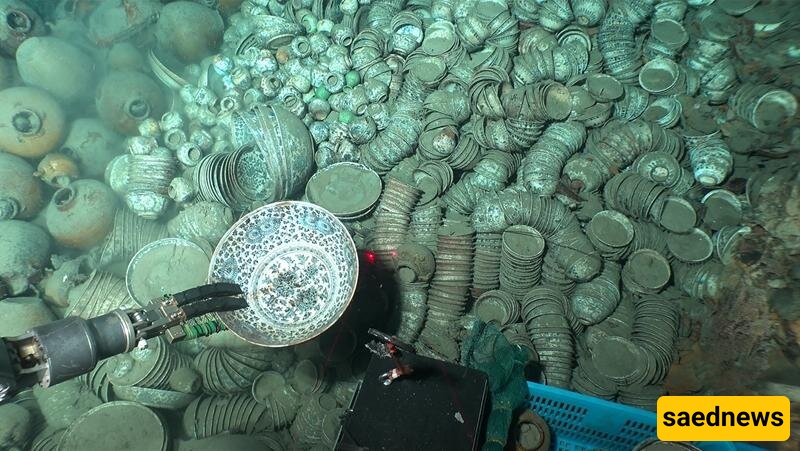
In addition to the coins, archaeologists identified the walls of jars produced in Africa and a smaller number of Eastern artifacts within the sediments. The divers discovered two major coin concentrations in a large sandy area between the shore and the seagrass. The second site, due to its position and seabed formation, may contain remnants of a shipwreck. Almost all coins are in remarkable condition, with only four showing minor damage, though still readable.
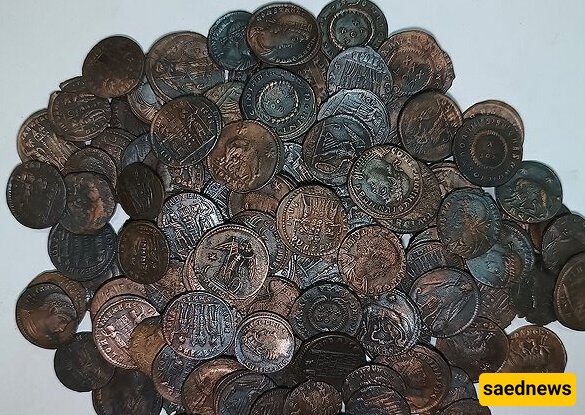
The coins date from between 324 CE, during the minting of Licinius, and 340 CE. Recovered specimens originate from nearly all active imperial mints of the period, except for Antioch, Alexandria, and Carthage. Luigi LaRuca, an official from the Sardinia Archaeology Department, stated, “The treasure discovered in the waters near Artsacena is among the most significant coin finds of recent years.”
Coins from the first half of the 4th century, preserved in such excellent condition, provide valuable insights into the region’s history. This discovery also underscores the importance of protecting the Mediterranean’s ancient heritage.