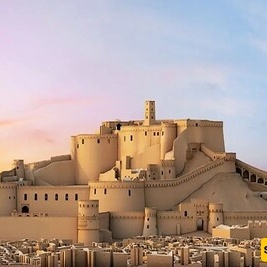
SAEDNEWS: Bam Citadel, attributed to Bahman, son of Gustasp, is one of Kerman’s most important historical fortresses. Built from mudbrick, brick, and clay, it is the world’s largest mudbrick complex and a striking example of Parthian-era Iranian architecture.
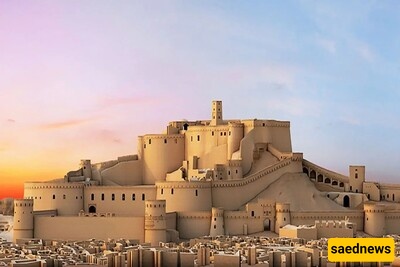
According to the History and Culture Service of Saed News, the historic Bam Citadel, with a history spanning over 2,500 years, is located near the city of Bam. This massive citadel, listed as a UNESCO World Heritage Site under the name “Bam and Its Cultural Landscape,” lies along the Silk Road and was constructed in the 5th century BCE. People continued to live within the citadel until about two centuries ago. Throughout its long history, Bam Citadel has faced numerous attacks and undergone several reconstructions.
The citadel is attributed to Bahman, son of Gostasp. Bam Citadel and its surrounding city rank among the most important historical military fortresses and are considered key sights in Kerman. The structure is a prime example of traditional Iranian architecture. Built from mudbrick, brick, and clay, it is the largest mudbrick complex in the world and is regarded as one of the most exquisite constructions of the Parthian era.
In January 2004, this historic site—recognized as the first intersection of architecture and urban life in Iran—was reduced to rubble by a devastating earthquake, which destroyed more than 80 percent of the citadel.