SAEDNEWS: Bemoaning the persistence of the global digital divide, Iran’s UN ambassador called for renewed international commitment to inclusive, development-oriented information and communication technologies (ICTs) under robust United Nations leadership.
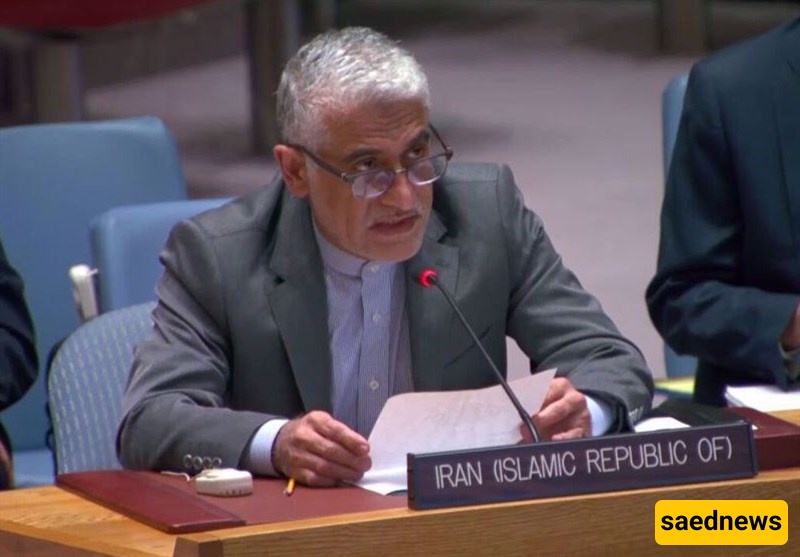
Addressing a high-level meeting of the UN General Assembly on the overall review of the implementation of the outcomes of the World Summit on the Information Society (WSIS+20), held in New York on December 16, Saeed Iravani reviewed the progress made since the adoption of the WSIS outcomes while highlighting key gaps that continue to hinder the realization of a truly inclusive information society.
The full text of his statement is as follows:
In the Name of God, the Most Compassionate, the Most Merciful
Mr. President,
Twenty years after the World Summit on the Information Society, we can acknowledge meaningful progress. Yet, the fundamental promise of WSIS remains unfulfilled: the digital divide has not only persisted but, in many regions, has deepened and diversified.
A coherent, inclusive, and development-focused global framework for ICT-related cooperation cannot be achieved without strong UN stewardship. However, unilateral coercive measures imposed on several countries continue to undermine this objective. If we are truly committed to the information society vision, these barriers must be addressed with urgency and fairness.
Mr. President,
Capacity-building remains a particularly critical and largely unfulfilled mandate. Many developing countries continue to face significant institutional and human-capacity constraints that limit their ability to harness the benefits of digitalization.
This brings us to the unfinished agenda of Internet governance. The Tunis Agenda called for enhanced cooperation among governments, on an equal footing, to address international public policy issues related to the Internet. Nearly two decades later, progress in operationalizing this mandate remains limited. The urgency now lies in translating agreed principles into effective and inclusive institutional arrangements.
Similarly, while the Internet Governance Forum has provided a valuable platform for dialogue, it lacks a decision-making mandate capable of ensuring equal and meaningful participation by States, particularly developing countries. Strengthening the role of governments within a balanced, multistakeholder framework remains essential.
At the same time, all stakeholders, including the private sector and digital platforms, must act responsibly. States bear the primary responsibility for ensuring accountability and preventing the misuse of ICTs in ways that undermine national sovereignty, security, and public order. Moreover, actors with monopoly power in the digital domain must refrain from instrumentalizing technological advances as tools of political or economic coercion.
In conclusion, Mr. President, twenty years after WSIS, we must return to its original vision: a people-centered, inclusive, and development-oriented information society. The Islamic Republic of Iran stands ready to work actively with all partners, at both regional and international levels, to advance a more equitable digital future for all.