SAEDNEWS: The President said intolerance of dissent, suppressive responses to criticism, and discriminatory economic and educational decisions have fueled public dissatisfaction, urging officials to seriously reform flawed governance practices.
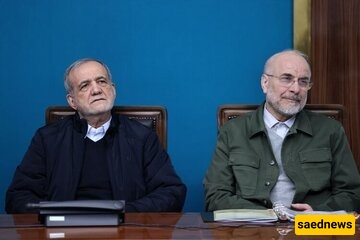
According to the Political Desk of Saed News Agency, citing the Presidential Information Base, a meeting of the Supreme Council of the Cultural Revolution was held on Tuesday afternoon under the chairmanship of Masoud Pezeshkian, with the presence of Mohammad Bagher Ghalibaf, Speaker of the Islamic Consultative Assembly, and Mohseni Ejei, Head of the Judiciary.
In this meeting, the President, presenting an overall analysis of recent events in the country and highlighting their social dimension, called for prioritizing and steering the council’s agenda toward a pathological review of the causes and contexts behind the occurrence of such phenomena, as well as identifying appropriate and principled methods and solutions for addressing public demands and protests.
Pezeshkian emphasized: I believe that a lack of tolerance for hearing opposing views, the existence of restrictive and exclusionary approaches in dealing with criticism and protest, discriminatory decisions, and the granting of unfair privileges in the economy, education, and other sectors have led to grievances and dissatisfaction in society. It is therefore necessary for all of us officials, across all governing institutions and bodies, to give special attention to correcting these flawed trends in the governance system.
The President went on to stress that if we had properly and timely fulfilled our duties toward the three fundamental institutions of society and the country—namely the family, the school, and the university—many of the conditions for such incidents would not have emerged in our country. He stated: Sociological analyses of the age range of some perpetrators of violent acts and behaviors confirm our neglect of these three fundamental institutions, and all relevant bodies must consider themselves committed and responsible for carrying out their duties and for filling the gaps and rifts that have arisen in social issues.
Pezeshkian further noted that if our path and direction are right, then we certainly should not fear criticism. He emphasized: The behaviors, actions, and decisions of the governing establishment must, by creating attraction, make today’s young generation interested in the system and the revolution, thereby adding to the country’s social capital.
At this session of the Supreme Council of the Cultural Revolution, facilities for the Artificial Intelligence Olympiad and the Economic Management and Governance Olympiad—similar to the previous seven Olympiads—were approved by the members following discussion and review.
Additionally, the report on the implementation of the Comprehensive National Aerospace Development Document in the aerial, space, and defense domains was reviewed, evaluated, and discussed.