SAEDNEWS: A groundbreaking new book reconstructs the life of Hazrat Zeinab (SA) through the first seven Islamic centuries, employing a rigorous, source-driven methodology to set a new standard in biographical scholarship.
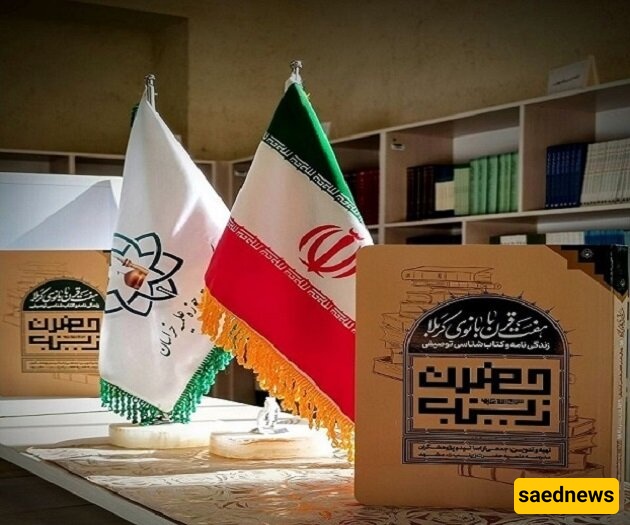
"Seven Centuries with the Lady of Karbala," published in Iran, distinguishes itself not merely as another biographical account but as a monumental scholarly enterprise.
It ambitiously seeks to anchor the luminous legacy of Hazrat Zeinab (SA), the granddaughter of Prophet Muhammad (PBUH), within the most rigorous foundations of Islamic historical science.
The book emerges as a definitive response to a palpable need within both academic and religious circles: the need for a comprehensive, analytically sound, and source-transparent narrative of her life, free from the accretions of sentiment and undocumented lore that can sometimes obscure the significance of such pivotal Islamic figures.
The work is innovatively structured as two complementary books in one volume. The first and core section undertakes a monumental task: tracing and analyzing the historical trajectory of Hazrat Zeinab’s (SA) life and legacy from the 1st to the 7th century of the Hijri calendar.
The authors, a dedicated team of seven researchers from seminary and university backgrounds under the supervision of experts like Sagharvanian, have left no stone unturned.
Their methodology is exhaustive, scrutinizing primary historical sources, books of Seerah (prophetic biography), narrations, classical literary texts, and even lexicons.
A particularly noteworthy aspect of their approach is the incorporation of indirect historical evidence, such as poems endorsed by the Ahl al-Bayt (AS), to paint a fuller, more nuanced portrait.
This seven-century cutoff is a deliberate and critical scholarly choice, focusing on sources temporally closest to her life and thus considered more authoritative, while consciously avoiding the repetition of less documented narratives from later periods.
The second section is a descriptive bibliography of works related to Hazrat Zainab (SA), a scholarly resource so substantial it could stand alone as an independent publication.
Its inclusion alongside the historical analysis provides researchers with an invaluable roadmap for further study, encapsulating the breadth of literary attention she has received across centuries.
This dual structure underscores the book’s ambition to be both a pioneering work of original research and an essential reference tool.
Beyond chronology, the book proactively engages with complex questions and ambiguities that have historically surrounded this towering figure.
It delves into scholarly discussions about the identity and socio-political role of her husband, Abdullah ibn Ja'far, and provides a reasoned analysis of the debated reasons for his presence or absence at Karbala.
Such engagements demonstrate the work’s commitment to intellectual honesty and depth, not shying away from historical complexities.
Furthermore, the inclusion of thematic and chronological tables at the end of the volume offers researchers an at-a-glance analytical tool to track how authors from both Shi’a and Sunni traditions engaged with her personality across different eras.
The conscientious presentation of original Arabic source texts alongside their Persian translation is another praiseworthy feature, alleviating the need for scholars to cross-reference multiple libraries or software, thereby integrating accessibility into its scholarly rigor.
The genesis of this project is rooted in a recognized void. The idea was conceived within the scientific nucleus of the Hazrat Zainab (SA) Seminary in Mashhad, responding to the lack of a reliable historical source, untainted by personal taste or speculative opinions, detailing the course of her life.
Launched in 2016 (1395 SH), the seven-year research process involved examining nearly 300 titles from both Shi’a and Sunni sources, concluding in 2023 (1402 SH).
The team engaged in dialogues with eminent scholars like Mr. Shahristani and Dr. Ali Bayat, ensuring their analysis benefited from contemporary expert insight.
The publication of this book carries profound cultural and ideological significance beyond academia. The authors posit it as a crucial intervention in the modern "intellectual turmoil," where materialistic and certain feminist paradigms, in their view, obscure the authentic spiritual identity of women and men alike. In contrast, the life of Hazrat Zeinab (SA) is presented as the quintessential model of transcendent womanhood—one who fully embodied her gender essence while rising above worldly material layers to showcase a horizon of spiritual excellence and profound social and political agency.
The book argues that in her steadfastness, wisdom, and oratory following the tragedy of Karbala, she epitomizes the powerful, divinely anchored role of women in Islamic thought, a stark counter-narrative to what the authors describe as the "unsound competition" and identity confusion fostered by Western-centric frameworks.
"Seven Centuries with the Lady of Karbala" is more than a history; it is an academic fortress built around a revered legacy.
By tethering the narrative of Hazrat Zainab (SA) so meticulously to the earliest and most trusted sources, it provides an unshakable foundation for both faith and scholarship.
In doing so, it offers a powerful antidote to historical reductionism and a compelling Islamic paradigm of spiritual potency and intellectual clarity. This work is set to become an indispensable reference, guiding future generations toward a deeper, more authentic understanding of a figure whose light continues to shape history.
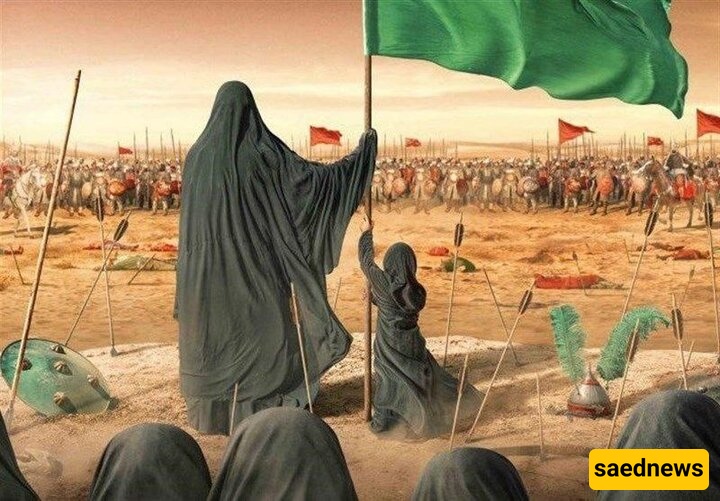
Hazrat Zaynab (SA) lived about one year after the torturous trials she endured. She withstood the impossible ordeal and carried out the spreading of the news everywhere, most successfully.
Zainab was duty-bound to prevent the Karbala Revolution from being distorted as a result of the deceitful and poisonous propaganda of the ruling system.
Even though Hazrat Zainab was in captivity along with other family members of the martyrs, spiritual pressures and the heavy duty of taking charge of the morning children of the martyrs did not preclude her from enlightening the minds of the people and bringing the realities into the open.
It is claimed that she died in Syria at the age of 57 in the year 62 AH. Her holy shrine, Zaynabieh, is located in the present country of Syria, or, according to some other beliefs, in Egypt, and nowadays many of the Shias visit it.