SAEDNEWS: If Mr. Spielberg knew that there is a cave in Iran that many consider mysterious, he would surely take his beloved character’s hand and head straight to Poldokhtar.

According to Saed News’ Society Desk, there is a cave whose name is a mouthful, yet it is familiar to many archaeologists and treasure hunters around the world. Kolmakareh is a mysterious and enigmatic place that concealed a vast treasure for centuries. How was this cave discovered, and which kings did its treasures belong to? Read on for the answers.
Countless rumors surround the cave and the artifacts found within it. Many claim that the Kolmakareh treasures did not belong to a specific king. They suggest the items were once stored in the Achaemenid treasury in Susa until Cyrus conquered Babylon and transferred all temple treasures to his own treasury. Later, when Alexander the Great embarked on his campaigns, the Achaemenid treasures were relocated by order of the king of Susa to the mountains near Poldokhtar, where Kolmakareh Cave sits, and four special guards were assigned to protect them.
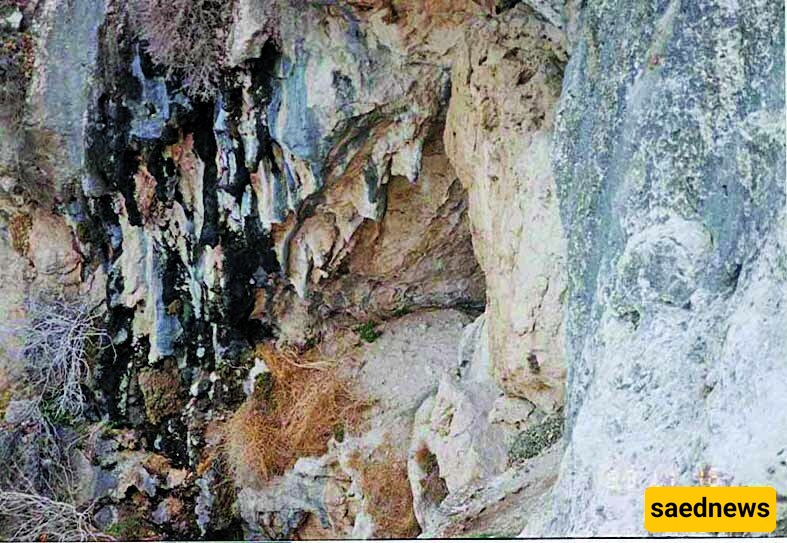
The total known area of the cave is about 4,300 square meters, and the length of the connected, explored passageways currently spans roughly 670 meters. The cave entrance is clearly marked in photographs.
Alexander ruled for many years, and the four loyal guards continued to protect the Achaemenid treasures until their deaths, after which they were buried at the cave entrance. Centuries later, in autumn 1989, a local hunter discovered the cave, along with several human skulls and a large number of historical artifacts, sparking whispers about the cave and its devoted guardians.
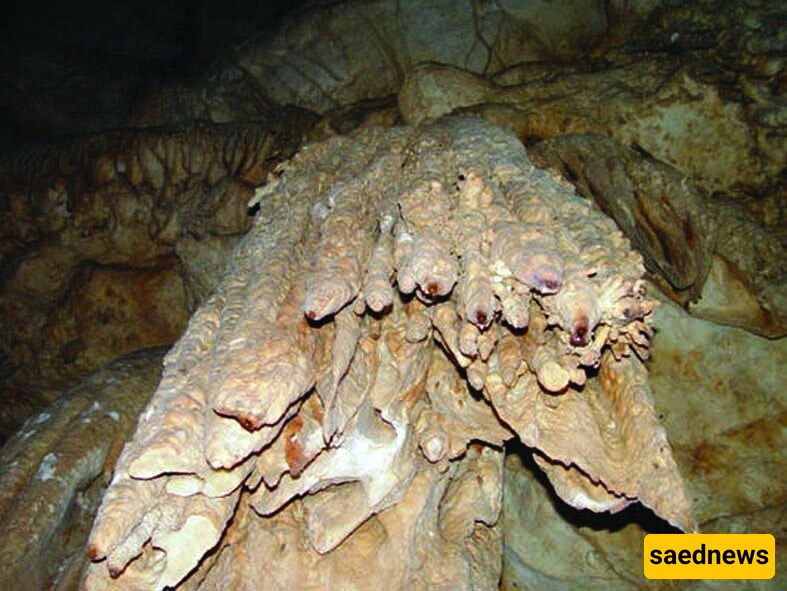
To visit this astonishing cave, you must travel to Lorestan. Kolmakareh Cave lies 12 kilometers northwest of Poldokhtar, perched on the limestone heights of Mount Maleh. Ata Hassanpour is the only archaeologist who has repeatedly explored this enigmatic cave. He says:
"Visiting this cave requires serious mountain climbing and caving skills. You’ll hike about 800 meters to reach the top. That’s when the hardest part begins: you must descend approximately eight meters using a rope to reach the cave entrance."
Kolmakareh sits 550 meters above the surrounding plain, on the eastern side of one of Mount Maleh’s final rocky valleys. The entrance faces west, and the cave continues east into the rock. Twin entrances are hidden behind a sloped rocky spur, providing a nearly invisible and secure hideout.
This safe haven remained hidden from humans for centuries. Villagers in Poldokhtar offer varying accounts of its discovery, but most point to the story of a local hunter. In 1989, he spotted a mountain goat with a wet beard dripping water, even though no river or spring was nearby. Curious, he abandoned his hunt and followed the goat, ultimately discovering the cave. Locals claim the hunter was named Aziz Gavkash, who became the cave’s first modern discoverer.
Afterward, villagers and antique smugglers entered the cave, searching for Achaemenid treasures and causing damage while hunting for golden artifacts, silver masks, and animal figurines.

Reports of the discovery soon led to the confiscation of some of the cave’s historical and cultural artifacts. The first items seized by the Poldokhtar Revolutionary Committee included a gold human mask, three small silver animal ears, three large silver animal ears, two curved metal rods resembling sickles, and three pieces of silver ingots.
Due to the antiquity of these items, archaeologists ranked the discoveries as the sixth most valuable treasure in the world. Hassanpour explains:
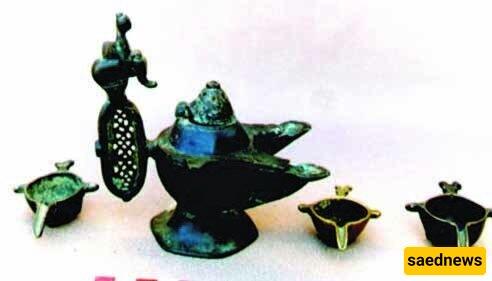
"Some of these objects fell into the hands of smugglers and were illegally exported. Others were displayed in special exhibitions in New York, Los Angeles, London, and Vienna. Today, parts of this treasure are scattered across museums in major cities in the U.S., England, Switzerland, France, and Japan."

Thanks to officials’ efforts, many of these artifacts were recovered and returned to Iranian museums, primarily the Khorramabad Museum and the National Museum of Iran. In 1992, researcher Rasoul Beshash studied inscriptions on some of the cave’s objects, revealing the name of a lost royal family and an unknown kingdom. Archaeologist Lambert deciphered numerous inscriptions on the vessels, identifying 22 individuals, four of whom bore the title “king.” These inscriptions suggest the items belonged to the land of Samtoreh, founded by King Amperish, son of Dabalast, highlighting the immense wealth of this local dynasty.
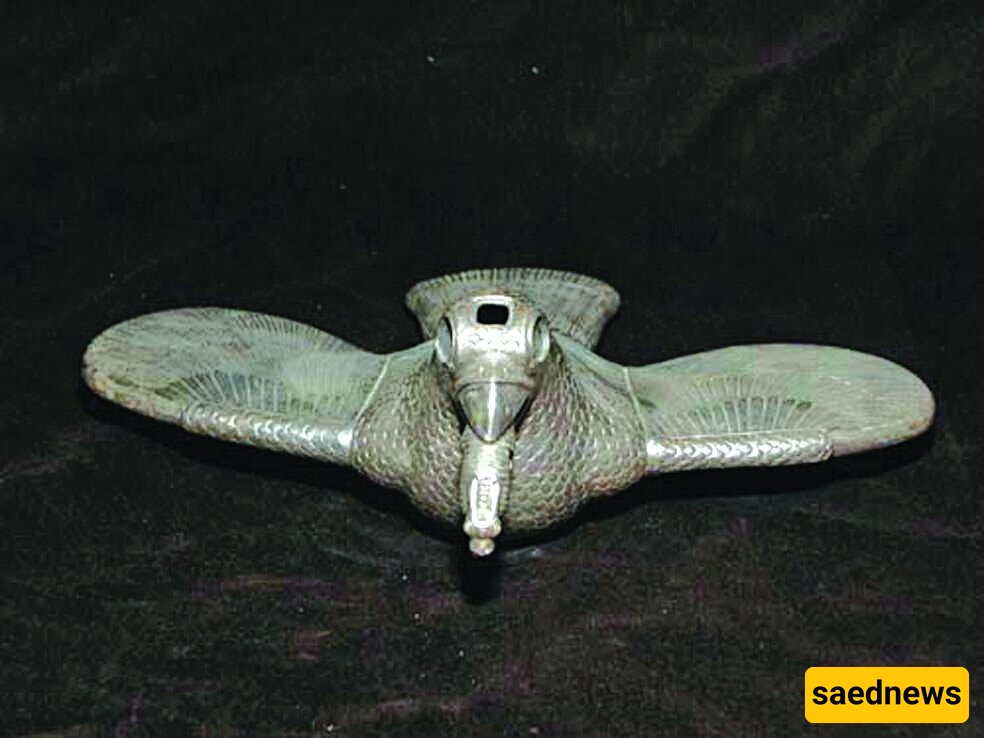
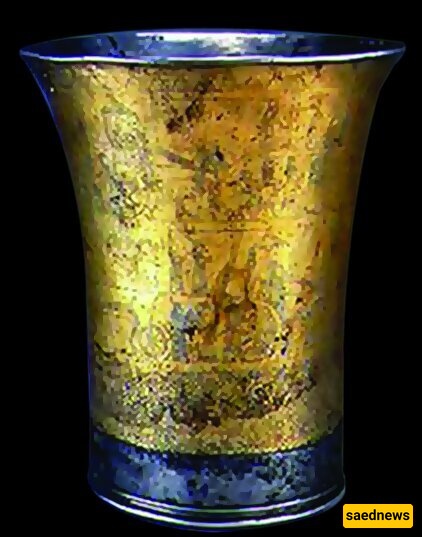
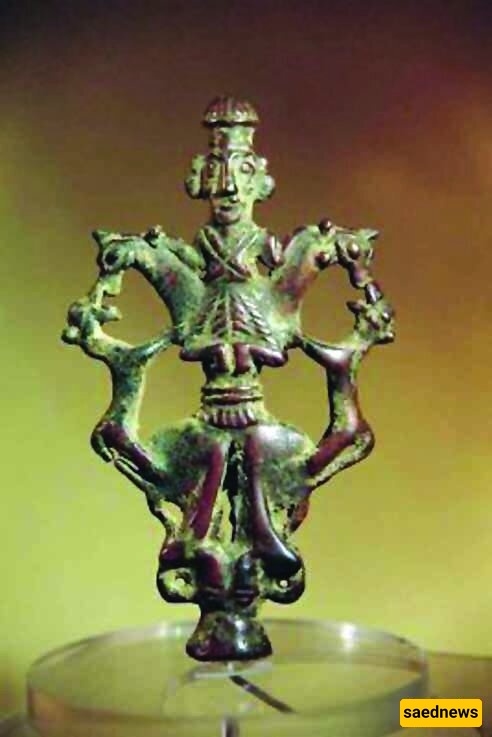
The recovered objects are remarkably diverse, ranging from gold and silver masks to rhytons shaped like lions and bulls, as well as jewelry. Among foreign museums, Japan’s Miho Museum houses the largest collection.
Experts agree on the cave’s name origin. “Kolmakareh” is thought to derive from three words: kol, ma, and karreh. In the Lorestan dialect, kol refers to a male mountain goat with upward-curving horns, while ma (used locally as the suffix -man) means a shelter or dwelling. Combined, they signify “the refuge of the mountain goat.” Karreh denotes a fig-like tree, distinguished from edible fig trees by its inedible fruit, which grows near the cave entrance. Hence, the cave’s name literally means “the place of the male mountain goat and the fig tree.”
Visitors should note that exploring Kolmakareh Cave requires physical endurance, technical climbing, and a sense of adventure, as the cave remains one of Iran’s most remarkable hidden archaeological treasures.














![[Video] Two Aircraft Intercepted Near Trump Golf Club After Entering Restricted Airspace](https://en.saednews.com/storage/files/post/678cf3b4-38d3-4114-b229-5316bfbe9da7-vOkXyCloq1rXAPV1/1x1-image.jpg)