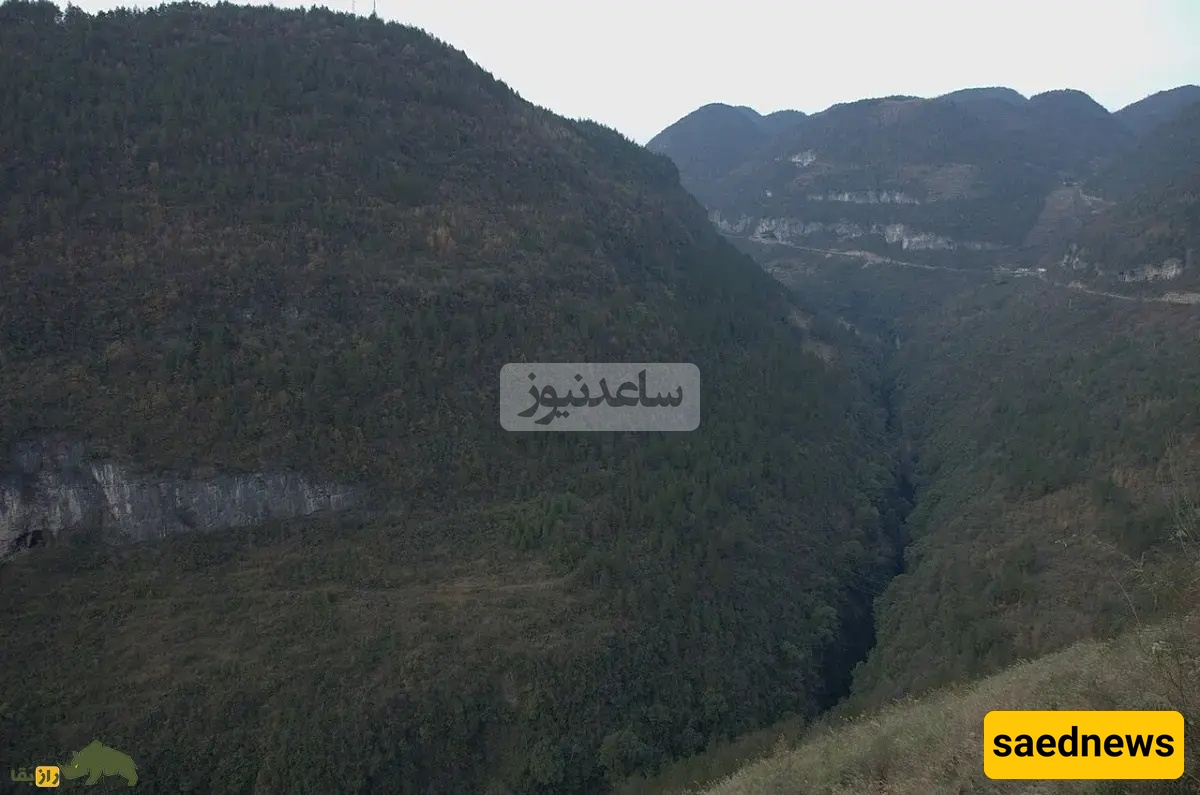
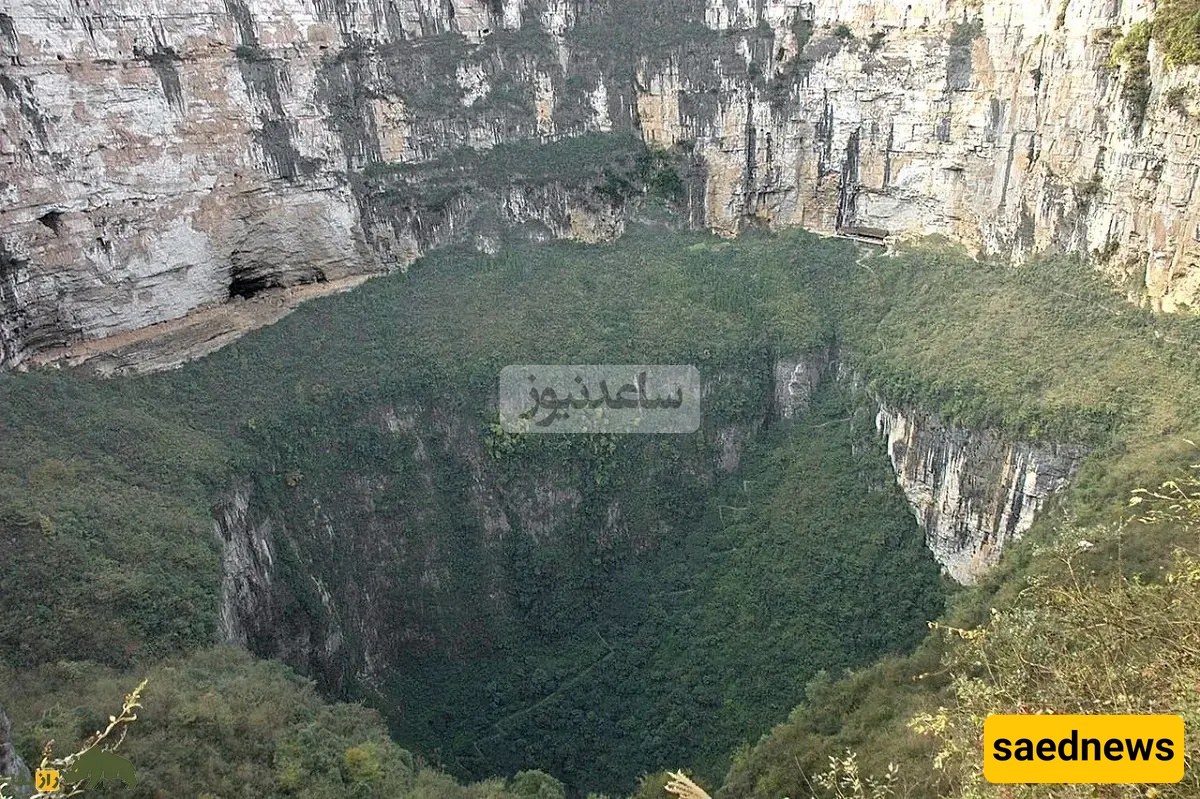
SAEDNEWS: The Heavenly Pit in China, the world’s largest natural sinkhole, plunges over 660 meters deep with a terraced structure. Strange air currents, echoing sounds, and “hanging forests” make it a mysterious natural wonder.
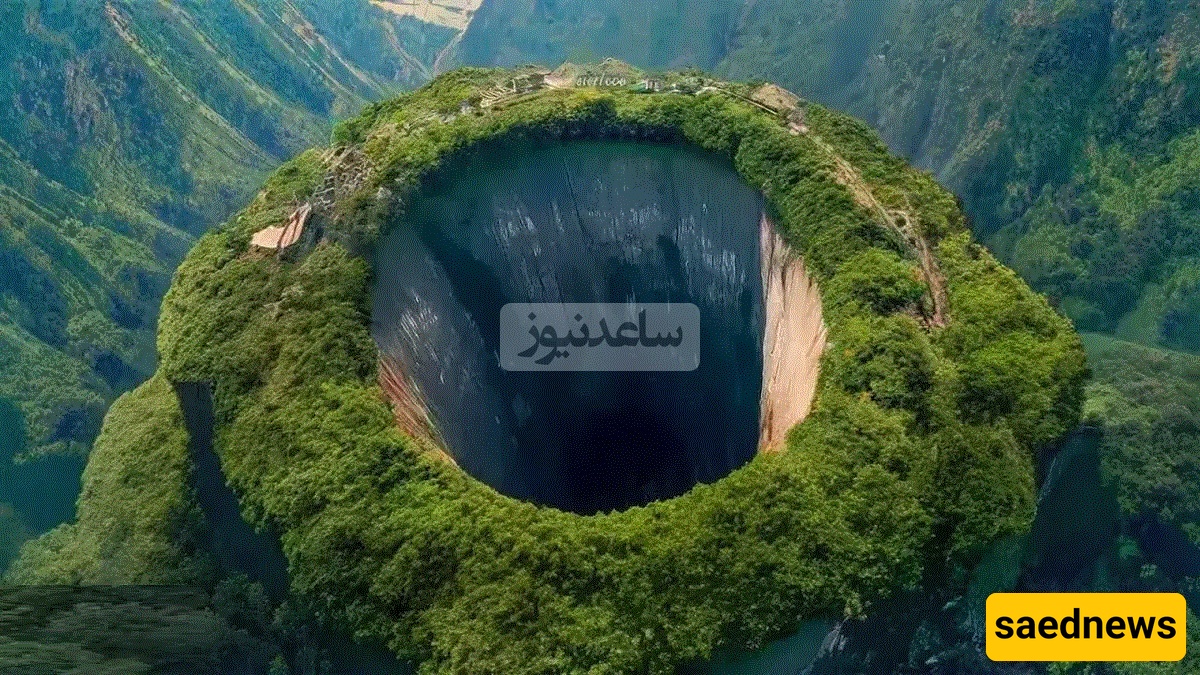
According to the Family Magazine section of Saed News, the Heavenly Pit, or Xiaozhai Tiankeng—also known as the “Zhaojai Sky Hole”—is the largest natural sinkhole in the world. It is located in Fengjie County, Chongqing Province, China.
This massive crater, with its astonishing depth and immense dimensions, is one of nature’s wonders, captivating scientists, adventurers, and tourists alike. The word Tiankeng translates to “sky hole,” a name that conveys both reverence and mystery.
Unlike typical sinkholes, which are often shallow and unremarkable, Xiaozhai Tiankeng plunges vertically into the earth, creating a unique ecosystem and showcasing extraordinary geological formations.
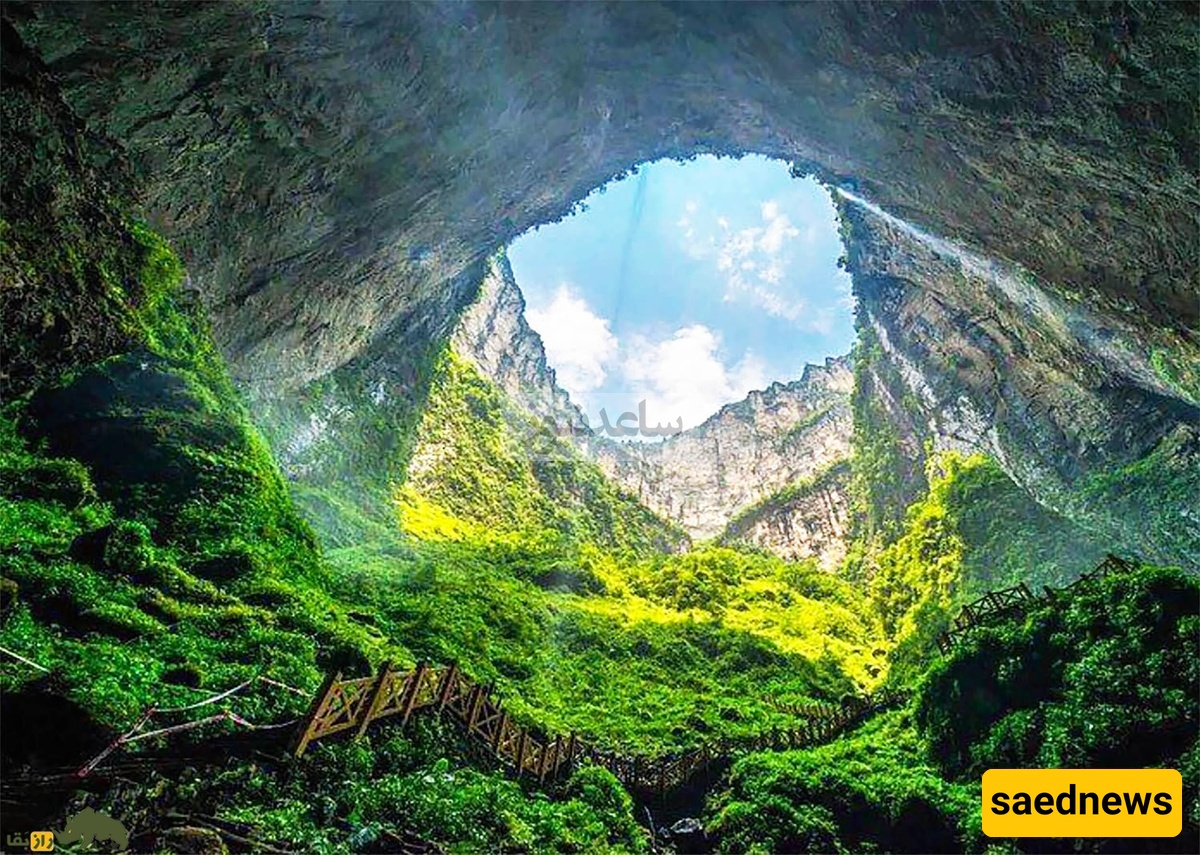
According to Survival Secrets, the Heavenly Pit measures approximately 662 meters deep, 511 meters wide at its widest point, and 626 meters long. It is recognized as a colossal vertical cavity formed through karst processes—where slightly acidic rainwater slowly dissolved the limestone over millions of years, sculpting this immense hole.
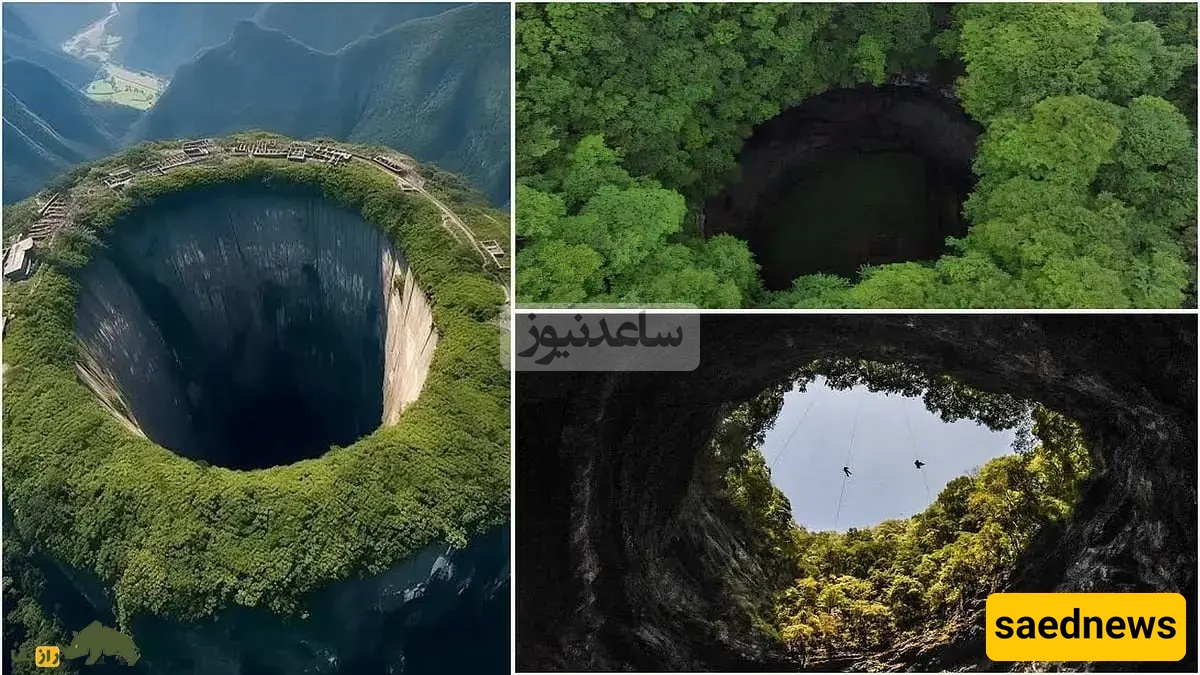
Unlike ordinary sinkholes, the Heavenly Pit features a terraced structure, with multiple ledges and cliffs along its walls. This geological marvel is connected to an intricate network of rivers and underground caves that continue to shape it.
Scientists believe the pit’s complex structure results from a combination of collapse and erosion processes, making it a dynamic and ever-evolving natural feature.
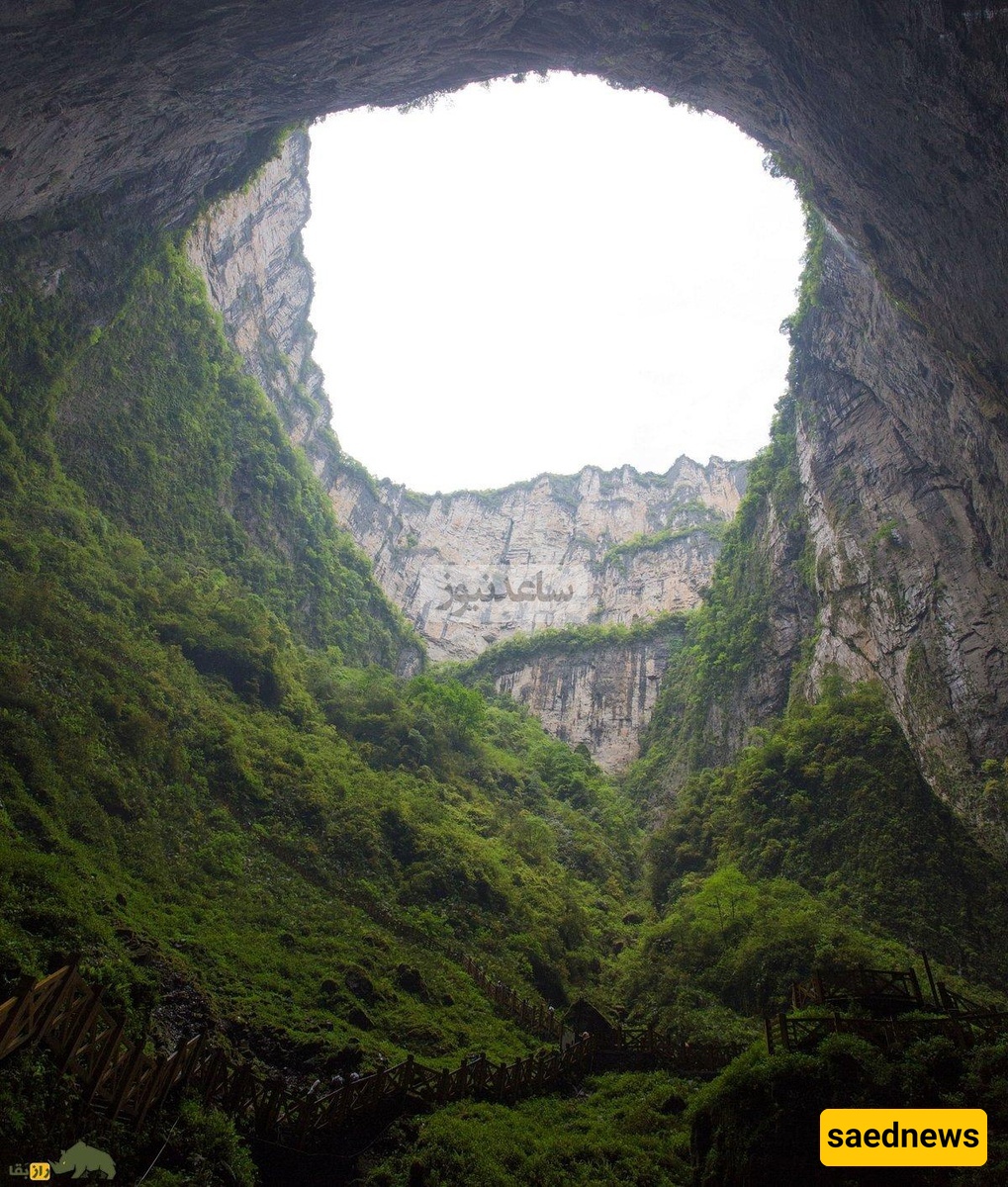
One of the most striking features of the Heavenly Pit is its unique microclimate. Sunlight reaches the bottom unevenly, creating distinct environmental conditions from the rim to the floor. These conditions support the growth of diverse plant life, including subtropical vegetation at the bottom that contrasts with the surrounding plateau.
The pit also provides a safe haven for various animals, including birds, insects, and amphibians. Its isolation has turned it into a natural laboratory for studying species evolution, adaptation, and ecological interactions. Researchers continue to discover species that exist only within this vertical ecosystem, highlighting the pit’s ecological importance.
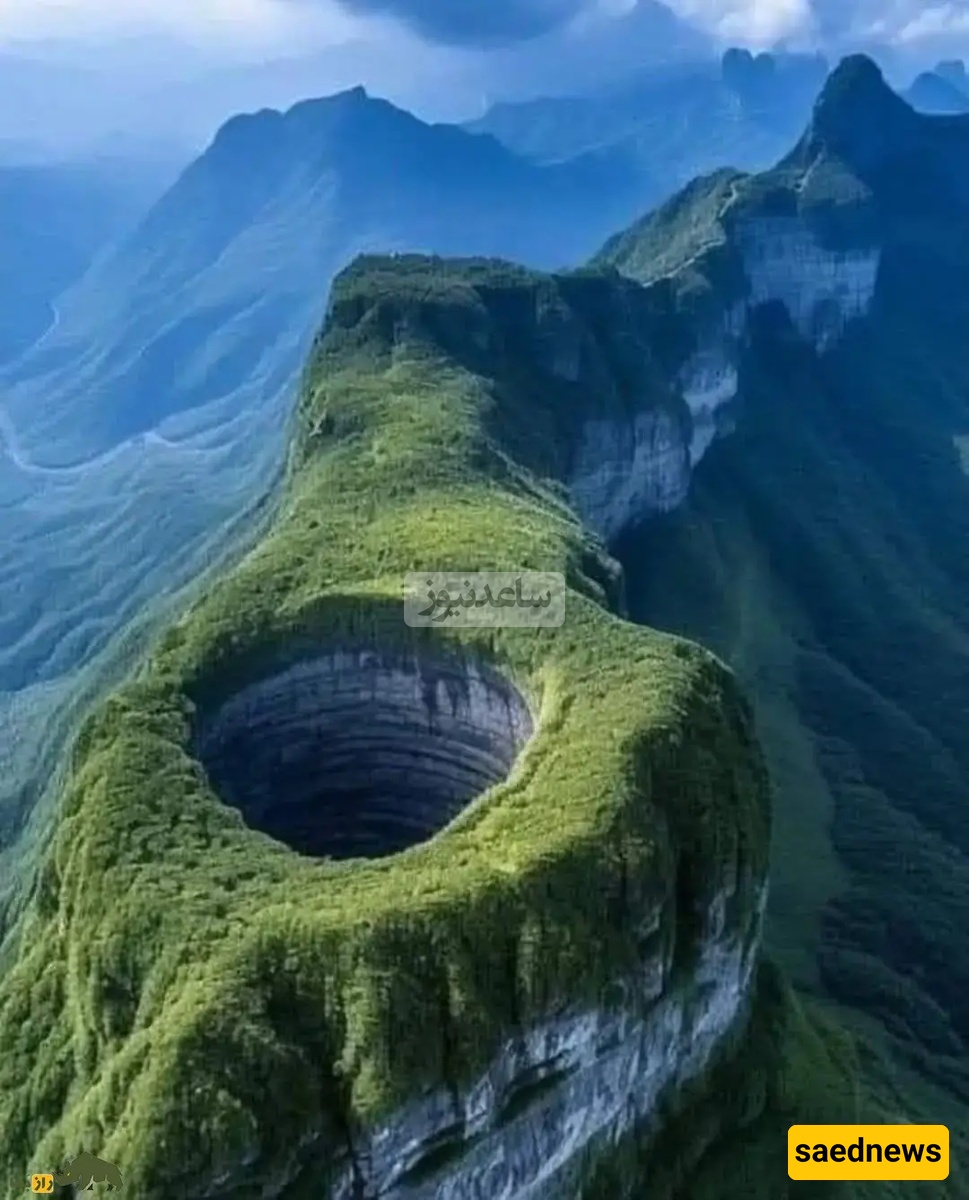
Exploring the Heavenly Pit is exceptionally challenging due to its depth and sheer rock walls. Adventurers and professional cavers often use ropes, ladders, and climbing equipment to reach the bottom. Despite these difficulties, the site has become a popular natural tourist attraction, drawing visitors eager to witness one of the planet’s most dramatic geological features.
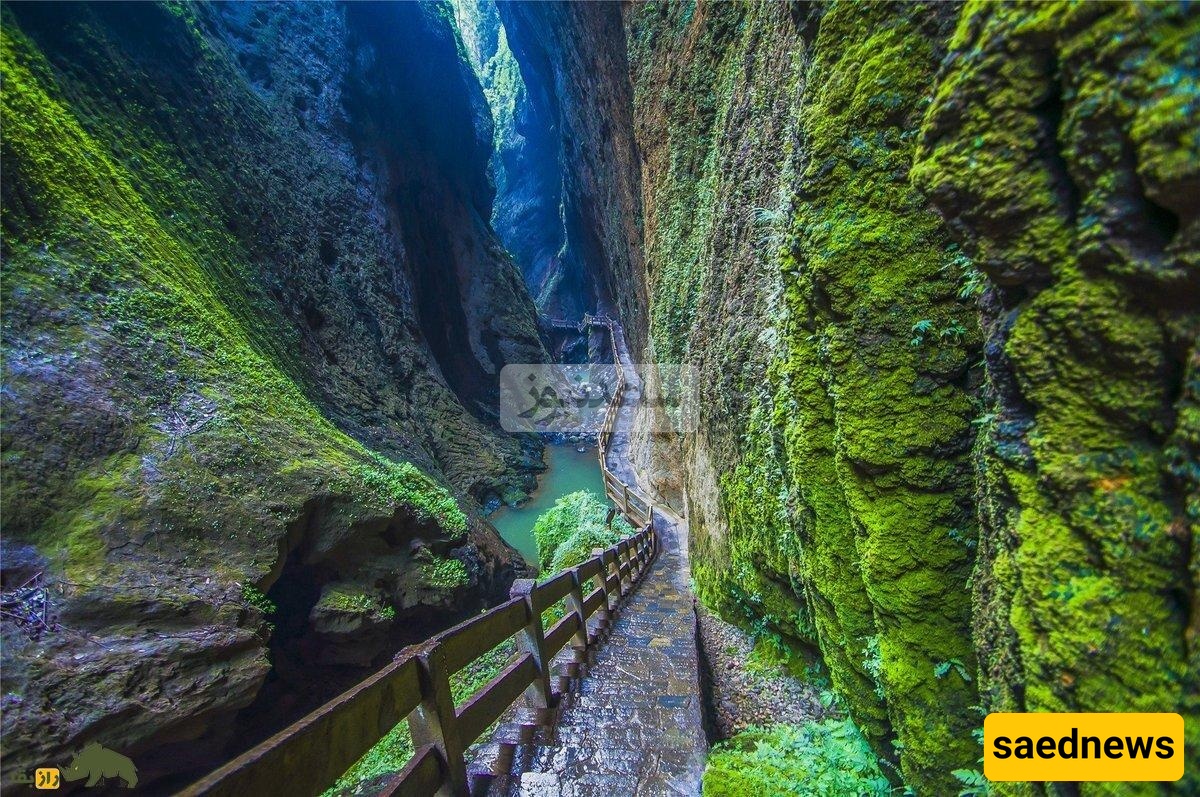
Local authorities have built limited infrastructure, such as observation platforms and guided tours, to balance tourism with environmental preservation. Xiaozhai Tiankeng continues to inspire scientific study and cultural reverence and is frequently featured in documentaries and travel media as a symbol of the power and mystery of the natural world.
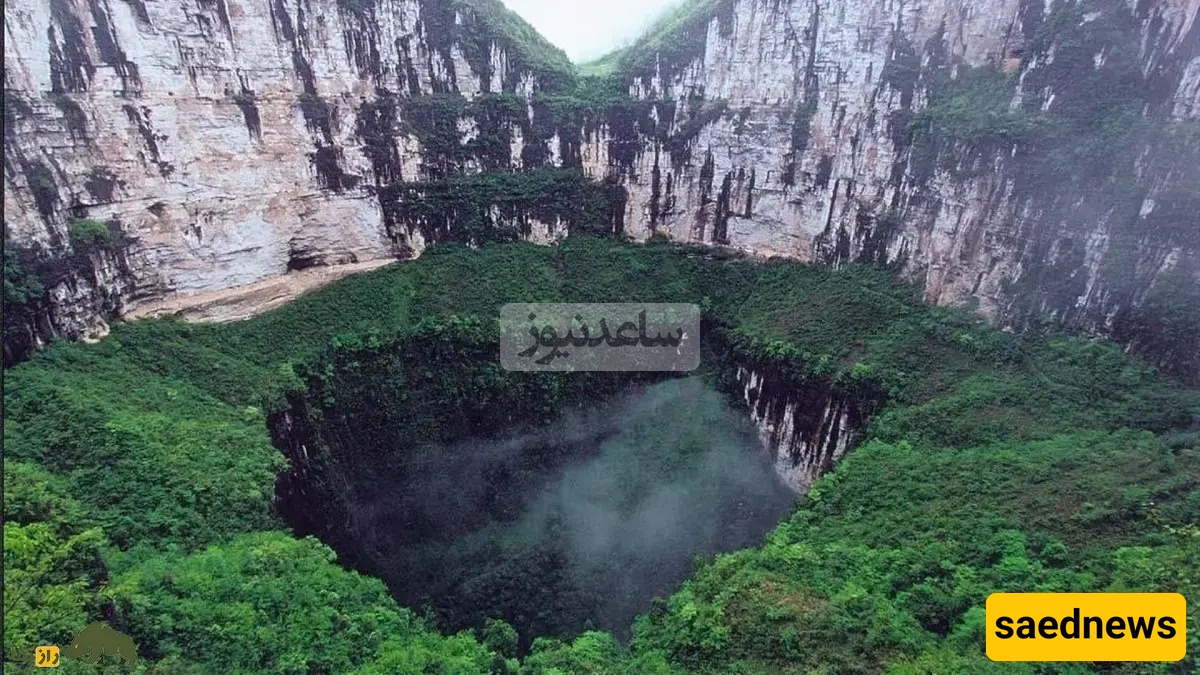
The Heavenly Pit is not only a geological wonder but also a source of remarkable phenomena. For instance, it creates a natural wind tunnel: air currents within the pit, driven by temperature differences and its vertical slope, can move at high speeds, producing localized weather patterns. Sudden mists and clouds rising from the depths create an almost otherworldly scene.
Another intriguing phenomenon is acoustic: sounds reflect unexpectedly due to the pit’s irregular and terraced walls, sometimes appearing amplified or distorted. Explorers describe this as a “hollow sound” seemingly coming from nowhere, adding to the pit’s enigmatic reputation.
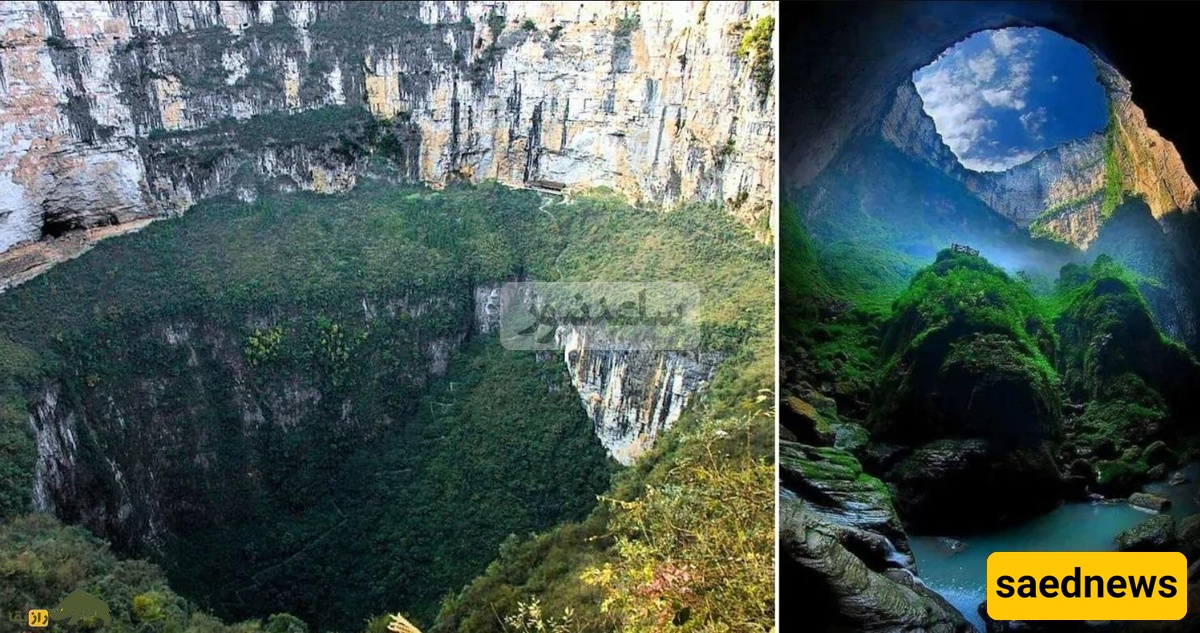
Additionally, the pit has several terraced ledges covered with lush vegetation, resembling a “hanging forest” when viewed from above—a feature rarely seen in other sinkholes worldwide.
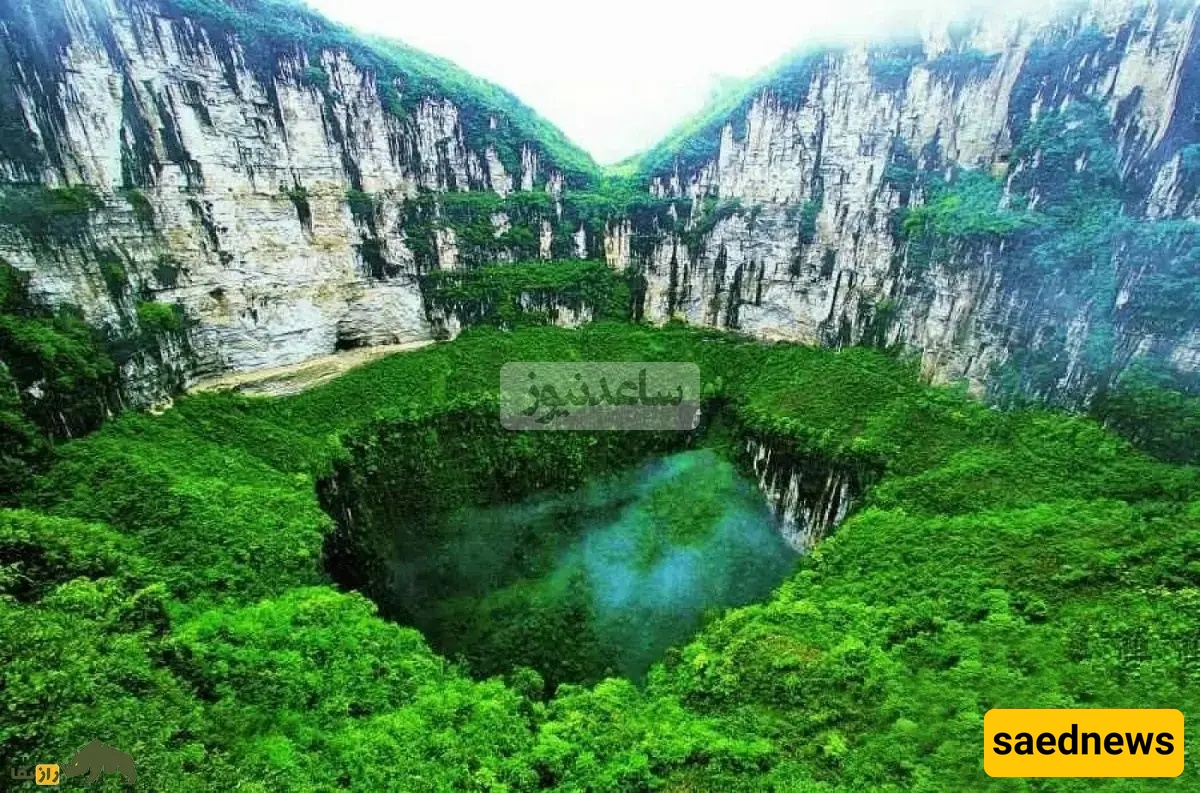
Perhaps the most unusual aspect is that the pit’s floor remains consistently moist, even with seasonal rainfall changes. Underground rivers feed the lower levels, sustaining plant and animal life year-round.
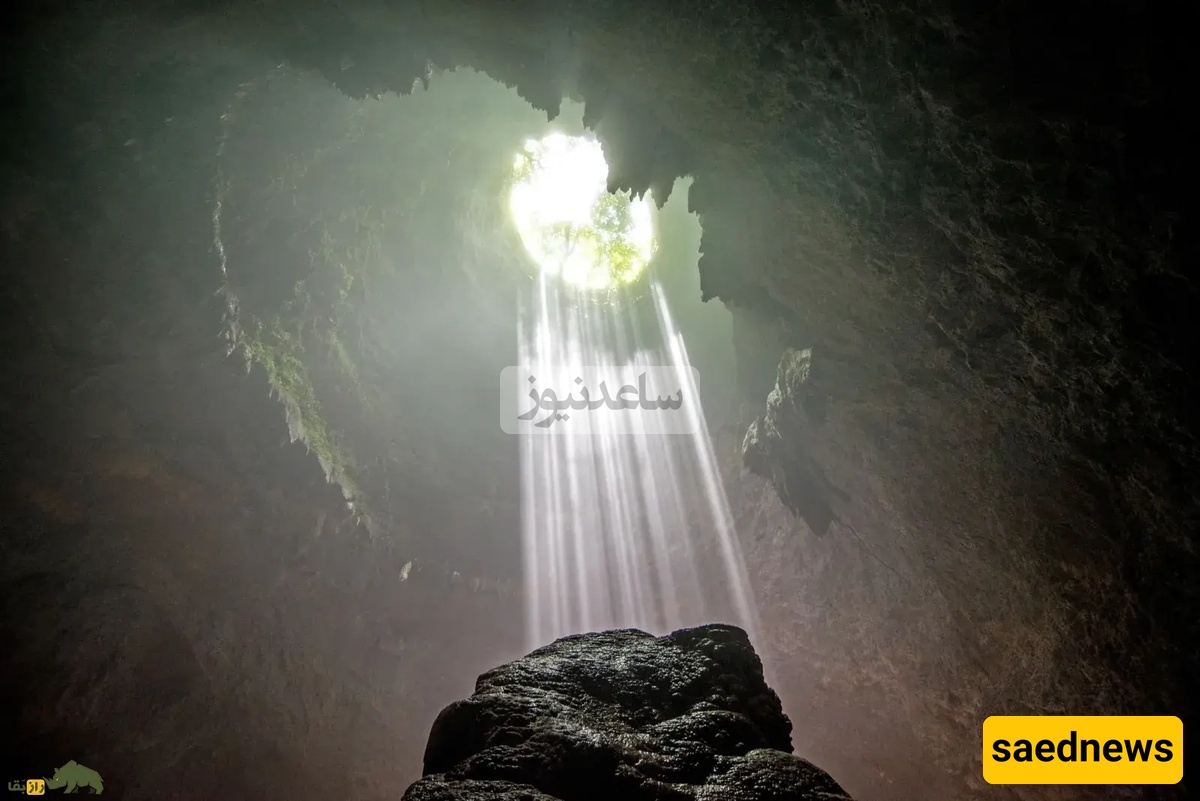
Some scientists even speculate that the Heavenly Pit may harbor unknown microorganisms uniquely adapted to its extreme conditions, potentially offering clues about survival in extreme environments and underground ecosystems. Altogether, these characteristics make the Heavenly Pit not only the world’s largest natural sinkhole but also one of Earth’s most mysterious natural wonders.