SAEDNEWS: Soldiers appeared on Benin’s state television on Sunday announcing they had removed President Patrice Talon from power in what officials described as a coup attempt, while the presidency said he was safe and loyal forces were re-establishing control.
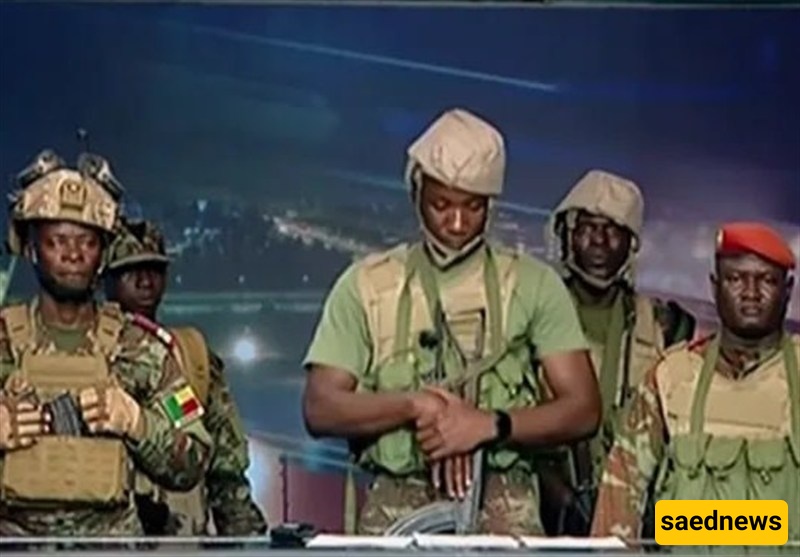
A group calling itself the Military Committee for Refoundation announced it had dissolved the government, closed the country’s borders, and suspended all political parties.
Lieutenant Colonel Pascal Tigri, speaking on state television, declared that the committee had decided President Patrice Talon “is removed from office as president of the republic.” He added that Tigri had been appointed head of the military committee.
The French Embassy reported on X that “gunfire was reported at Camp Guezo,” near the president’s official residence. Soldiers claiming to have seized power reiterated that all borders were now closed and political parties suspended.
AFP cited Talon’s office as saying the president was safe and that loyal forces were regaining control. “This is a small group of people who only control the television,” the presidency told the news agency. “The regular army is regaining control. The city and the country are completely secure.”
Benin’s Foreign Minister Olushegun Adjadi Bakari told Reuters there had been a coup attempt but insisted the situation was under control. He noted that most of the army and the national guard remained loyal to the president and were containing the unrest.
In a separate interview with Al Jazeera, Adama Gaye, former director of communications at the regional bloc ECOWAS, said the apparent coup attempt “does not come as a surprise to anyone.” He noted that longstanding political tensions, including the imprisonment of several opposition figures, had fueled public frustration.
Gaye added that Talon had “eliminated key people in the opposition party, including former President Boni Yayi,” and had already positioned his finance minister to succeed him after the next election. He said there had been expectations of a “smooth transition,” given Benin’s “great strides toward economic development,” but some viewed the planned handover as lacking credibility and feared the next leader could serve merely as a “figurehead.”
Commenting on broader regional trends, Gaye argued that the wave of coups in West Africa stemmed from countries “pretending to have democracy.” Leaders, he said, were “mismanaging democracy to stay in power; if they don’t genuinely promote democracy, they expose themselves to military coups.”
Talon, a former cotton magnate, first took office in 2016 and was re-elected in 2021 with 86 percent of the vote in an election boycotted by some opposition parties. He is due to step down next year at the end of his second term, the constitutional limit. Last month, lawmakers extended the presidential term from five to seven years but kept the two-term maximum. Opposition candidate Renaud Agbodjo was barred from the upcoming vote after the electoral commission ruled he lacked sufficient sponsorships.
Today’s events follow two other coups on the African continent in recent months. In October, Madagascar’s President Andry Rajoelina fled the country, and Colonel Michael Randrianirina declared himself president after weeks of youth-led protests culminated in a military takeover. In November, in Guinea-Bissau, General Horta Inta-A was sworn in as transitional president one day after officers said they had deposed President Umaro Sissoco Embalo, just before provisional election results were due.