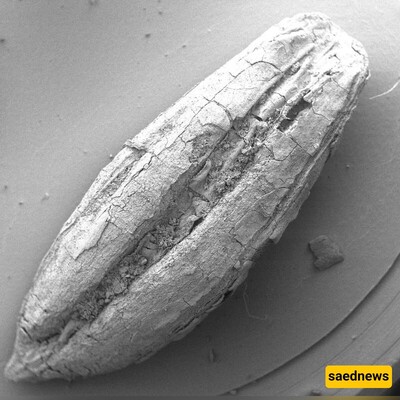
SAEDNEWS: Recent research indicates that one of the massive stones of the ancient Stonehenge monument may have been transported from northeastern Scotland—at least 700 kilometers away—to its final placement in southwestern England.
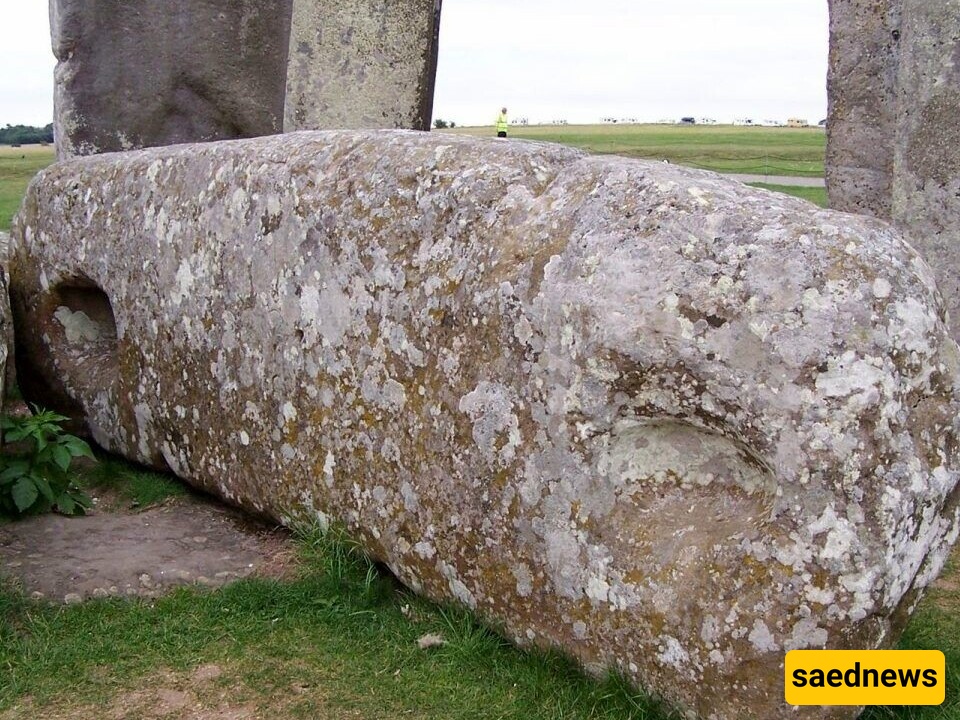
Recent research led by Curtin University suggests that the Stonehenge “bluestone” may have traveled at least 700 kilometers from northeastern Scotland to its final location in southwestern England.
The new study identifies northeastern Scotland as the source of this massive monolith, challenging the long-held belief that it originated in Wales. Moreover, the findings point to highly sophisticated transport methods and social organization around 5,000 years ago, when the stone was moved to its present site.
Published in Nature under the title “Scottish Origin of the Stonehenge Bluestone,” the research adds fresh intrigue to the story of this iconic Neolithic monument, though it remains unclear how prehistoric people managed to transport the six-ton stone across the British Isles.

Construction of Stonehenge began roughly 5,000 years ago and continued with multiple changes over the next 2,000 years. Previously, it was thought that the monument was built from two types of stones: larger sarsens, likely quarried about 25 kilometers from Marlborough, and smaller bluestones transported from the Preseli Hills in southwestern Wales.
The “bluestone”—a massive sandstone block, roughly 5 by 1 meters, buried flat in the center of the monument—was long assumed to be one of the Welsh bluestones. However, the new research contradicts this assumption.
Curtin researchers analyzed the age and mineral chemistry of the bluestone fragments at the center of Stonehenge in Wiltshire.
Anthony Clark, a Curtin PhD candidate, studied the samples in the laboratory. As lead author, he noted that the mineral composition and age of the bluestone fragments match stones from northeastern Scotland, clearly distinguishing them from the Welsh bedrock.
Clark explained, “Our analysis shows that specific mineral grains in the bluestone are predominantly 1–2 billion years old, while others are around 450 million years old. This creates a distinct chemical fingerprint indicating that the stone comes from rocks in the Orkadian Basin of Scotland, at least 750 kilometers from Stonehenge. Considering its Scottish origin, the findings raise fascinating questions about how Neolithic people moved such a massive stone over long distances around 2600 BCE, given the technological constraints of the era.”
Clark added a personal note: “I grew up in the Preseli Hills of Wales, where some Stonehenge stones came from. I first saw Stonehenge when I was one year old, and now at 25, I’ve returned from Australia to contribute to this scientific discovery.”
Professor Chris Kirkland, co-author of the study, emphasized that the findings provide important insights into ancient communities, their networks, and transport methods.
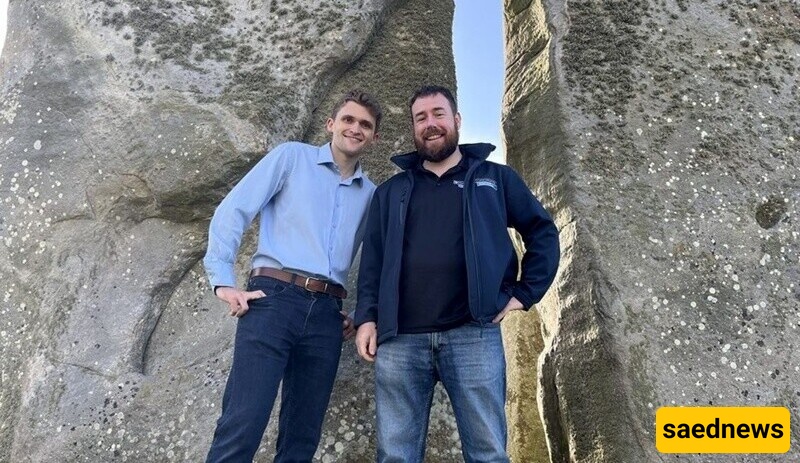
He noted, “Our discovery about the bluestone’s origin points to a remarkable level of social coordination during the Neolithic and helps paint a vivid picture of prehistoric Britain. Moving such enormous stones overland from Scotland to southern England would have been extremely challenging and suggests a possible maritime route along Britain’s coasts. This implies long-distance trade networks and a level of social organization previously underestimated in Neolithic Britain.”
Professor Harleen Hayne, Deputy Vice-Chancellor of Curtin University, highlighted that much of the analysis conducted by Clark and Kirkland was carried out at the university’s renowned John de Laeter Centre.
The research, funded by the Australian Research Council Discovery Project, involved collaboration with the University of Aberystwyth, the University of Adelaide, and University College London.