SAEDNEWS: There is always this question in the minds of travelers: if someone flies in the opposite direction of the Earth’s rotation, should they arrive at their destination sooner than usual, since the destination is constantly moving closer to them?
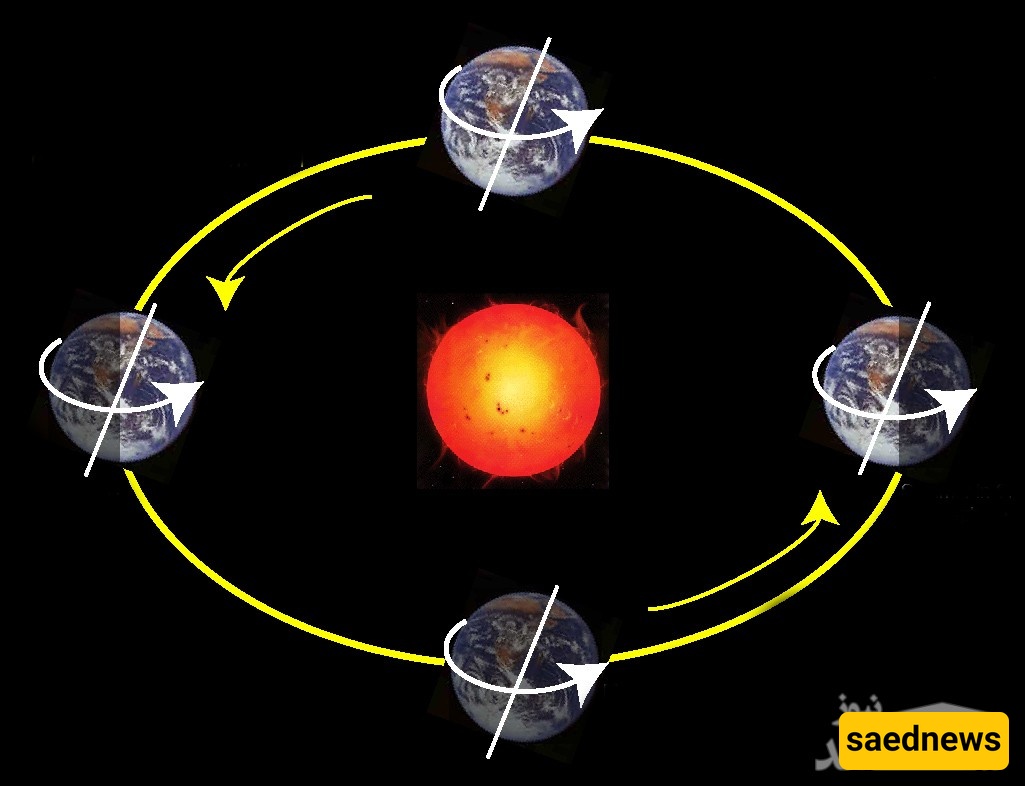
According to Saed News and quoted from ITabnak, the Earth is rotating around its axis at an incredible speed. In this case, common sense suggests that if a person flies on an airplane in the opposite direction of the Earth’s rotation, they should arrive at their destination sooner than usual, because the destination is moving toward them.
If a destination moves toward a traveler, it may seem that the passenger would reach it faster than normal. However, in reality, this is not the case.
The Earth rotates from west to east at a speed of about 1,180 kilometers per hour. If a person is flying westward toward a destination, and we assume the destination is moving toward the aircraft due to Earth’s rotation, one might expect the flight to be shorter. The short answer is no.
In this situation, the person does not arrive earlier than usual because the airplane is also affected by the Earth's rotation. While the destination is rotating toward the aircraft, the aircraft itself is also moving along with the Earth's atmosphere, effectively maintaining the same relative motion.
Although the Earth rotates at about 1,670 kilometers per hour at the equator toward the east, both the Earth's surface and everything on or above it—including the atmosphere—move with this rotation. In more northern or southern regions, the rotational speed is lower, around 1,180 kilometers per hour.
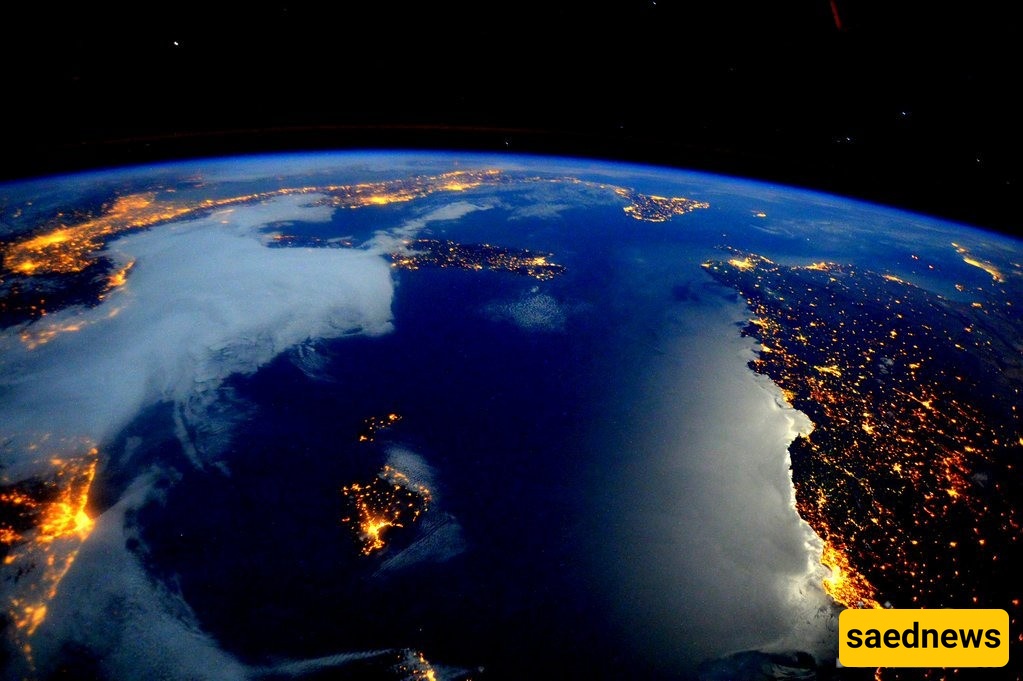
Even the air surrounding the Earth rotates along with it. Therefore, when an airplane flies westward, it is not simply meeting a stationary target moving toward it. Instead, it is moving within a rotating system where both the aircraft and the destination share the same overall motion.
For example, an airplane flying east at 160 km/h near the equator effectively has a ground speed of 1,830 km/h (1,670 + 160). But when flying west at 160 km/h, its effective speed relative to Earth’s rotation becomes 1,510 km/h (1,670 − 160).
In reality, while flying west, you are still moving within the same rotating system as the Earth, just at a lower effective speed relative to the rotation.
These conditions change only near the poles, where the effect of Earth's rotation becomes minimal and movement is not significantly influenced by eastward rotational speed.
This is why flight times for the same route in opposite directions are usually different. Strong atmospheric jet streams, which are themselves influenced by Earth's rotation and shape, also significantly affect flight durations.