Saed News: Kuyi was a wealthy woman from a prominent family in the Qian region of China who died in 878 AD. After archaeological excavations in this woman’s tomb, the skeletons of three donkeys were found.
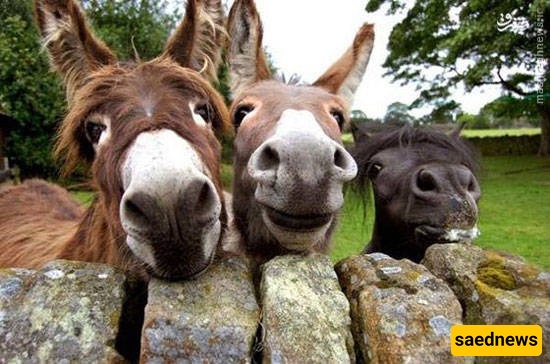
According to SAEDNEWS, quoting Tabnak Bato, in modern times donkeys are considered infamous animals. Donkeys do not have the remarkable physique of horses; they are shorter and have larger bellies. In modern culture, the name of this animal is often associated with ignorance, stubbornness, and foolishness.
But if the noble Chinese woman in today’s report were alive now, she would disagree with our modern view of donkeys, because the bones of three donkeys were discovered inside her grave. But what is the secret behind this noblewoman’s affection, who lived during the Tang dynasty?
The owner of this controversial tomb is named Kuyi Chi. She was a wealthy woman from a well-known family in the Qian region of China who died in 878 AD. Lady Chi loved these animals so much that before her death she bequeathed that three donkeys be buried alongside her body.
It appears that despite all the negative traits associated with them, these animals are very loyal. In fact, the donkey was an animal with which Lady Chi played the sport of polo, which she greatly loved.
This Chinese woman played polo using donkeys instead of horses. According to a research report published in March 2020 in the journal Antiquity, donkeys are shorter and less agile, and therefore less dangerous than horses.
The discovery of Lady Chi’s tomb is the first reliable evidence of donkey polo in ancient China. Before this discovery, donkey polo was only mentioned in historical books, but this finding not only confirms historical records but also shows that donkeys were not only used for hard labor and transport but also had greater value in the ancient world.
A researcher involved in excavating Lady Chi’s tomb in 2012 says: donkeys were not only for the elite, but also used by ordinary people for daily purposes.
It seems that Kuyi Chi understood the unusual and noble aspects of these powerful animals in ancient times. Her husband was a Chinese general named Bao Gao. Polo was a popular sport for them.
Polo sometimes caused injuries, and players were killed after falling from horses. The general was highly skilled in polo and lost one of his eyes during a match. The Chinese emperor Motzong also died after falling from a horse. To reduce injuries and deaths in polo, nobles considered replacing horses with donkeys and named this game Lvju. Donkeys were calmer, more stable, lower, and less dangerous. Although donkey polo existed alongside horse polo, researchers say only horse polo was recorded in historical documents.
Lady Kuyi Chi’s tomb shows that she had a strong affection for donkeys; at least she wished to be buried with them. She died at the age of 59. Her death was not related to donkey polo. Shortly before her death, she requested to be buried with the donkeys she used in polo so she could remain with them forever.
Unique signs on the donkey bones found in Kuyi Chi’s tomb indicate that these donkeys spent most of their lives running fast, turning, and making sudden movements, which are only associated with polo.
Sunghua Song, a researcher at the Shaanxi Archaeological Academy, says: these findings show that the donkeys found in the tomb were used in polo, not for transportation.
However, William Taylor, an anthropologist at the University of Colorado who was not involved in the study, says these signs could also indicate that the donkey was used for pulling carts or grinding grain, which can produce similar effects on bones.
In both cases, research shows that donkeys held a special status in ancient times, and archaeologist Sandra Olsen from the University of Kansas says: it is time to better understand the value and importance of donkeys.