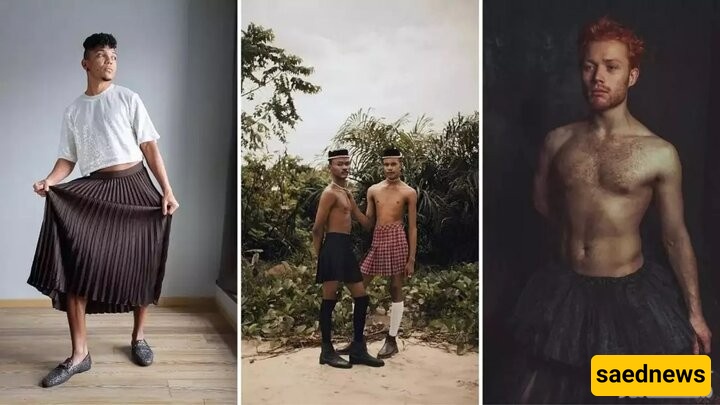
SAEDNEWS: A look at the world of news shows that the number of men—from Hollywood superstars and music icons to everyday people around us—gradually putting aside their pants in favor of skirts is increasing.
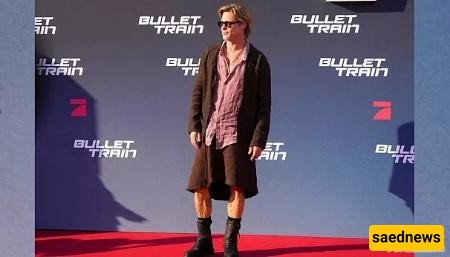
According to Saed News, quoting Bitoteh, one of the latest examples of this trend is 58-year-old American actor Brad Pitt. At a special event in Berlin for the premiere of his newest film Bullet Train, he wore something resembling a kilt—the traditional Scottish men’s skirt—and when asked why, he said he wanted to “feel the breeze.”
A look at recent news shows that more and more men—from Hollywood superstars and music icons to ordinary people around us—are gradually setting aside pants and embracing skirts.
Another example is Lee Moran, an employee of a municipal waste disposal company in the UK. Not on a red carpet, but during his daily work in the city, he chose to wear a kilt. Restricted from wearing shorts due to “safety and hygiene concerns,” he picked a skirt to better tolerate the extreme heat.
J. McCauley, a lecturer in history and cultural studies at the University of the Arts London, believes this shift isn’t straightforward.
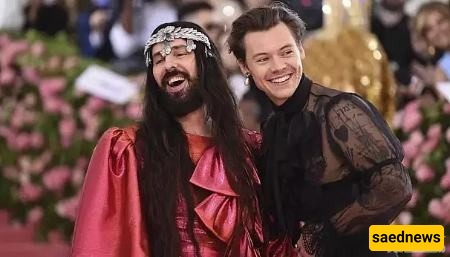
He argues that men wearing skirts at events like the Met Gala is often intended to attract public attention. Beyond such occasions, however, strong cultural norms still govern men’s clothing choices. While some shifts in men’s and women’s dress culture have occurred over the years, certain taboos persist.
That’s why changes are rarely “radical.” For example, wearing a formal dinner jacket is no longer mandatory as a men’s dress code, and avant-garde clothing seen on magazine covers or fashion runways is seldom worn on the streets.
Still, McCauley notes that these innovative designs are not meaningless; they can be interpreted as symbolic resistance to rules that dictate how people dress based on gender.
Historical clothing trends in Europe show that what we now consider women’s clothing was not always designed for women. The “Men’s Fashion” exhibition at the Victoria & Albert Museum in London illustrates this. Visitors were surprised to discover that cheerful colors like pink were once common in stylish men’s attire, and that many contemporary women’s fashions were influenced by historical men’s clothing.
Justin Bengry, a history lecturer at the University of London, also points to the cultural significance of famous men adopting traditionally feminine attire, including its impact on the acceptance of diverse gender expressions. He says:
“The extraordinary history of sexual and gender diversity teaches us that individuals—whether famous or not—don’t need to adopt the labels imposed upon them to present themselves.”
McCauley agrees, highlighting British singer and actor Harry Styles. Observing Styles’ largely young female fanbase, he notes how the gentle, gender-fluid image Styles projects has helped change perceptions of masculinity in society.