SAEDNEWS: The year 2025 was thrilling for astronomy, marked by the discovery of interstellar comets, supermassive black holes, traces of past life on Mars, and variable dark energy. The Vera Rubin Observatory opened a new frontier in space exploration, capturing unprecedented images of galaxies and nebulae.
According to SaedNews Science Service, 2025 was marked by numerous astronomical discoveries that captured the attention of space enthusiasts. From newly identified exoplanetary neighbors and hints of weakening dark energy to the strongest evidence yet for past life on Mars and an interstellar comet that sparked global fascination, the year’s cosmic findings were packed with remarkable revelations.
A New Interstellar Comet
Undoubtedly, the standout event of the second half of 2025 was comet 3I/ATLAS, the third interstellar object discovered passing through our solar system.
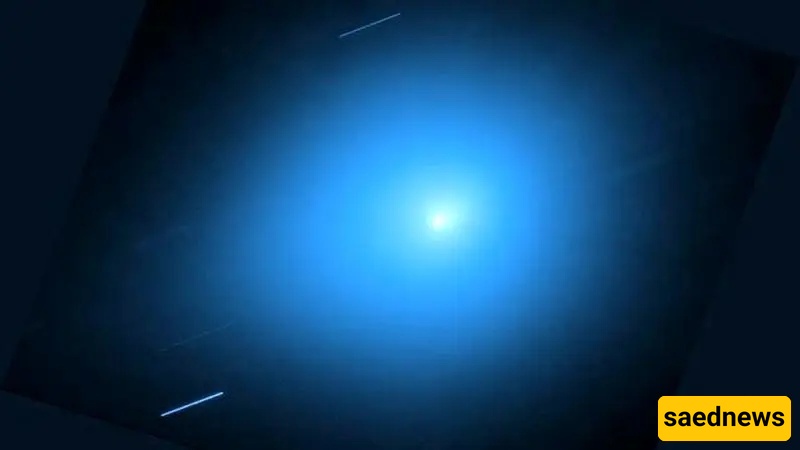
Chile’s Asteroid Terrestrial-impact Last Alert System (ATLAS) spotted this interstellar visitor on July 1 as it silently crossed the stars of Sagittarius. It soon became clear that its trajectory was highly hyperbolic. Unlike solar system comets that orbit the Sun, 3I/ATLAS merely passed through, moving faster than any comet previously observed. Traveling at an extraordinary 58 kilometers per second, the comet likely wandered the interstellar void before the solar system formed, receiving gravitational nudges from nearby stars.
By September, 3I/ATLAS had moved behind the Sun, making it impossible to track from Earth until it reappeared in mid-November. NASA and the European Space Agency (ESA) relied on spacecraft observations during solar conjunction to capture clearer images.
Researchers have confirmed that 3I/ATLAS is indeed a comet, displaying familiar cometary characteristics. Its chemistry largely resembles solar system comets, though with slight variations: a higher carbon dioxide-to-water ratio and slightly more nickel than iron, reflecting the composition of its parent star system. ESA notes that interstellar comets are truly alien; unlike the solar system’s planets, moons, asteroids, and comets that share a common origin, these objects carry clues about planetary formation far beyond our system.
The Birth of Supermassive Black Holes
Since the James Webb Space Telescope began deep-sky observations in 2022, astronomers have identified tiny red dots in the cosmic background. Initially thought to be dwarf galaxies or dense star clusters, their brightness defied standard cosmological models, prompting some critics to question the framework of cosmology itself.
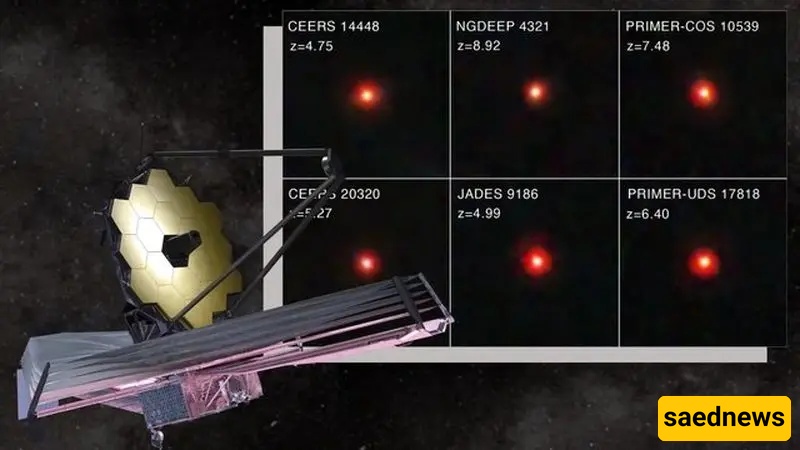
By September, astronomers revealed that these red dots are actually “black hole stars”—supermassive black holes forming less than a billion years after the Big Bang within massive, dense gas clouds. These early black holes may have arisen from direct gravitational collapse of gas clouds or mergers of countless stellar-mass black holes formed from collapsing stars within dense clusters.
Anna de Graaff of Cornell University, leading one research team, suggests that these observations likely reveal a previously unknown phase in black hole growth, offering critical insight into the early universe and galaxy formation.
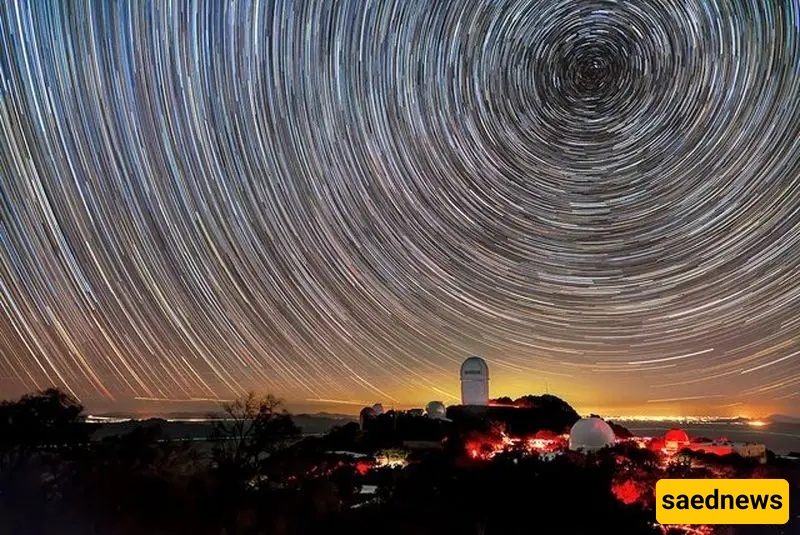
Dark Energy Appears to Weaken
The first full release of data from the Dark Energy Spectroscopic Instrument (DESI) at the Nicholas Mayall Telescope in Arizona revealed a surprising trend: dark energy, responsible for accelerating cosmic expansion, may be weakening.
This contradicts the long-standing assumption that dark energy is a constant, unchanging force. While the results are not yet definitive, they are compelling. DESI’s three-year survey, published in March 2025, included 13.1 million galaxies, 1.6 million quasars, and roughly 4 million stars, forming the largest and most precise 3D map of the nearby universe to date.
Findings suggest dark energy may have begun to weaken around 4.5 billion years ago. Over the past nine billion years, it appears to have been stronger than expected. This so-called “phantom dark energy” behaves in ways that challenge current cosmological models and deepen the mystery of the universe’s expansion.
A Year Full of Biosignatures
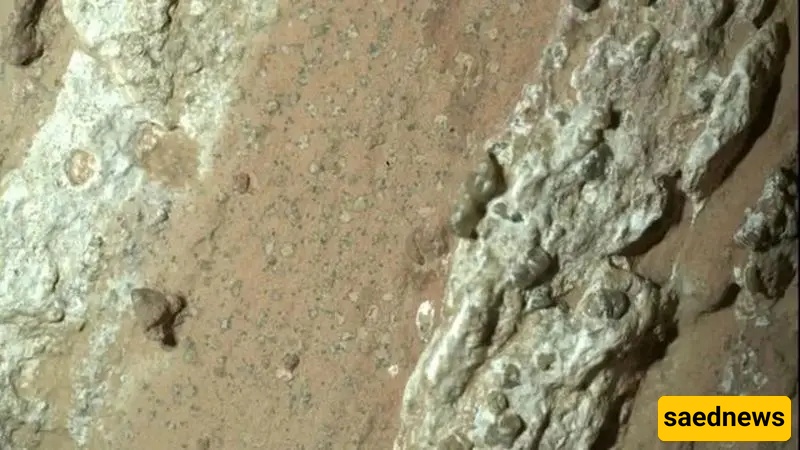
2025 revealed some of the most exciting and debated signs that humanity may not be alone in the universe. The strongest evidence for past life on Mars emerged in September 2025 thanks to NASA’s Perseverance rover, which detected bright red spots surrounded by darker material.
These “leopard spots” are not unusual on Earth and typically form either from exposure to acidic, warm conditions or through biological activity. Organic molecules were also found in sedimentary rocks, though Perseverance could not confirm them. Together, these discoveries provide the most compelling evidence yet that microbial life may have existed in Jezero Crater 3.5 billion years ago.
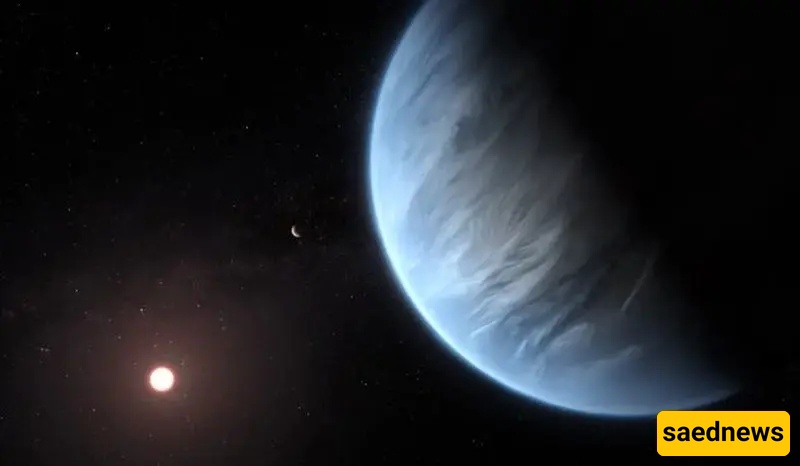
On the exoplanet front, James Webb detected a new biosignature on K2-18b. Previously, researchers identified dimethyl sulfide alongside methane and oxygen, suggesting that K2-18b could be a “Hycean planet”—an ocean world enveloped by a hydrogen-rich atmosphere. March 2025 observations strengthened the case for dimethyl sulfide as a potential biosignature, though some astronomers remain cautious, noting non-biological explanations are possible.
New Nearby Exoplanet Neighbors
Astronomers made significant progress in confirming new exoplanets around nearby stars such as Proxima Centauri and Barnard’s Star. Observations in 2025 confirmed the existence of a small rocky planet around Barnard’s Star and three smaller exoplanets. The largest is one-third Earth’s mass; the smallest, one-fifth. None lie within the habitable zone, though temperate-zone planets remain plausible elsewhere.
James Webb observations in August provided the strongest evidence yet for a planet orbiting Alpha Centauri A, likely a gas giant similar in mass to Saturn. If confirmed, this would be the nearest exoplanet in the habitable zone of a Sun-like star, though its gaseous nature precludes Earth-like life.
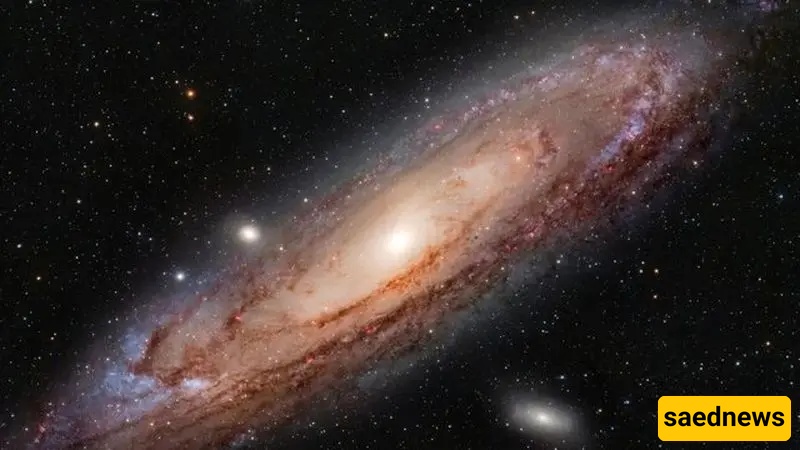
Uncertain Future for the Milky Way and Andromeda
New research indicates the Milky Way and Andromeda galaxies may not collide within the next 10 billion years. Updated gravitational modeling, accounting for the Triangulum Galaxy and the Large Magellanic Cloud, suggests a 50–50 chance of collision. Simulations show that if the galaxies come within 650,000 light-years, a merger will occur; otherwise, they will continue separately.
The Largest Black Hole Observed
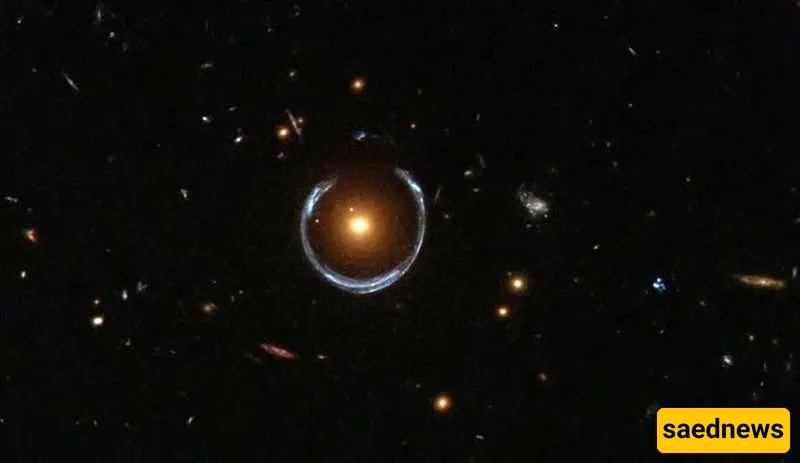
In 2025, astronomers reported possibly detecting the largest black hole ever observed: a 36-billion-solar-mass monster at the center of the Cosmic Horseshoe galaxy. Acting as a gravitational lens, it distorts light from a more distant galaxy into an Einstein ring shaped like a horseshoe. Unlike other massive black holes measured indirectly, this mass was determined directly by observing the motion of nearby stars. It dwarfs Sagittarius A*, the Milky Way’s central black hole.
First Light at Vera Rubin Observatory
After more than 25 years of planning and a decade of construction, Chile’s Vera Rubin Observatory, featuring an 8.4-meter Simonyi Survey Telescope, saw first light in summer 2025. Its images revealed unprecedented detail across the night sky, including the Virgo Cluster, the Trifid Nebula, and the Lagoon Nebula.
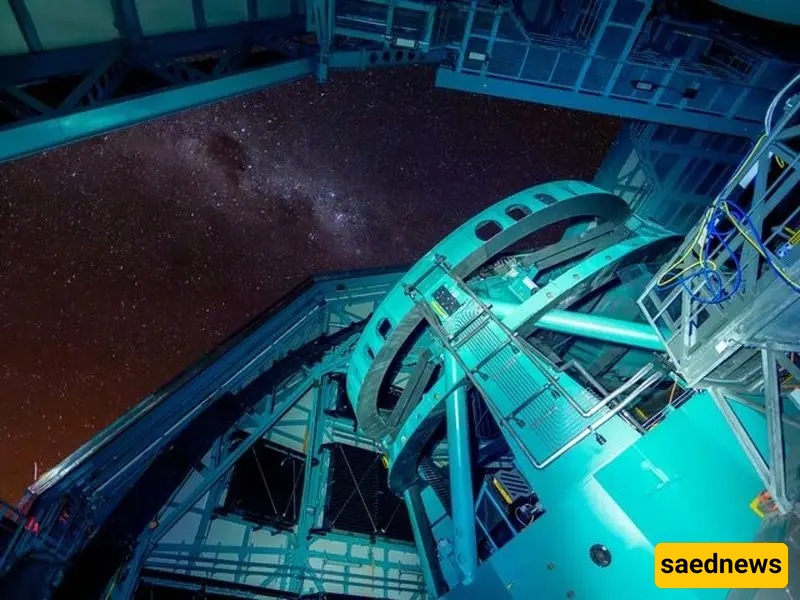
Equipped with a 3.2-gigapixel CCD—the largest camera ever built—the observatory will generate 20 terabytes of data nightly, issuing 10 million alerts daily for asteroids, variable stars, tidal disruption events, and supernovae. Over its initial 10-year survey, Vera Rubin is expected to collect 60,000 terabytes, potentially triggering a wave of unprecedented astronomical discoveries.