SAEDNEWS: This 3,500-year-old covered chariot is the best-preserved example of its kind in the world. Found in a noble’s tomb, the ancient masterpiece was likely buried with its owner to accompany them on the journey to the afterlife.
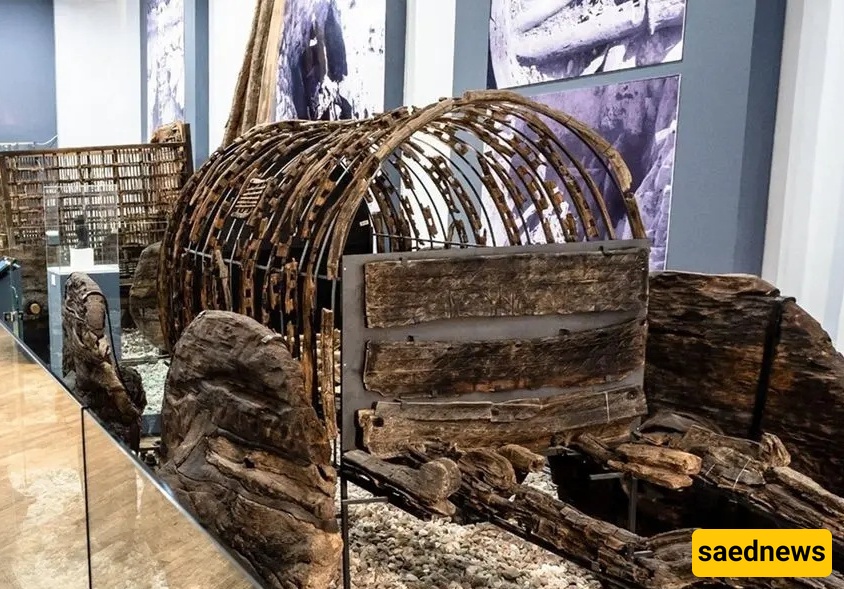
Archaeologists in Lachashen, Armenia, have excavated six oak chariots from an elite Bronze Age cemetery. Each had four wheels on two axles; two were open, while four featured intricate frame-like structures on top. One is the best-preserved example of an early covered chariot.
On display at the History Museum of Armenia in Yerevan, the Lachashen chariot consists of at least 70 pieces joined with a tongue-and-groove system of wooden planks and bronze fittings. Archaeologist Stuart Piggott noted in 1968 that its canopy framework required at least 600 pegged joints, highlighting the precision and skill involved.
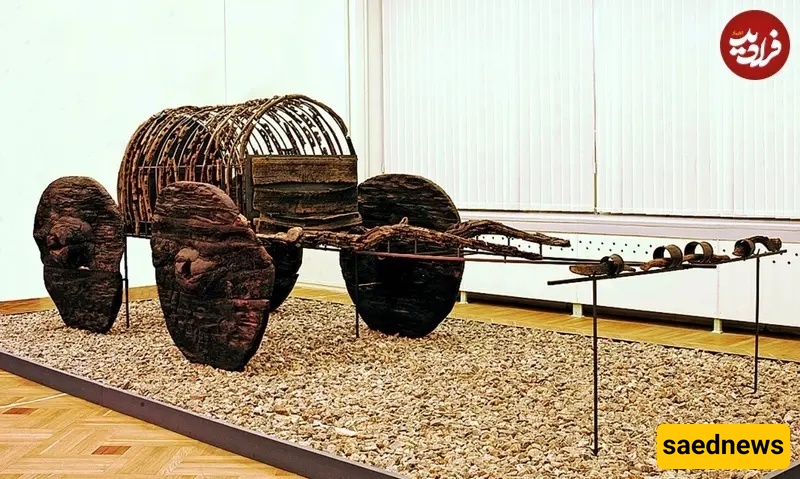
About 2 meters long, each wooden wheel is made of two joined planks and stands roughly 1.6 meters high. The chariots were discovered in the 1950s when Soviet workers drained part of Lake Sevan for irrigation, revealing a Late Bronze Age cemetery with over 500 burials and hundreds of grave goods. Notable features include two- and four-wheeled chariots and bronze models of war wagons.
While some claim the Lachashen chariot is the “world’s oldest,” earlier examples of wheeled vehicles—including covered chariots—exist. Wheeled transport likely originated in Mesopotamia during the Copper Age (c. 4500–3300 BCE).
Still, the Lachashen chariot represents a very early and exceptionally well-preserved covered design with spoked wheels, showcasing innovation in early wheeled vehicles. Whether this technology emerged in Armenia or arrived from southern Mesopotamia or the Russian steppes remains under study.
According to the History Museum of Armenia, wheeled burials appeared in the Middle Bronze Age (2400–1500 BCE) and peaked in the Late Bronze Age, serving both practical transport and symbolic purposes for moving a deceased leader to the afterlife.