SAEDNEWS: Angkor Wat is a complex of temples built in the early 12th century for King Suryavarman II in Cambodia, serving as his state temple and capital. Now, one of the gate guardians of this historic site has been uncovered after centuries beneath the soil.

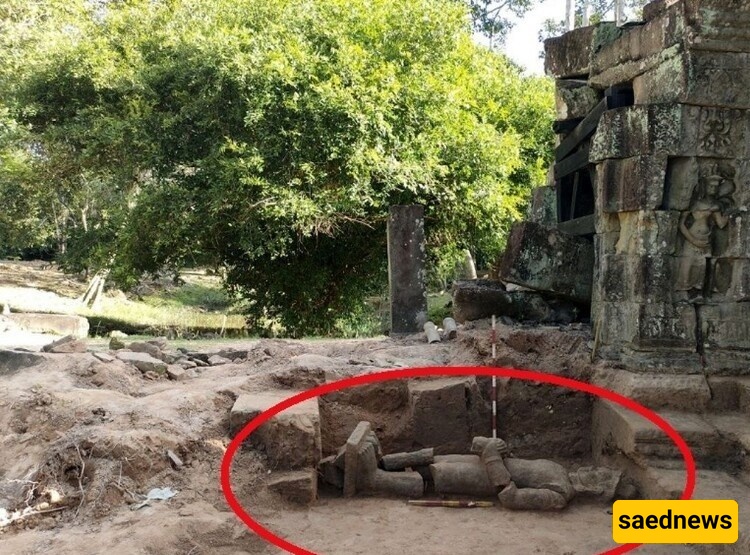
According to the History and Culture Service of Saed News, a statue of a stone guardian has been discovered at Banteay Prei Temple, located in the ancient Khmer capital of Angkor Wat, Cambodia. The statue was found about 76 centimeters below the ground, near the eastern entrance of the temple’s second gate, while archaeologists were clearing debris from a collapsed gate.
The guardian statues, known as Dvarapala, derive their name from two Sanskrit words meaning “gate” and “guardian.” These figures were placed at entrances to Hindu and Buddhist temples, as well as royal palaces across Southeast Asia, serving as symbolic protectors. They were typically depicted as armed warriors, often standing with their hands resting on a large club pointed toward the ground.
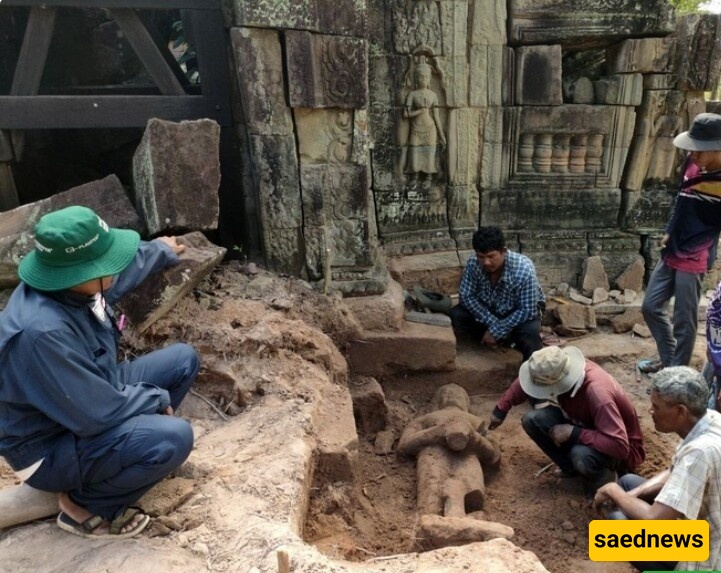
The newly discovered Dvarapala stands 157 centimeters tall. When the upper structure of the gate collapsed, the statue broke into six pieces. The neck, left forearm, waist, and both legs were fractured, though all broken parts have been recovered, except for a few sections of the club. A small portion of the club’s handle remains beneath the statue’s hands, while a longer piece that rested in front of its feet is also preserved.
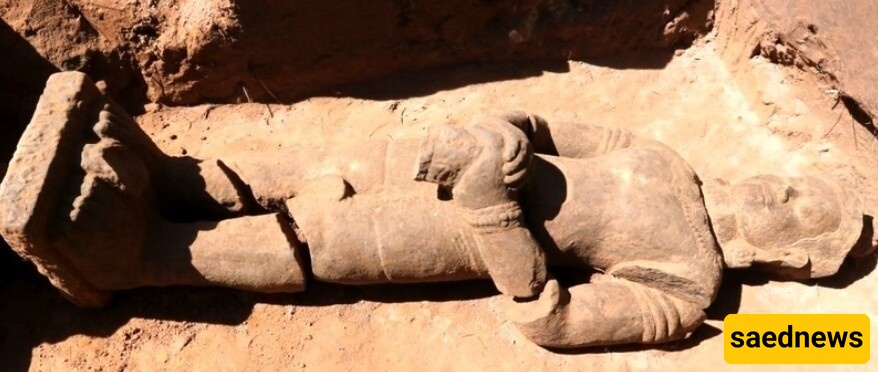
The statue’s serene and composed facial expression reflects the “Bayon” style, named after the Bayon Temple at the center of Angkor Thom, the Khmer capital under King Jayavarman VII. The latest temples in the Angkor Wat complex date to this period. Banteay Prei Temple, located about five miles (8 kilometers) north of the main temple, is relatively remote. Like the Bayon, it was built by King Jayavarman VII in the late 13th or early 14th century, and the Dvarapala statue dates from the same era.