SAEDNEWS: British archaeologists recently discovered a variety of carved medieval tombstones while surveying the area around a wrecked medieval ship.
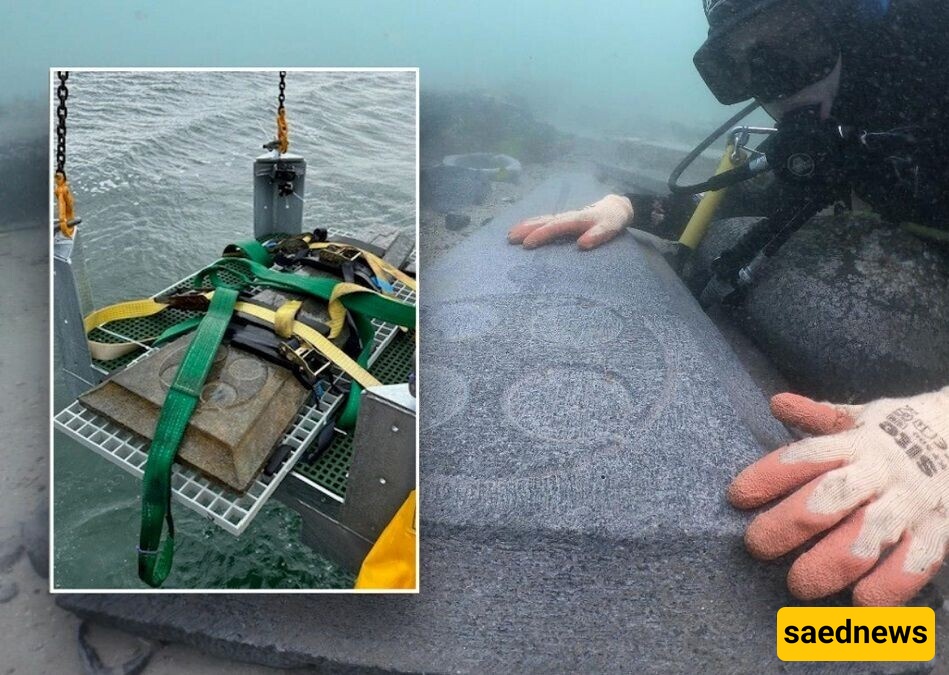
According to the Bournemouth University community news service, the discovery of centuries-old tombstones was announced in a press release on Friday. The stones were recovered from Studland Bay, off the coast of Dorset, and are believed to have been submerged in the English Channel for around 800 years.
The press release explained: “These Purbeck marble slabs were part of the cargo of England’s oldest known historical shipwreck, which sank off the Dorset coast during the reign of Henry III in the 13th century. Henry III, son of King John, ascended the throne in 1216 and ruled until his death in 1272.”
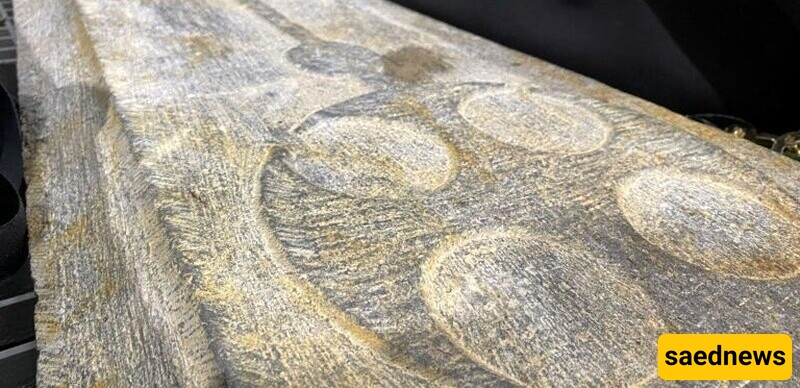
Images show the tombstones have survived remarkably well over the centuries, despite one being covered in barnacles. Marine archaeologists spent over two hours last Tuesday carefully bringing the slabs back to the surface.
“One of the tombstones, completely intact, measured 1.5 meters in length and weighed around 70 kilograms. The other, much larger and in two pieces, measured 2 meters and weighed approximately 200 kilograms. In pounds, the stones weigh roughly 154 and 440 pounds, respectively.”
These heavy tombstones were likely intended for high-ranking clergy, who were highly respected in medieval English society.
“Both stones feature carvings of Christian crosses, common in the 13th century, and our research team believes these crosses served either as coffin lids or as memorial markers for esteemed clerics.”
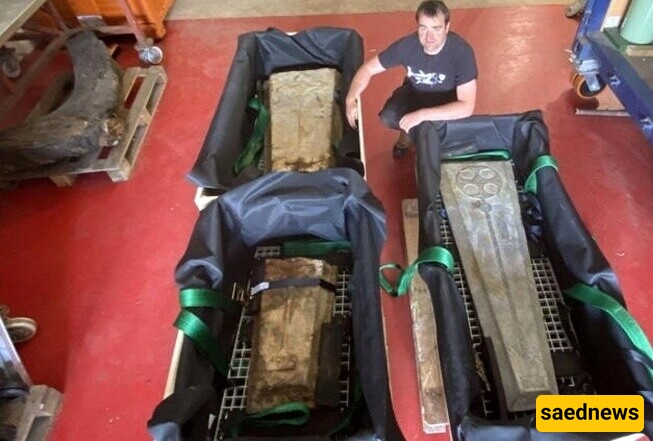
Tom Cousins, the archaeologist leading the study, noted that the type of stone used for these tombstones can also be found in Westminster Abbey, Canterbury Cathedral, and Salisbury Cathedral. “This ship sank at the height of Purbeck marble craftsmanship, and the tombstones we recovered here were a widely used form of commemoration for bishops and archbishops across England’s churches and monasteries at the time.”
Cousins added, “Although Purbeck marble was quarried near Corfe Castle in Dorset, there has always been debate over how much work was completed locally versus in London. We now know these tombstones were definitely carved here, although they were not finished to a polished shine when the ship sank.”
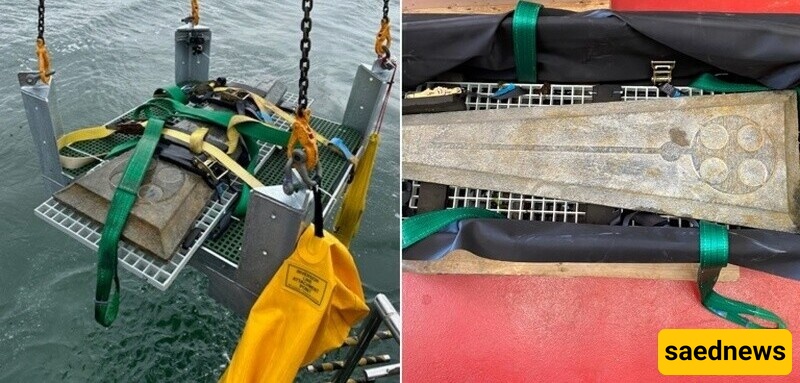
Bournemouth University archaeologists are now working to desalinate the tombstones before they go on public display next year.
Ongoing discoveries like this give the Bournemouth team valuable insight into 13th-century life and the ancient art of stone carving.


















![[Video] Two Aircraft Intercepted Near Trump Golf Club After Entering Restricted Airspace](https://en.saednews.com/storage/files/post/678cf3b4-38d3-4114-b229-5316bfbe9da7-vOkXyCloq1rXAPV1/1x1-image.jpg)