SAEDNEWS: Hearing the birds sing every morning is a gift for everyone who wakes up early. Of course, this sound can be irritating for many people. But the important question is: why do birds do this?
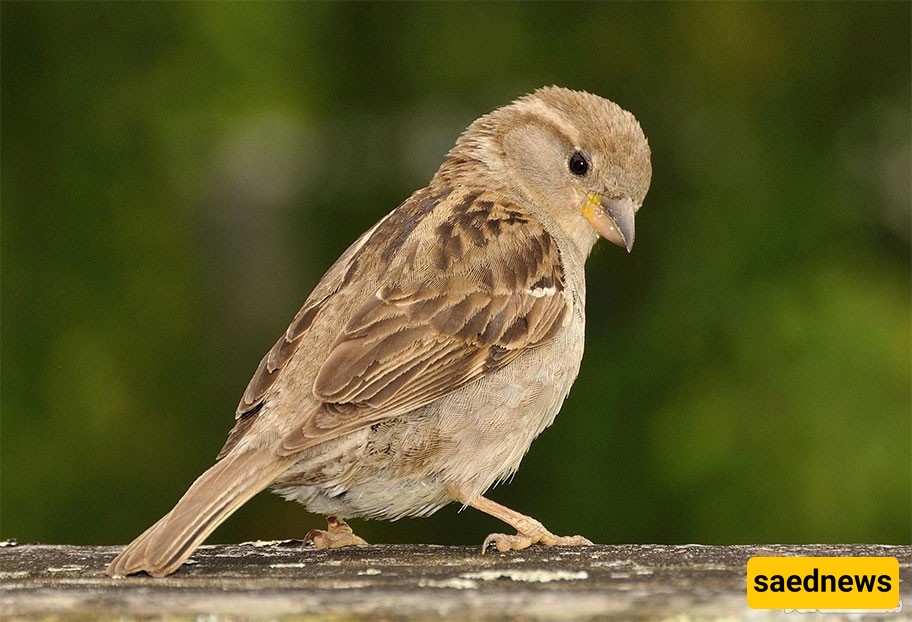
According to Saed News’ Society Desk, birds around the world make noise and sing loudly in the early hours of the day. But why do birds perform this morning chorus, and why do their songs differ?
It’s important to note that not all birds sing in the same way. Naturally, all birds make sounds, but only some produce structured songs. These songs are usually complex and composed of multiple notes.
A songbird may spend weeks listening and months practicing before it can perform a complete song. Typically, these songs serve purposes such as attracting a mate or marking territory to warn competitors. For instance, a chick that has just hatched can already call and beg for food. The sounds an animal can produce depend on the structures it has built; the larger a bird’s syrinx, the deeper and richer its song can be.
Research also suggests that different bird species may have specific sensory preferences. The bird’s brain appears to influence its singing, and some birds can even develop distinct dialects within different populations.
A 2012 study found that birds living in noisy urban environments adjust their calls and songs in response to background noise. Some increased the minimum frequency of their songs to reduce interference from low-frequency urban noise that makes it difficult for other birds to hear. Others altered the speed of their singing or emphasized certain syllables and patterns that travel better in specific soundscapes.
Despite extensive research, scientists have yet to reach a consensus on why birds sing at dawn. According to Dr. Dominic Potvin, an evolutionary and behavioral ecologist, one hypothesis is that birds sing in the early morning due to a combination of several factors.
Many creatures do not produce sounds early in the morning because cold-blooded animals, like frogs, invertebrates, or insects, do not have enough energy to create loud noises before sunrise.
Another factor is humidity: early mornings tend to have higher moisture in the air, which allows sound to travel slightly faster. Water molecules are less dense than oxygen, nitrogen, or carbon dioxide molecules, creating a more efficient medium for sound.
Another theory is that the dawn chorus may be a way for a bird to signal that it is well-fed and healthy, broadcasting its status to mates and rivals. A 2006 study showed that well-nourished birds are more likely to sing at dawn, while hungry birds are less inclined to do so.
Additionally, morning songs may serve as a simple “I’m still alive” message to other birds—a reassurance that the singer survived the night.
Professor Sonja Klindorfer, a biological systems expert and professor at Flinders University, adds: “Another way to think about this phenomenon is to ask whether there is a mechanical explanation for how sunlight might trigger singing behavior. For example, light may stimulate hormones that increase the bird’s motivation to sing.”