SAEDNEWS: A Mother Remarkably Had Two Children with Different Skin Colors After 10 Years
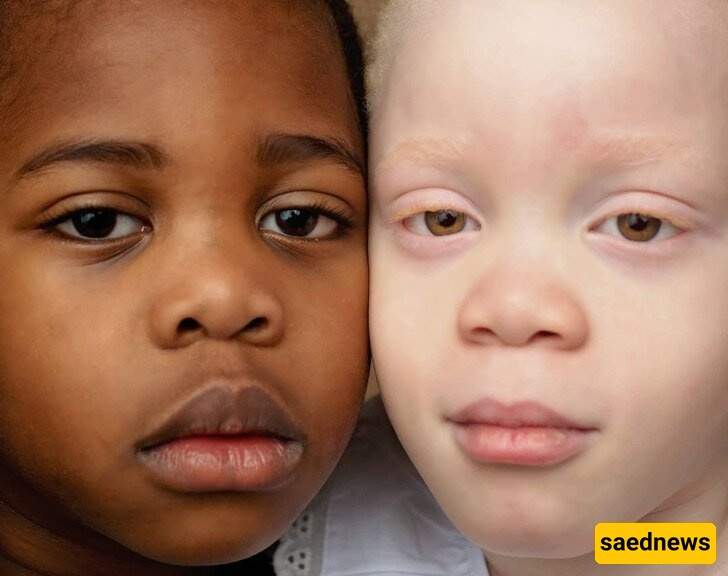
According to SaedNews’ society section, citing Young Journalists Club, this event initially surprised Judith Enowokucha, the mother of the twins, but she now sees their differences in a new light.
A Decade-Long Journey to Motherhood
Judith Enowokucha, a Nigerian woman living in Canada, spent 10 years longing to become a mother. Deep down, she knew she might have to wait even longer to experience motherhood. She recalls:
"When I got married, days turned into weeks, weeks turned into months, and months turned into years. Anxiety and despair consumed me."
When it seemed that all options had run out, she turned to prayer. Judith found supportive friends, and together they believed that a miracle was possible. She prayed especially to have a twin boy and girl and had even chosen their names: Kamsi and Kachi.
After eight years, Judith and her husband decided to try in vitro fertilization once more. Previous treatments had failed, but they never lost hope. To their astonishment, this attempt succeeded. Judith says:
"I realized that finally my twins were going to grow inside me. We were overjoyed. The first ultrasound only showed one embryo, but I immediately told the doctor it was a mistake."
The second ultrasound confirmed Judith was right. However, subsequent scans brought worrying news: her daughter was at risk of bleeding and might not survive. Throughout her pregnancy, Judith continued praying but struggled to overcome constant anxiety.

The Twins Are Born—One Looks Unexpectedly Different
After years of waiting, Judith’s children were finally born: her son Kamsi and daughter Kachi. The joy of becoming a mother was immense, but something about her newborns immediately caught Judith’s attention.
Seeing Kachi for the first time, Judith wondered if a mix-up had occurred at the hospital. For several months, she worried that another child had been given to her by mistake. She recalls:
"I was truly amazed at how pale her skin was, but the joy of their healthy arrival quickly outweighed every other feeling. I was ecstatic."
Judith assumed Kachi’s appearance was simply due to her very light skin, never considering the possibility of albinism.
No one in Judith’s family had albinism. After birth, Kachi required special care and was transferred to the hospital’s neonatal intensive care unit, staying longer than her brother until she gained enough weight to go home.
Judith wanted to focus only on happiness for her newborns, but worry soon overtook her. She says:
"My anxiety gradually turned into sadness. I worried about her future, how society would treat her, and whether she would be accepted. I even envied other Black children and thought, ‘Why me? Why do I have a child with albinism? How did my twins end up one Black and one white?’"
Motherly Love Triumphs
Judith admits that both she and her husband initially struggled to accept reality and often denied it. They eventually sought guidance from a counselor to manage their emotions. It took until Kachi’s first birthday for them to adopt a different perspective.
She says:
"I gradually started seeing my daughter differently. I began to appreciate the beauty in her albinism—her golden hair, brown eyes, pink lips—and admired every aspect of her. I realized that whenever we took the children out, Kachi would captivate people."
Judith now constantly reminds herself of Kachi’s inner and outer beauty, emphasizing that she would not trade her daughter’s unique condition for anything in the world.
The twins now share an unbreakable bond, loving and playing with each other regardless of their physical differences. Judith says:
"I’m not sure if Kachi fully understands yet that her appearance makes her special, but one day she will. It’s my job to teach her to love herself just as she is."
For more society stories, follow SaedNews’ society section.