SAEDNEWS: Now, 170 slices of Albert Einstein’s brain have been returned to Princeton University Medical Center. Another 46 thin sections are on display at the Mütter Museum in Philadelphia. However, many other pieces remain missing.
According to the Saed News Society Desk, 170 pieces of Einstein’s brain have now been returned to Princeton University’s medical center, where they are under protection and carefully preserved. Another 46 thin slices are on display at the Mutter Museum in Philadelphia. Yet, many other pieces remain missing.
How could so many fragments of history’s most famous brain simply disappear? According to Dr. Harvey and other researchers, the answer lies in the brain itself. Physically, Einstein’s brain had exceptional features, and a proper scientific analysis could help explain the genius behind his extraordinary mind.
After Harvey ordered Einstein’s brain removed in 1955, it was cut into cube-like pieces. Some of these cubes were then sliced into 12 sets of 200 sections each—each slice no thicker than half the width of a human hair. (Prior to dissection, he also photographed the intact brain from multiple angles.)
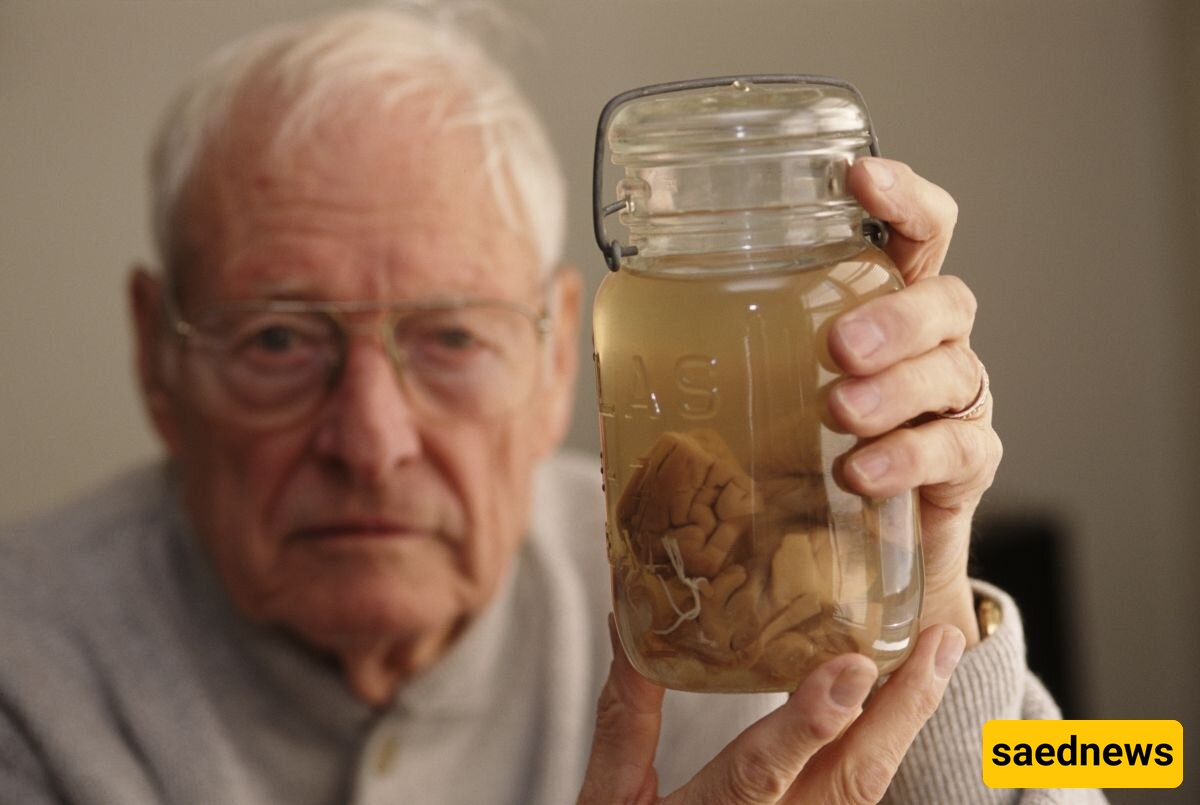
As reported by Science magazine, Harvey mounted the brain slices on slides without the Einstein family’s permission and sent them to an unknown number of researchers. He hoped that this analysis would uncover the secrets hidden within Einstein’s brain. Harvey personally drove many of these samples across the United States and parts of Canada, while keeping the majority of Einstein’s brain hidden in a jar inside a cardboard box in his car.
When Harvey’s road trip with the genius’s brain finally ended, the remaining cubes were transferred to jars at his home. Although he continued to share samples with interested researchers, he kept the bulk of Einstein’s brain until 1998. That year, 43 years after it was removed from Albert Einstein’s body, the remnants were finally returned to Princeton University Medical Center. According to the BBC, scientists today may only study Einstein’s brain after submitting a well-designed research proposal to the medical center.