SAEDNEWS: Despite remarkable advances in archaeology and engineering, the pyramids continue to harbor questions for which clear scientific answers remain elusive. This report explores seven astonishing mysteries of the pyramids—secrets that sharpen the boundary between today’s knowledge and the enigmas of the ancient world.
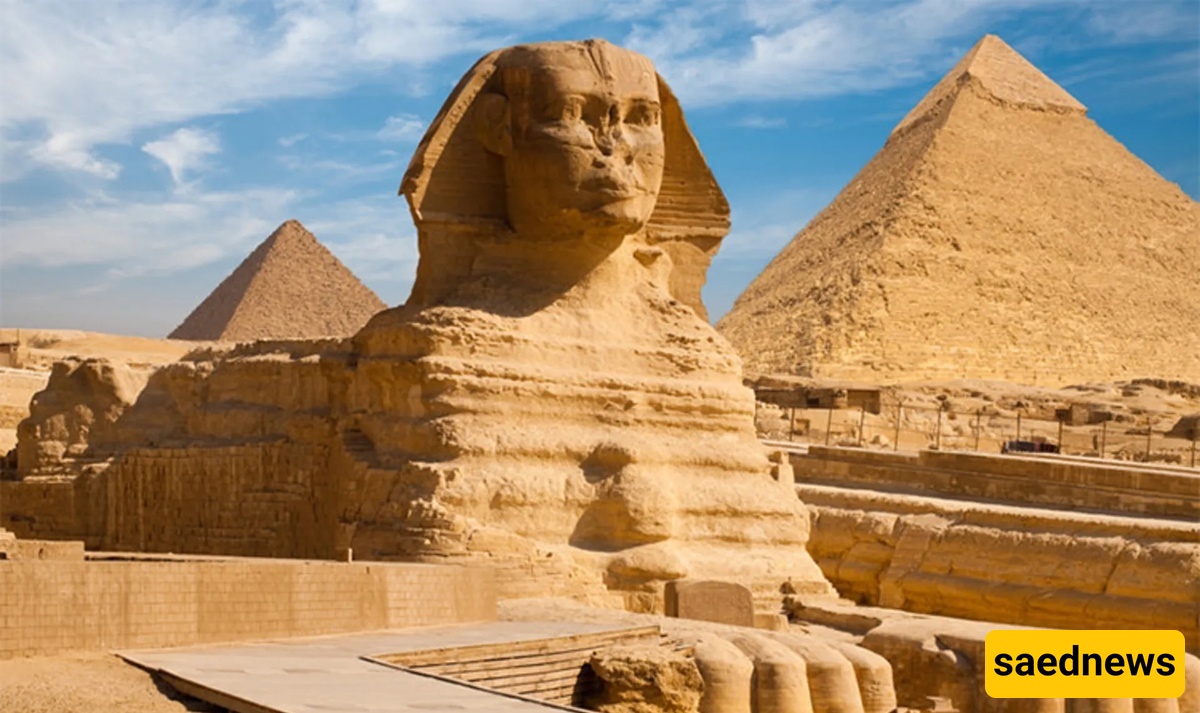
According to the History and Culture Desk of Saed News, even thousands of years after their construction, the pyramids remain a boundary between humanity’s confirmed knowledge and its unsolved mysteries. While researchers using advanced technologies have revealed many aspects of their architecture and history, parts of their construction process, functions, and astonishing features remain shrouded in uncertainty. What makes the pyramids truly captivating is not just their grandeur, but the questions they pose—questions that modern science still struggles to fully answer.
🏗 Unknown Construction Methods
No one knows how millions of 2.5-ton stones were moved and stacked with such precision. Even with today’s technology, the feat would be daunting.
🧭 Perfect Alignment with True North
The Great Pyramid is almost perfectly aligned with the cardinal directions—north, south, east, and west—with astonishing accuracy.
🏛 Undiscovered Chambers
Modern scans reveal hidden rooms within the pyramids that have remained untouched for 4,500 years. Their contents remain a mystery.
🌡 Strange Thermal Signatures
Infrared scans show unknown hot spots inside the pyramid walls—but no one knows what causes them.
📐 Impossible Pyramid Mathematics
The dimensions of the pyramids incorporate π, the golden ratio, measurements of the Earth, and even the speed of light. Is this mere coincidence—or something more?
🪨 Incredibly Precise Stones for Primitive Tools
The stone blocks are cut with laser-like precision, yet no tools from that era could achieve such accuracy.
❓ A Mystery Beyond Human Hands?
With so many secrets and such extraordinary precision, could these feats really be the work of ancient humans—or might unknown entities have played a role?