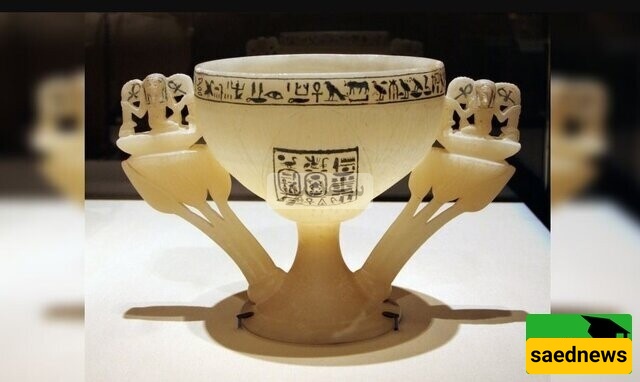
SAEDNEWS: Tutankhamun is likely the first name that comes to mind when thinking of the nobility of ancient Egypt. A photograph captures a pharaoh’s cup, designed in the shape of a flower, discovered in his tomb. The hieroglyphs engraved on the cup call for millions of years of life to be granted to Tutankhamun.
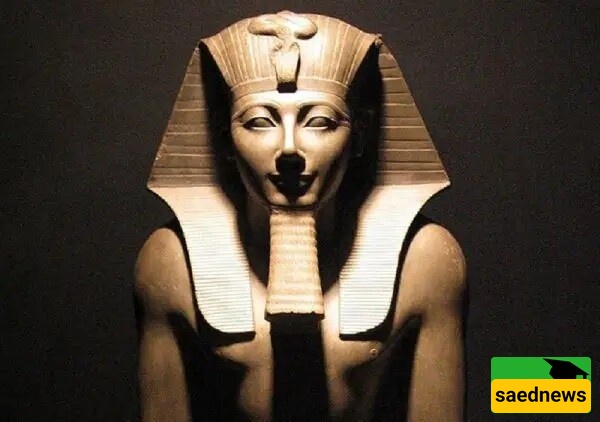
According to the History and Culture Service of SaedNews, most people are aware that Tutankhamun was one of the most famous pharaohs of ancient Egypt. He ascended the throne at the age of nine and ruled Egypt from 1332 to 1323 BCE. His unique golden mask, capturing the determined yet youthful face of Tutankhamun, is perhaps the most renowned artifact from the ancient world.
A remarkable chalice belonging to Tutankhamun, discovered in his tomb, offers a glimpse into the treasures of this legendary ruler:
The period commonly referred to as “ancient Egypt” spans some 5,000 years. Tutankhamun’s reign fell within the Eighteenth Dynasty and the era known as the New Kingdom of Egypt, also called the Egyptian Kingdom period.
The New Kingdom of Egypt lasted from the 16th to the 11th centuries BCE. It encompassed the Eighteenth, Nineteenth, and Twentieth Dynasties and is often regarded as the most prosperous period in the history of ancient Egypt. The Eighteenth Dynasty is particularly famous among the public due to its well-known pharaohs.
Notable figures of this dynasty include Hatshepsut, the female pharaoh of ancient Egypt; Akhenaten, Tutankhamun’s father; and Nefertiti, Akhenaten’s queen. These figures remain some of the most celebrated personalities in Egypt’s rich history.