SAEDNEWS: In the Strait of Hormuz, Iran’s small, high-speed armed patrol boats operate around the clock, maintaining a constant presence in the Persian Gulf. But what makes these agile vessels such a challenge for even the world’s most advanced warships?
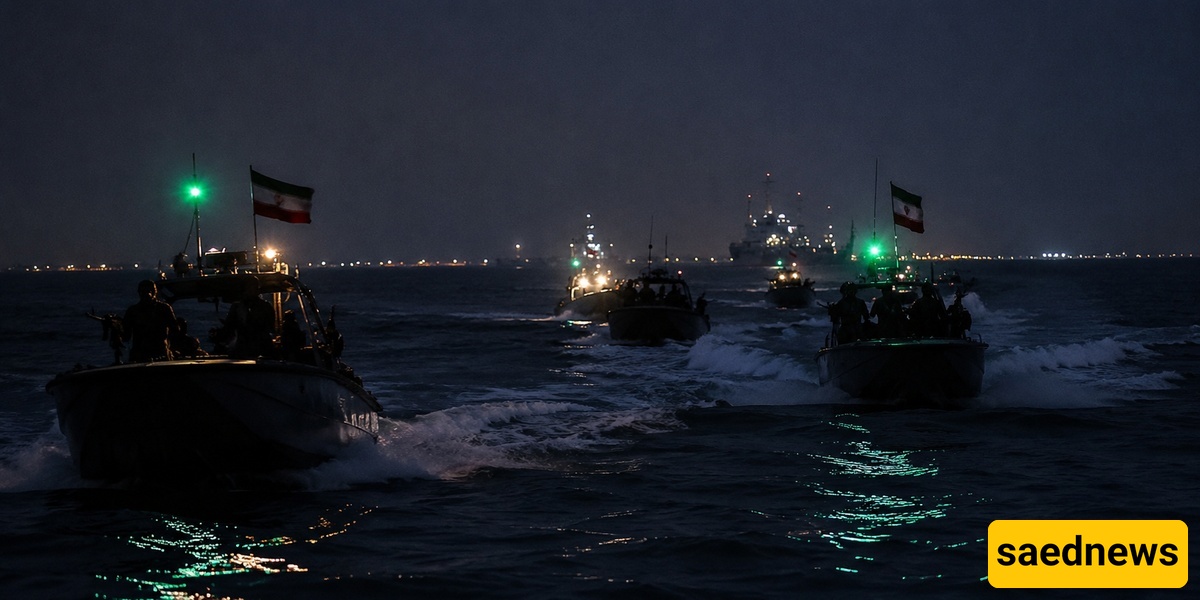
According to the political service of Saednews news website, citing Fars News Agency, in recent days the naval forces of Iran’s Islamic Revolutionary Guard Corps (IRGC) have been continuously patrolling this vital waterway with their fast attack boats. Operating around the clock, these forces closely monitor maritime traffic, knowing exactly where ships are coming from and where they are headed. Acting much like traffic controllers at sea, they guide oil tankers and commercial vessels along designated routes to ensure safe and orderly navigation. Their constant presence allows them to observe all movements in the area and quickly respond to any activity that violates established regulations.
The significance of these operations becomes clearer when viewed in the context of modern naval warfare. Recent maritime conflicts have demonstrated that small, fast, and missile-equipped vessels can pose serious challenges to large and expensive warships. Based on this approach, Iran has developed a coordinated fleet of high-speed boats capable of rapid response. Supporters of this strategy argue that any hostile action in the Persian Gulf could be met quickly by numerous agile and armed vessels, increasing the risks and costs for potential adversaries.
According to an analysis by Saad News, the primary message of these continuous patrols is that Iran has adopted a different approach to maritime security. In the past, Western countries often demonstrated their military presence in the Persian Gulf through the deployment of large and costly naval vessels. Iran, however, has focused on a strategy that emphasizes mobility, speed, and situational awareness. This approach reflects the view that effective control of a strategically important region depends not only on the size of military assets but also on operational flexibility and information dominance. Iranian planners consider the slower maneuverability of large ships to be a potential vulnerability and have structured their naval tactics accordingly.
From this perspective, the result is that one of the world's most important energy transit routes remains under close surveillance and security oversight. The sustained presence of these patrol boats signals that the Strait of Hormuz is not a place for escalation or disruption. Beyond their military role, these vessels are presented as symbols of Iran’s ability to monitor and safeguard maritime activity in the region, reinforcing the country’s message that it plays a central role in maintaining security and regulating navigation within its territorial waters and surrounding strategic waterways.