SAEDNEWS: The combination of stealth with high speed, maneuverability, and low-altitude flight reduces the time and opportunity for defensive systems to respond.
According to the political news service of SaedNews, Major General Mohammad Pakpour, commander of the Islamic Revolutionary Guard Corps (IRGC), stated: “If we can equip our missiles with stealth technology, we can certainly increase the likelihood of our missiles penetrating the defensive shield of the Israeli regime.”
As reported by Fars News, missile stealth technology encompasses a range of designs and methods that make missiles harder to detect, track, and target. The primary goal is to reduce the chances of enemy radar and heat sensors spotting the missile, thereby improving the likelihood of hitting the intended target.
Radars detect objects by sending out waves and analyzing their reflections. In stealth missiles, the body shape, angles, and overall design are crafted so that radar waves are deflected away from the source. Additionally, radar-absorbing materials are used in the missile’s body to absorb energy from incoming waves and minimize reflections.
When combined with high speed, maneuverability, and low-altitude flight, stealth technology leaves defense systems with less time to react.
The Rise of Smart Missiles
Stealth is not the only advantage of Iran’s missile systems. Today, equipping certain missiles with artificial intelligence (AI) has significantly enhanced their capabilities.
An example of AI integration was demonstrated in an IRGC naval exercise, where the navy launched AI-enabled Qaem and Almas missiles from advanced Mohajer-6 and Ababil-5 drones. The missiles successfully destroyed simulated enemy targets with high precision.
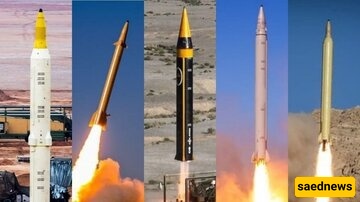
Iran now possesses a diverse missile arsenal with varying ranges and capabilities, including the Shahab, Khorramshahr, Zolfaghar, Qadr, Emad, Qiam, Kheibar-Shikan, Haj Qasem, Sejil, cruise Paveh, Ghadir, Fateh 110, and Fateh 313 families. These missiles, with their range and targeting accuracy, constitute a cornerstone of the country’s defense of territorial integrity and strategic interests.
Strategic Missile Development
After the 12-day Holy Defense, Iran focused on rebuilding and upgrading its air defense systems, missile capabilities, modern technologies, and intelligence weaknesses. This approach reflects a strategic, not merely reactive, vision aimed at establishing a new, stable regional and extra-regional security balance.
The development of stealth and smart missile technology has strengthened Iran’s deterrence and comprehensive defense posture, demonstrating that the Islamic Republic can deliver precise and decisive responses to any threats from adversaries.