Saed News: Naser al-Din Shah had a strong interest in recording his daily memories and never abandoned this habit, even during long and distant journeys. He called his daily notes a “diary” (ruznameh), and these writings contain interesting and readable details about activities, daily events, and the moods of himself and those around him at court.
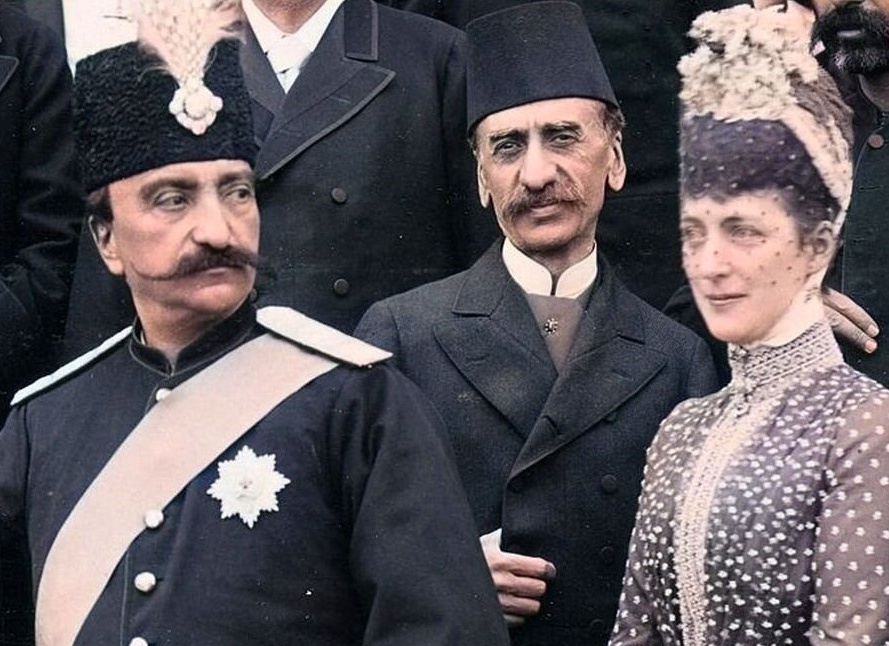
According to the History Desk of Saed News, Naser al-Din Shah Qajar wrote in his diary entry for Tuesday, 11 Shawwal 1287 AH (January 13, 1871):
“We camped at Ya‘qubiyeh. The day passed by looking at our old photographs and laziness and such things. Yesterday the Pasha was saying, “In Basra and the Imarah, a severe outbreak of cholera has appeared; in Najaf and Baghdad there is some of it as well.”
Timur Mirza also said yesterday:
“The night the camp moved toward Samarra, I was in Kazemayn, and Iqbal al-Dowleh was there as well. A Hindu prince had just arrived in Baghdad by ship from India.”
—He is the brother of the same prince who was in Tehran and the brother of the one I saw in Karbala—
Timur said:
“We brought him to Kazemayn at night; it was very amusing. Two of his servants, at night, held a large Indian sunflower on a stick, turning it in every direction, holding a shamsiyeh (parasol) so that light would not fall directly on the prince.
Two other servants, each holding a peacock feather, fanned him, swinging them like gobargeh (clubs) in a zurkhaneh, so that mosquitoes would not land on the prince. He himself wore a crown with a large imitation jeweled plume and had two swords fastened to him.”
“In short, it became a women’s gathering at dusk. All were women and young pages. The cats were playing. All the pages, along with Leila and Gozgeldi, played eshter-eshteran [1]. They struck Gozgeldi’s backside with a sonqari, causing an uproar.”
“Later, at night, after dinner, it became a men’s gathering.”
Source: The Diary of Naser al-Din Shah Qajar from Rabi‘ al-Awwal 1287 to Shawwal 1288 AH, along with the Travelogue of Karbala and Najaf, edited by Majid Abdolamin, Tehran: Dr. Mahmoud Afshar Publications, first edition, Winter 2019, pp. 238–239.