SAEDNEWS: Dr. Elahe Delshad, a Traditional and Complementary Medicine Specialist at Mashhad University of Medical Sciences, emphasized that rice is neither a health enemy nor an inevitable cause of weight gain. What truly leads to increased weight, elevated blood sugar, or liver damage is the improper way this food is consumed—not the rice itself.
According to the Science and Technology section of SaedNews, Dr. Elahe Delshad, a specialist in Iranian and complementary medicine at Mashhad University of Medical Sciences, explained that rice, as a staple and traditional food of Iranians, can lead to weight gain, increased blood sugar, and worsened fatty liver if consumed without considering individual temperament, proper timing, and correct cooking methods. However, when prepared and eaten according to proper principles, rice becomes a healthy, nourishing, and energy-rich food.
From the perspective of Iranian medicine, rice has a balanced temperament (slightly dry in secondary degree) and is considered a “compound-strengthening” food, meaning its effects on the body vary depending on a person’s temperament. For example, feeling warm after eating rice indicates a warm temperament, while feeling cold suggests a cold and wet temperament.
Dr. Delshad emphasized that the cooking method significantly affects rice’s properties. “Steamed rice (Kateh) is more warming, while boiled-and-drained rice (Polo) is more cooling. Choosing between the two should depend on individual temperament, physical condition, and health concerns,” she said.
Steamed rice (Kateh) is more suitable for growing children, underweight individuals, and certain health conditions.
Boiled-and-drained rice (Polo) is recommended for those who are overweight or have a warm temperament.
The expert also noted the importance of rice “modifiers” (Mosalih). “Eating rice in excess without these modifiers can cause constipation. Adding ingredients like milk, unrefined sugar, cumin, or saffron enhances rice’s benefits and reduces potential side effects. Daily, continuous consumption of rice is not recommended; dietary variety is important.”
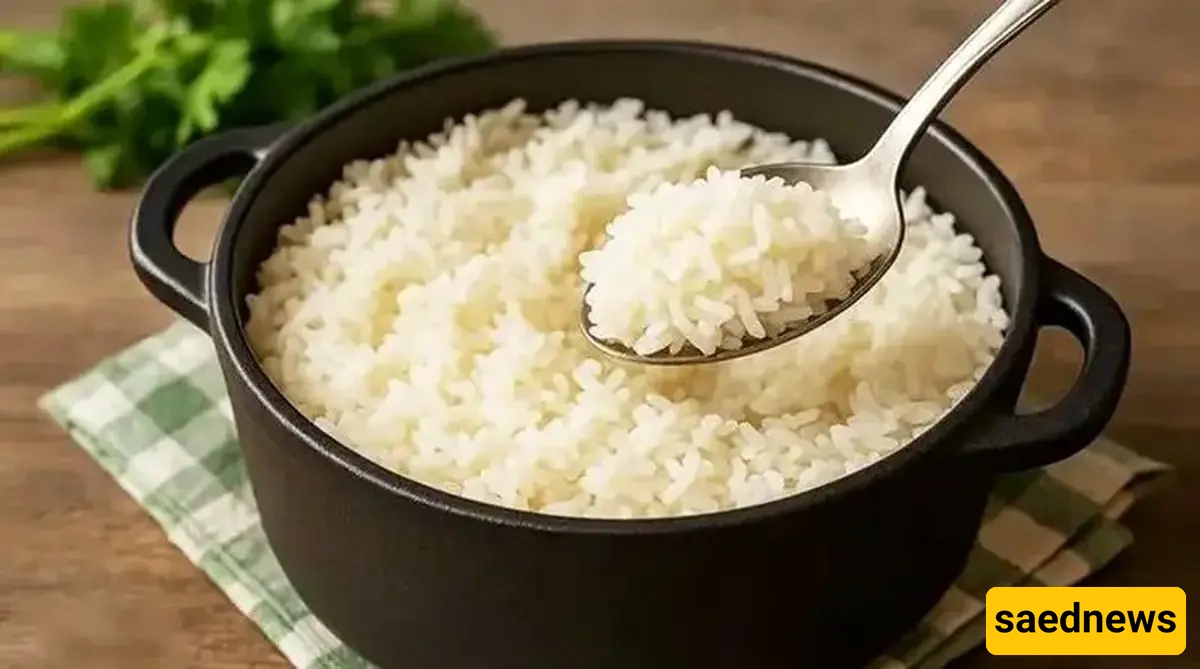
Dr. Delshad recommended thorough washing, soaking, and appropriate cooking to reduce contamination and potential toxins in rice. She highlighted semi-boiled (or partially drained) rice as the best method: after washing and soaking the rice in water and salt, it is briefly boiled in a large amount of water, then drained and steamed with a small amount of water. This technique removes toxins, preserves beneficial minerals, and reduces stickiness and density, making it suitable even for people with fatty liver.
In conclusion, Dr. Delshad stressed that completely removing rice from the diet is not a universal solution for weight loss or health improvement. The correct approach is to adjust rice consumption according to Iranian medicine principles, respecting this traditional and valuable staple of the Iranian table.