SAEDNEWS: Millet might not seem like an ordinary crop or a natural fit for your breakfast table, but the truth is that, around the world, these small seeds are cultivated and harvested both as animal feed and for human consumption. Join us as we explore the remarkable health benefits of this humble grain.
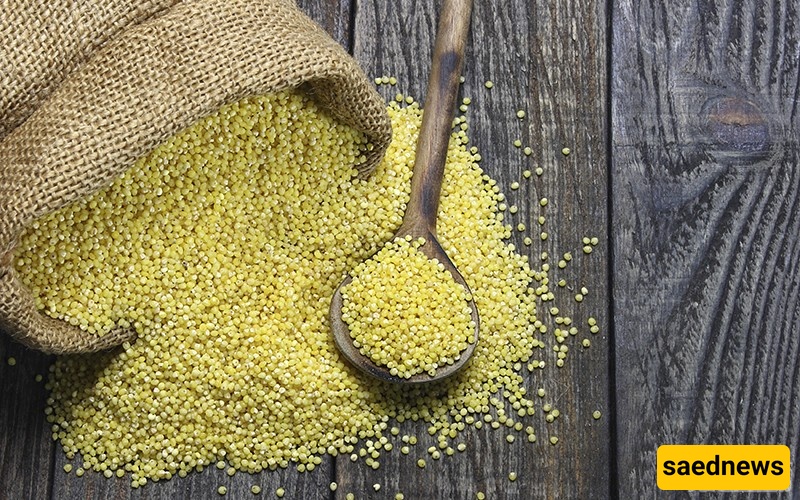
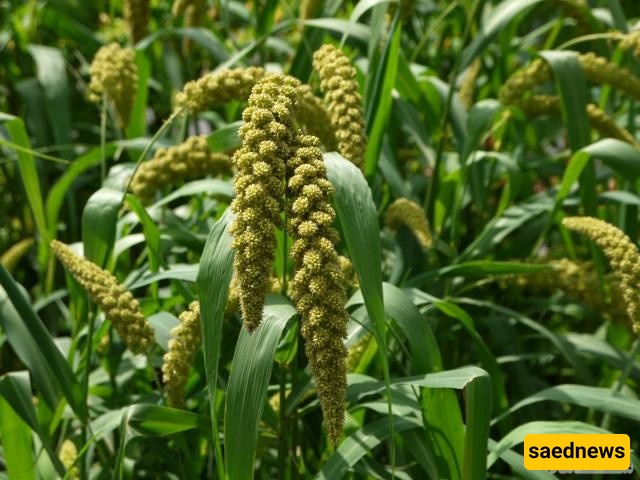
Millet comes in various types, with pearl millet and finger millet being the most well-known. Although often considered bird feed, millet is not exclusive to birds. It is a delicious grain widely used in many countries, especially China, Africa, and India, for preparing a variety of dishes. Available year-round, millet is small and round, appearing in colors such as white, pale yellow, brown, gray, or purple.
In traditional medicine, millet is considered naturally cooling. It is believed to have antidepressant and sleep-promoting properties, as well as antifungal effects. It helps reduce phlegm, blood fat, and chest-related ailments, has astringent qualities, and its flour can treat bile-related diarrhea while regulating body temperature. Millet soup can aid in cases of vomiting and indigestion, and regular consumption may help alleviate morning sickness and nausea.
Protein: 15%
High fiber content
B-complex vitamins: Niacin, folacin, riboflavin
Minerals: Iron, magnesium, phosphorus, manganese, potassium, calcium, zinc
Essential amino acids: Methionine, lecithin
Vitamin A
Rich in phytochemicals such as phytic acid
Powerful Antioxidant Effects
All types of millet contain phytochemicals called polyphenols, potent antioxidants that help neutralize free radicals in the body. This detoxifying effect can help prevent heart disease, cancer, viral infections, and inflammation. Pearl millet and finger millet have particularly strong antioxidant properties.
Diabetes Management
Millet has a low glycemic index and high soluble fiber, which helps control blood sugar. Finger millet is especially beneficial for type 2 diabetes, improving insulin receptor efficiency due to its magnesium content and reducing insulin resistance. Studies show that millet consumption can reduce diabetes risk by up to 30%.
Heart Health
Millet is excellent for cardiovascular protection. Its magnesium content helps lower blood pressure, reducing the risk of heart attacks and strokes, particularly in individuals with atherosclerosis. High potassium levels in millet also support blood vessel relaxation and circulation. Additionally, plant lignans in millet can be converted into animal lignans by gut microflora, offering protection against chronic diseases like cancer and heart disease.
Gluten-Free for Celiac Patients
Millet contains no gluten, making it a safe alternative for individuals sensitive to wheat or with celiac disease.
Anti-Cancer Properties
Phenolic compounds in millet act as protective shields, potentially preventing the development of various cancers. This makes millet a useful dietary addition for blood cancer patients.
Bone Health
Finger millet is rich in calcium, helping strengthen bones and prevent bone density loss. It serves as an excellent calcium source when dairy intake is insufficient.
Easy Digestion
Millet, especially pearl millet, is high in fiber, promoting balanced digestive function. Its gluten-free nature prevents allergic reactions, making it suitable for those with gastrointestinal issues, including celiac patients.
Gallstone Prevention
A diet including millet can reduce the risk of gallstones by about 17%, particularly in individuals with low fiber intake, smokers, or those with high cholesterol.
Weight Management
High fiber content in millet promotes satiety, helping control appetite. It also lowers cholesterol and enhances insulin sensitivity, supporting weight management and obesity prevention.
Improved Mood and Sleep
A recommended serving of 120 grams of millet provides 42% of the daily requirement of tryptophan, an amino acid essential for serotonin production, which improves mood and combats depression. Tryptophan also enhances sleep quality and morning alertness while boosting cognitive functions like memory and learning.
Anti-Aging Effects
Millet’s antioxidants and phenolic compounds have anti-aging properties, preventing cell damage. Its collagen-promoting effect helps maintain youthful skin and reduces wrinkles.
Faster Wound Healing
Studies indicate that consuming millet for 16 days can accelerate wound recovery. While these studies are mainly on animals, early evidence suggests potential benefits for humans as well.
Supports Lactation
Millet is a safe and natural option for increasing breast milk production without side effects.
Rice and Wheat Alternative
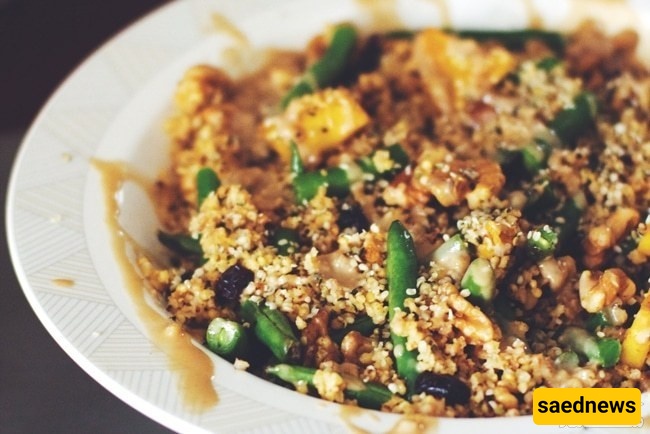
In Japan, millet is commonly used instead of rice, often served with tofu and vegetables. Africa and India also use millet as a primary food source.
Asthma Prevention
Research shows millet may improve life quality for children with asthma and reduce its incidence. Unlike wheat, millet is free of compounds that trigger asthma, reducing wheezing and attacks by over 15%.
Cholesterol Control
Millet’s high fiber content helps eliminate harmful LDL cholesterol while promoting beneficial HDL cholesterol, supporting heart health.
Pregnant women should avoid millet due to possible risks of miscarriage.
Overconsumption may lead to increased uric acid, bladder stones, stomach upset, and weakness.
Individuals with high cholesterol, gout, atherosclerosis, bladder congestion, or arterial issues should avoid millet.