SAEDNEWS: China Launches the World’s First Humanoid Robot Fighting League, Offering Teams Free T800-Model Robots
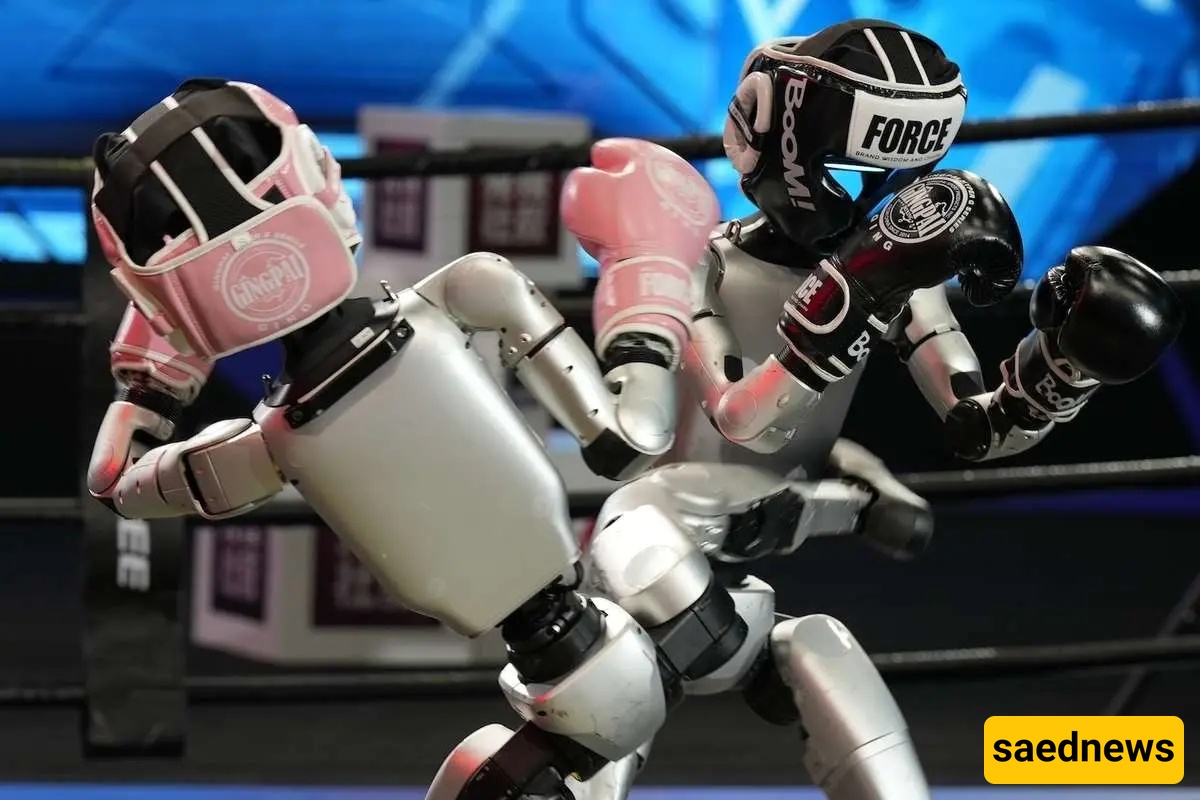
According to the Science and Technology Desk of SaedNews, citing ISNA, the event takes place in Shenzhen under the name Ultimate Robot Knockout Legend (UKRL). EngineAI provides T800 humanoid robots to various teams free of charge, allowing them to develop and optimize the robots’ practical capabilities.
Global Times reports that the winning team will receive a championship gold belt valued at approximately $1.44 million (10 million yuan).
Chinese experts emphasize that competitions like this highlight the nation’s remarkable progress in robotics and its practical applications.
The 2026 UKRL season will be held in multiple stages and continue until December 2026.
The T800 robot, designed specifically for combat, was introduced by EngineAI in early December last year. A video showcasing the robot’s precise and flawless martial arts moves quickly attracted widespread attention on social media.
According to the company’s website, the T800 can perform martial arts techniques such as side kicks and 360-degree aerial spins. Its structure uses aviation-grade aluminum panels, providing a simple yet lightweight and durable design. Equipped with an active cooling system in the leg joints and a solid-state lithium battery, the robot can operate at high intensity for up to four hours.
The humanoid robot features a multi-sensor array, including 360-degree LiDAR, stereo cameras, and rapid environmental processing, enabling real-time situational awareness and obstacle avoidance. Powerful joint motors generate up to 450 Nm of torque, allowing dynamic maneuvers such as aerial strikes, spins, and rapid direction changes.
The UKRL 2026 competition is part of China’s efforts to increase public awareness of humanoid robots and expand their applications nationwide.
Beijing-based analyst Pan Helin notes that such events help raise public recognition of humanoid robots while highlighting their practical potential. He considers real-world deployment a crucial step in addressing current technological challenges.
Tian Feng, former head of the SenseTime Research Institute, stated that providing T800 robots to smaller teams reduces research and development barriers and fosters collaboration between industry, academia, and research centers.
Tian added that conducting real-world battles can shorten the technology development cycle by over 30 percent, while also validating laboratory simulations against actual performance.
The competition evaluates key metrics such as motion control, dynamic balance, and impact resistance, thoroughly testing critical components including reducers, lead screws, and hand tendons.
Tian told Global Times that the appeal of robot combat differs from traditional perceptions of robots, helping dispel the stereotype of robots as cold, mechanical arms. This, in turn, encourages young people to learn and pursue advanced technologies.
However, he cautioned that focusing too heavily on combat performance could divert development from conventional industrial or service applications, as battles demand short, high-impact movements rather than sustained, long-term performance.
With rapid advances in visual intelligence, Chinese humanoid robots are evolving quickly, and their potential applications in industrial and domestic environments continue to expand.