SAEDNEWS: Khosrow Motazed, in the program “Watchable History” on the video-sharing website Tamasha, recounted the history of how the harem was formed in Iran, which we will explore in this article.
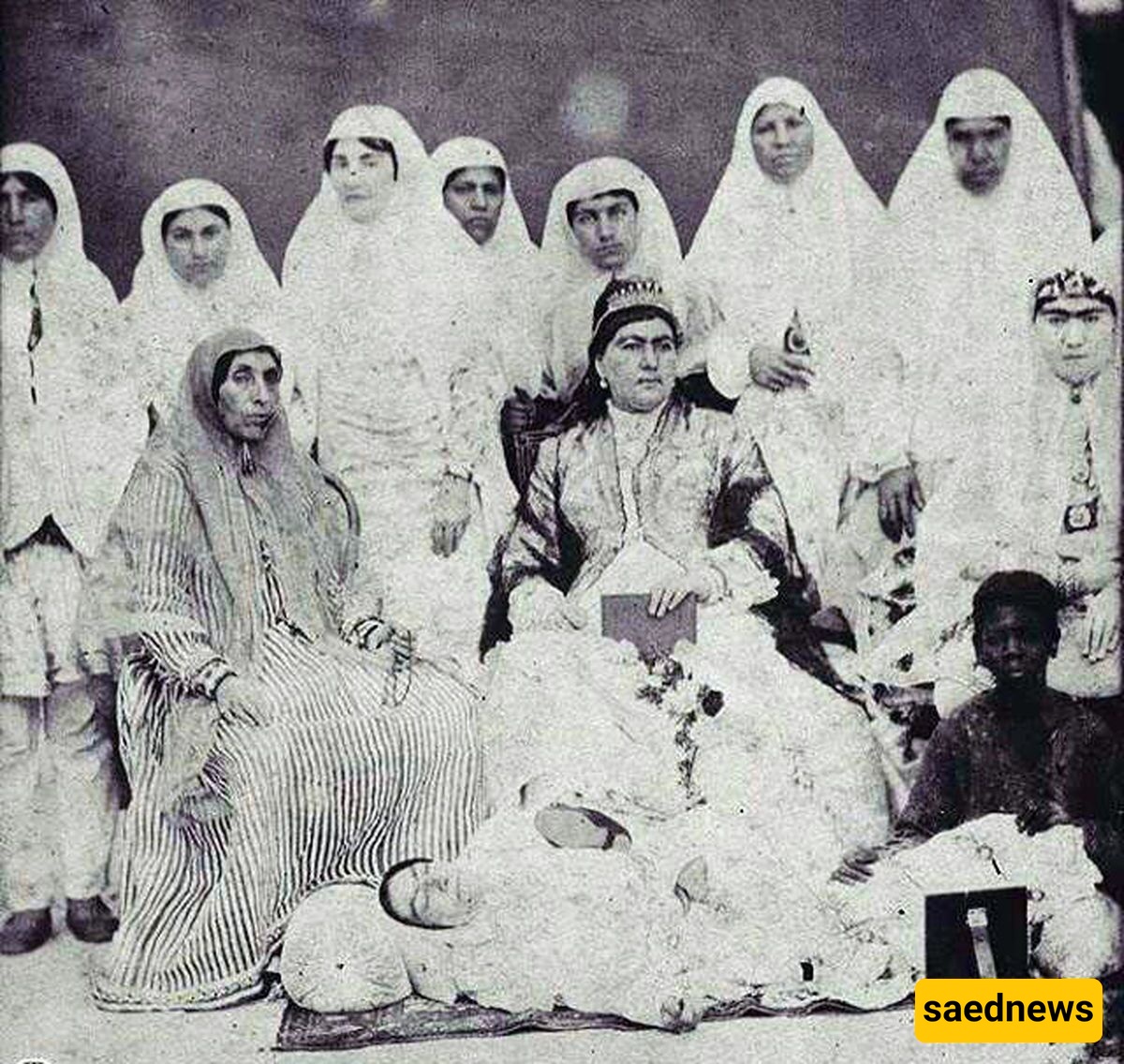
According to the History Service of Saed News, quoted by Mashregh News, historian Khosrow Motazed explained the meaning of the word “Khawaja” after Islam as follows:
One meaning of “Khawaja” is “a great or noble person,” as in Khawaja Nizam al-Mulk and Khawaja Nasir al-Din Tusi. Another meaning is the opposite of “great,” referring to a castrated man (eunuch), who in the past was made so through various methods in order to serve in royal harems.
He continued that eunuchs did not exist in European countries. For example, in Rome and Greece, he could not find the term “eunuch,” because there were no harems in Greece. In Rome, however, any man could buy multiple women or keep them in his own household. Figures such as Crassus and Julius Caesar are mentioned in this context. Julius Caesar married Cleopatra, the Ptolemaic queen, but also had other women.
He emphasized that, apart from Europe, eunuchs existed in other regions, especially in Eastern courts. In Achaemenid history, the names of several eunuchs are recorded who served women in the royal harem and held significant power. For example, the mother of Artaxerxes II, Parysatis, was described as a cruel woman who ordered the poisoning of her daughter-in-law Stateira because she was favored by the king.
He stated that poisoning has always existed throughout history. Dr. Polak, an Austrian who lived in Iran for 20 years during the reign of Naser al-Din Shah, wrote about poisons used by women in the harem to kill one another.
The historian referred to the long history of harems in Iran. For example, Darius is said to have brought an Egyptian princess from Egypt, which angered his wife. Herodotus reports that Atossa strongly criticized her husband. In the late Sasanian period, one of the public’s grievances was that nobles and commanders had multiple wives like kings.
He noted that religion was not very important for these rulers. For example, Yazdegerd I had a Jewish wife, and Khosrow Parviz had both a Christian wife from the Roman Church and another Christian wife from the Assyrian Church. After Islam, although up to four wives were permitted, polygamy and harems became more common, especially among the Umayyad caliphs.
He mentioned stories from the book Al-Aghani by Abu al-Faraj al-Isfahani, describing two women named Hababa and Salama. According to the account, one of them died after a grape got stuck in her throat, causing the caliph to fall into deep grief and eventually die.
Motazed described the Umayyad caliphs as indulgent and careless, except for Umar ibn Abdul Aziz, who was known for his piety and praised by Saadi. In the Abbasid era, rulers such as al-Saffah were described as violent and expansionist, while al-Mansur was also serious and strict.
He stated that later caliphs increasingly maintained harems, especially Harun al-Rashid, whose mother was Persian. He also emphasized the influence of Persian viziers such as the Barmakids.
He added that eunuchs were brought from Africa and Asia, and were classified into “white” and “black” eunuchs. The Ottoman court was considered the most prominent in this practice.
He claimed that depictions of the Ottoman harem in modern films are exaggerated and made for tourism purposes. He also referred to books describing alleged violence in the Ottoman harem, including killings and drownings, which he considered exaggerated or fictional.
Regarding the Safavid period, he mentioned that many women in royal paintings were Georgian, Circassian, or Armenian. He claimed that dancing women depicted in these paintings were not Iranian, as Iranian women were not allowed to dance publicly at that time.
He also described Shah Abbas’s campaigns in Georgia and the political marriages used to secure alliances. He criticized Shah Sultan Hussein as a weak ruler with many wives, which contributed to the fall of the Safavid dynasty.
He stated that Fath Ali Shah had around a thousand wives and over 100 sons, and that the names of many of his wives were recorded. He also claimed that Naser al-Din Shah had many daughters who were often forced into marriage with officials for political reasons.
He argued that royal marriages were not only for pleasure but also served political purposes, helping rulers maintain control over different regions.
Motazed concluded that throughout Iranian history, polygamy was common among those who had the means, which sometimes led to problems. He emphasized that Islam imposed strict conditions of justice and equality among wives, which, in his view, is difficult to practice in the modern world.