SAEDNEWS: Trump tells Congress US hostilities with Iran have “ended” during ongoing ceasefire, says no need for legislative approval deadline to continue war
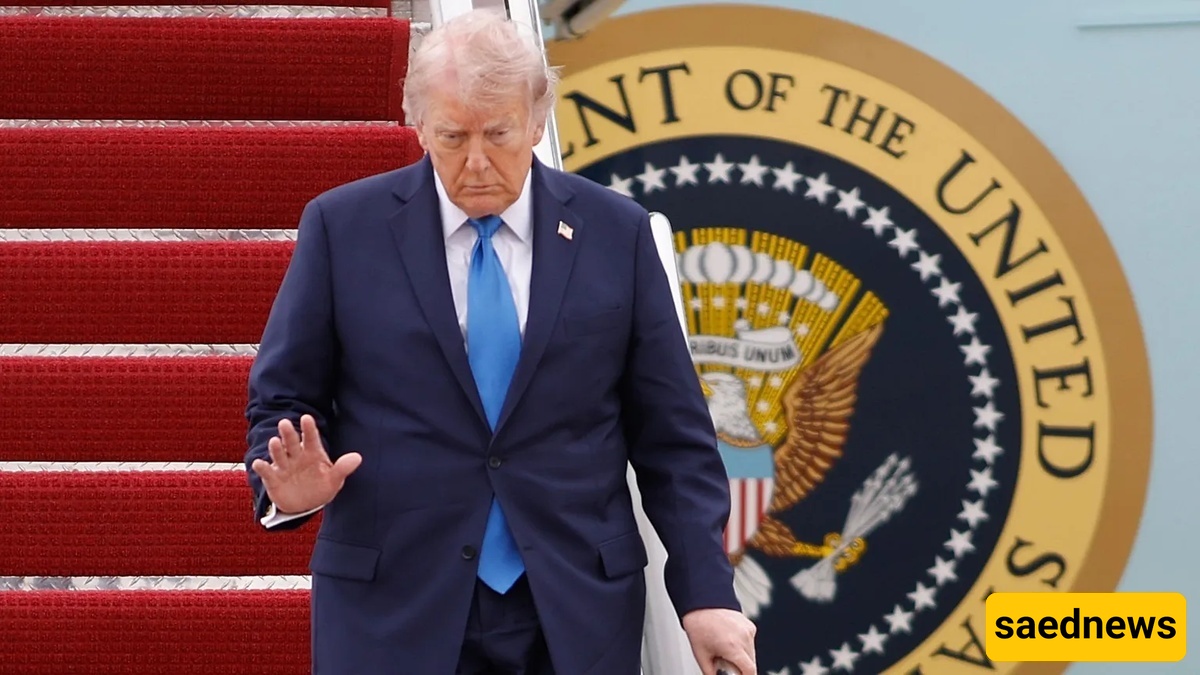
According to Saednews, Quoting BBC, under U.S. law, the President must obtain congressional authorization within 60 days after informing lawmakers of military action, otherwise hostilities must be terminated. However, Donald Trump stated in a letter to congressional leaders that he is not bound by the War Powers Resolution, arguing that a ceasefire agreement reached with Iran last month has paused the legal 60-day clock.
The United States and Iran have not yet reached a long-term peace agreement through negotiations, although Iranian media reported on Friday that Tehran has sent a new proposal via Pakistan. On the 60th day after formally notifying Congress about strikes against Iran, Trump wrote to congressional leaders on Friday: “Since April 7, 2026, there has been no exchange of fire between U.S. and Iranian forces. The hostilities that began on February 28, 2026, have ended.”
Iran’s state news agency IRNA reported that Tehran’s proposal for talks with the United States was delivered through Pakistani mediation, though it provided no further details and it remains unclear whether Washington has received it. Trump told reporters that discussions with Iran had recently taken place, adding, “We’ll see what happens. But I have to say, I’m not satisfied.” He also suggested that reaching an agreement has been difficult because Iran’s leadership has become “very confused” following the deaths of several senior military officials during the conflict.
Trump said he was briefed by U.S. Central Command (CENTCOM) on Thursday about potential options ranging from “heavy bombing and permanent destruction” to “reaching a deal.” On Friday, he added: “They are not moving forward with the kind of deal we need. We’re going to finish this properly. We’re not going to leave early just to face the same problem again in three years.”
Meanwhile, the U.S. Treasury Department warned that any individual or company paying Iran “fees or transit rights” for passage through the Strait of Hormuz could risk violating U.S. sanctions. The strategically vital waterway remains effectively disrupted, causing global economic effects.
In Congress, lawmakers are increasingly questioning whether votes will be held in both chambers to formally authorize military action. The War Powers Resolution of 1973 requires the President to end the use of armed forces within 60 days unless Congress declares war or grants an extension of up to 30 days for withdrawal. The law was designed to limit presidential war-making powers following the Vietnam War era.
Defense Secretary Pete Hegseth told Congress that the legal deadline had been paused. Democratic Senator Tim Kaine disputed this interpretation, saying he does not believe the law supports such a reading.
Democratic efforts in Congress to restrict Trump’s actions on Iran have repeatedly failed, with most Republicans opposing such measures, though some have indicated they may reconsider once the 60-day period expires.
Trump also told reporters that no other country has required similar congressional approval, claiming that many view such requirements as “unconstitutional.” However, legal scholars have challenged the administration’s interpretation of the War Powers Resolution. Professor Heather Brandon-Smith of Georgetown University Law Center said that even if a ceasefire exists, it does not necessarily stop the 60-day clock, arguing that only a permanent end to hostilities could do so. She added that continued conflict could ultimately require intervention by Congress or the courts to halt military action.