SAEDNEWS: According to BBC, Donald Trump announced a two-week ceasefire between the US and Iran and said there was major progress toward a final peace agreement, though the outcome of talks remains uncertain.
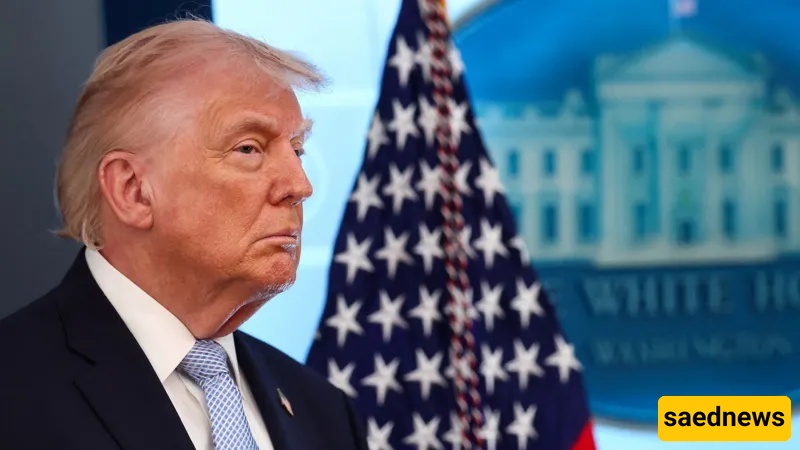
According to the political service of Saed News Agency, the BBC reported that at 18:32 Washington time, U.S. President Donald Trump posted on his social media platform that the United States and Iran were “very close to an outcome” and had reached an understanding on a “definitive” peace agreement. He also said he had agreed to a two-week ceasefire to allow negotiations to continue.
The decision was not taken at the very last moment, but it came extremely close to a deadline set by Trump at 20:00 Eastern Time (01:00 Wednesday UK time). If no agreement had been reached, the United States was reportedly prepared to launch extensive strikes against Iran’s energy and transport infrastructure.
However, all of this was conditional on Iran also halting hostilities and fully reopening the Strait of Hormuz for commercial shipping. The Iranian government has said it would comply, while still insisting on its sovereignty over the waterway.
The agreement allowed Trump to step back from a difficult position that was rapidly escalating into a high-risk choice between further intensification—after warnings that “an entire civilization would be destroyed”—or retreating and weakening his credibility. Even so, the U.S. president may only have gained temporary relief.
Over the next two weeks, the United States and Iran are expected to enter negotiations aimed at reaching a permanent agreement. The path ahead is likely to be difficult, but in after-hours trading, oil prices fell below $100 per barrel for the first time in several days, while U.S. stock futures surged, reflecting growing optimism that the worst phase of the crisis may be over.
Even this development was far from certain as recently as Tuesday morning, when Trump reportedly threatened Iran with “a death from which a civilization would never recover.”
It remains unclear whether such threats pressured Iran into accepting a ceasefire it had previously rejected. What is clear, however, is that Trump’s extraordinary and inflammatory rhetoric—coming just days after a similarly harsh message on Truth Social—has no precedent in modern U.S. presidential language.
The report adds that even if the two-week ceasefire leads to lasting peace, the Iran conflict—and Trump’s recent statements—may have fundamentally reshaped global perceptions of the United States.
The country that once presented itself as a stabilizing global force is now seen as shaking the foundations of the international order, while the president appears willing to break political norms both domestically and internationally.
Democrats quickly condemned Trump’s remarks, with some even calling for his removal. Representative Joaquin Castro said the president was “in decline and unfit for leadership,” while Senate Majority Leader Chuck Schumer warned Republican lawmakers would bear responsibility if they failed to act to end the war.
Although many Republicans continued to support Trump, several prominent figures criticized his rhetoric. Representative Austin Scott called the remarks unconstructive, while Senator Ron Johnson warned that continuing military action would be a “huge mistake.” Others, including Lisa Murkowski, rejected the justification of such threats as mere negotiating leverage.
Despite the backlash, the White House is likely to argue that the strategy has been effective pressure. However, analysts note that Trump faces declining approval ratings, internal party dissent, and rising energy prices.
In his Truth Social post announcing the ceasefire, Trump claimed the United States had “achieved and exceeded all military objectives.”
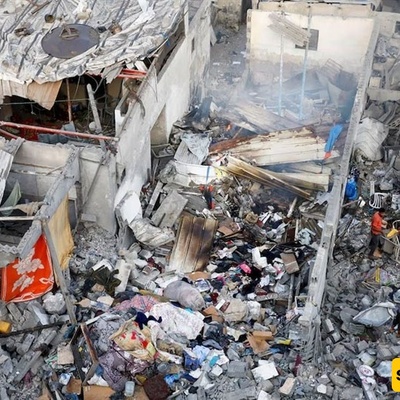
The report also states that while Iran’s military capabilities have been significantly weakened and several senior figures were killed in airstrikes, key strategic questions remain unresolved. The fate of Iran’s enriched uranium and its regional influence through allied groups such as the Houthis in Yemen remains uncertain.
Iranian Foreign Minister Seyed Abbas Araghchi said Tehran would halt defensive operations and allow safe passage through the Strait of Hormuz “in coordination with Iranian armed forces,” while claiming the U.S. had accepted the general framework of Iran’s 10-point proposal.
That proposal reportedly includes U.S. military withdrawal from the region, lifting sanctions, compensation for war damages, and Iranian control over Hormuz—terms that remain highly unlikely to be accepted in full, making the upcoming negotiations highly volatile.
The long-term cost of the war and the president’s rhetoric remains unclear.